“It was Dylan mainly,” Healy says of the music that first captured his attention. “Listening to him as a teenager it felt like discovering ‘Oh, so this is what songs are capable of’. Lou Reed was the other one. It felt like dangerous music coming from a different world. A very cool world – like it was made by people who had very little fear.”
After high school, however, Healy’s immediate future lay in grapevines rather than guitars. He grew up with his parents, who worked at Cloudy Bay vineyard, and at first he followed in their footsteps into viticulture. He headed to Europe, working as a “cellar rat” in wineries along the Rhine Valley in Germany and France.
He took a guitar with him, though, and after a couple of years he decided to come home and he enrolled to study music and English at the University of Otago. In Dunedin he first heard the Flying Nun bands of the Dunedin Sound and discovered a path for himself in music.
“I didn’t know a lot of New Zealand music before then,” he says. “But in Dunedin there was this cult around Flying Nun and it was the first time I heard records where I thought ‘If I make music, it would probably sound like this’.
“There was this whole strain of music made by people in my position – from small towns in the South Island – and it sounds badass. And one of them was my tutor.”
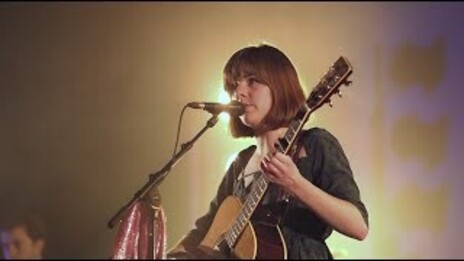
That was Graeme Downes, who helped establish Otago’s contemporary music degree. Healy began playing in bands in Dunedin, fronting his own group The Tomahawks, and as a guitarist for folk musician Hannah Curwood.
Healy realised his place in the music industry might not be at the front of the stage
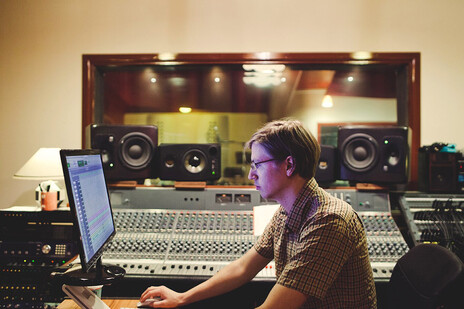
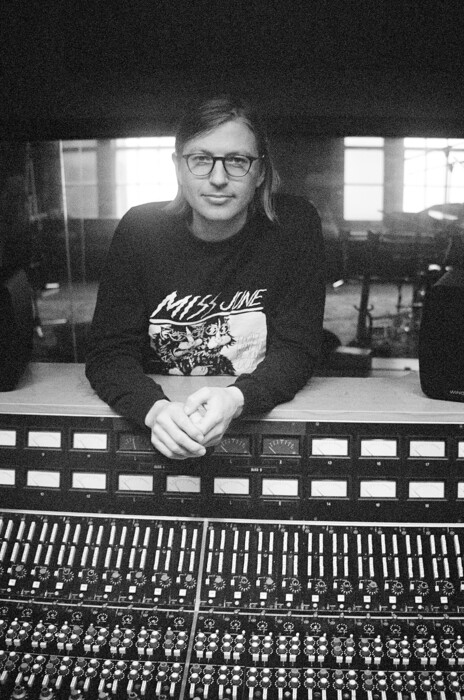
While studying with Downes, Healy also realised his place in the music industry might not be at the front of the stage. “I knew what a charismatic front person was, and it wasn’t necessarily me,” he says. “But when I started recording, I was like ‘Oh man, this I truly love’. The scientific qualities of recording, the gear – I thought it was the best distillation of my passions.”
Downes – who later hired Healy as a guitarist in The Verlaines – introduced him to local award-winning producer/engineer Dale Cotton and he soon assisted him on recordings, including working together on an album for Erica Miller, Shayne Carter’s mother. “Dale took me under his wing and got me a bit of work. He was someone who I could sit there and quiz, ‘What does this mic do?’”
Cotton, now residing in Auckland, recalls Downes introducing Healy as “One of his star students” and being impressed by his skillset. “Tom has that rare thing where not only is he an intuitive artist, but he’s a bit of a scientist in the studio,” Cotton says.
“We call it screwdriver work, when you’ve got to figure out how to fix something out of time or in the wrong key – he just loves that shit. It’s really quite a rare thing – an intuitive musician who can put his science hat on and go ‘Let’s figure out how this works’.”
After graduating with a double degree in music and English, Healy headed to Auckland with the goal of getting a foothold in the industry as a producer, but began teaching guitar five days a week to pay the bills.
He soon got work helping record Die! Die! Die!’s third album, Form, working alongside veteran engineer Nick Roughan at Auckland recording studio The Lab. There he discovered the studio had a vacant room for rent. The Lab’s studio manager and house engineer, Olly Harmer, recalls “this young keen guy showing up” asking to rent a space.
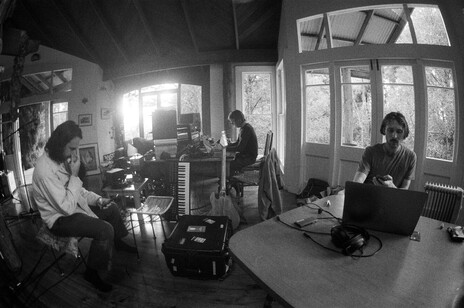
Over the following year, Harmer watched Healy build a DIY studio in the Lab’s labyrinth of rooms beneath Mt Eden’s Crystal Palace Theatre. He says Healy’s skills as a musician and producer soon became apparent.
“He knows music ... he understands how to make sounds and he understands songwriting” – Olly Harmer
“He knows music. He’s a great guitarist and keyboard player and he understands how to make sounds. He also understands songwriting and how to help people to finish a song with such an intimate knowledge of how music works.”
Over time, Healy was able to teach guitar less and record more. He went on to produce albums for Simon Comber and began a long-time collaboration producing and recording with the eclectic Carnivorous Plant Society. He also recorded Die! Die! Die!’s fourth album, Harmony.
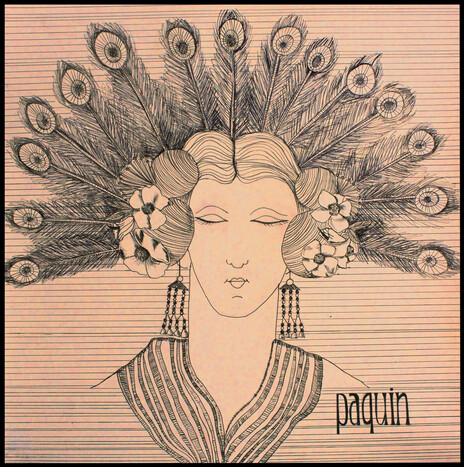
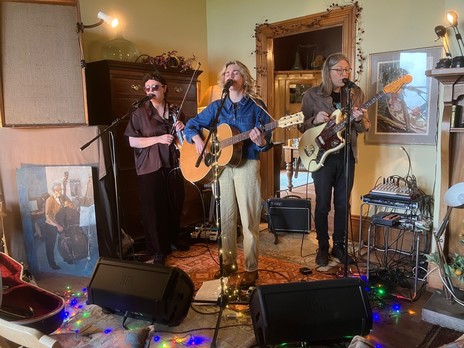
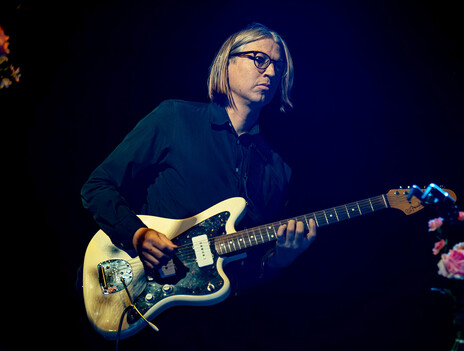
He also became a regular feature on stage as a guitarist, playing in She’s So Rad, The Verlaines and in his own band, Paquin.
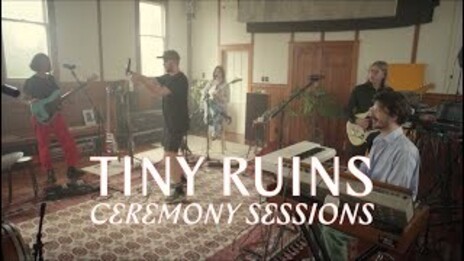
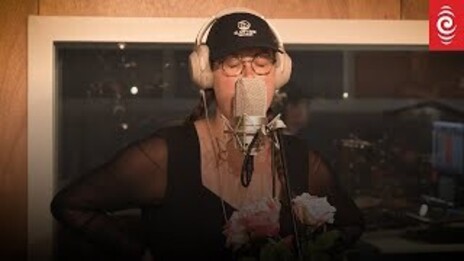
But arguably the pivotal moment in Healy’s career came in 2013 when he met Hollie Fullbrook of Tiny Ruins. After releasing her debut album, 2011’s Some Were Meant for Sea, Fullbrook toured extensively, and was building material for a new album when the pair met. “We were looking for someone to record the album and he showed up out of nowhere,” she says.
While the band had discussed recording at Neil Finn’s Roundhead Studios, Fullbrook says they soon decided to record with Healy. “I think the idea of going to Roundhead at the time was very intimidating and Tom’s very charming. I immediately liked him.”
Healy’s DIY studio was still a work in progress, however. “There were quite a few technical issues because he was obviously still wiring up his room, but I didn’t really know any different.”
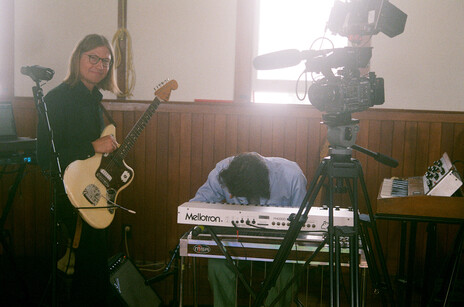
While recording, Healy added electric guitar parts to some songs and soon found himself part of the band. “We ended up wanting more sounds that Tom was so adept at doing, and his guitar playing style is extremely idiosyncratic and unique,” Fullbrook says. “You feel it more than hear it, with lots of washes of sound and strange effects.
“I was also impressed at his dedication in finding the place where he could belong in Tiny Ruins. He didn’t take over or have solos, it was more like building up these really interesting sonic landscapes with us. The sound of the band has grown and evolved quite a lot over the years and a lot of that is down to Tom.”
The subsequent album, Brightly Painted One (2014), gained international attention and went on to win Best Alternative Album at the NZ Music Awards, while Healy was nominated for Producer of the Year.
It’s an intimate and spacious record with a rich and varied instrumentation – strings, brass, percussion, keys – elevating songs without obscuring them.
Healy recalls it being a moment that felt like he gained validity as a producer. “Not just in other people’s eyes, but also in my own eyes, that I can make a record that’s a worthy contribution to the world,” he says.
“You only have to read a lyric sheet of Holly Fullbrook’s to know she’s one of New Zealand’s great songwriters. She’s such a great lyricist and a world-class songwriter, so to be involved in that record, it was really special.”
Healy went on to produce the band’s subsequent two albums, which both also gained him Best Producer nominations. In 2026 he is working on a forthcoming Tiny Ruins album.
Healy’s work on Tiny Ruins’ ‘Brightly Painted One’ caught the attention of other artists
Fullbrook says he’s become an important sounding board for the band. “His presence and advice is never overbearing,” she says. “He knows when you’ve hit the mark and when you haven’t and he’s able to tell the artist in a way that doesn’t destroy their confidence, but enables them to change and grow.”
Brightly Painted One caught the attention of other recording artists. The Veils’ frontman and founder Finn Andrews says it was the reason he contacted Healy to record his first solo album, 2019’s One Piece At A Time.
“I’m a huge fan of Tiny Ruins and I loved the sound Tom got on Brightly Painted One, so that was the initial impetus for seeking him out,” Andrews says.
Healy subsequently produced The Veils’ next album, And Out of the Void Came Love, and is working with Andrews on a forthcoming album.
“The Veils have been lucky enough to work with some really great producers over the years, but Tom is something else,” says Andrews. “What makes Tom such a unique producer is his ability to see a project from both a wide, strategic perspective and a detailed, musical one.
“I suppose this comes from being such an accomplished musician himself … he understands each element on a granular level whilst still pulling the strings from above. He makes his ideas heard, but he’s respectful of the artist’s instincts being at the core of the thing, and that’s an exceptionally precious thing indeed.”
The work continued to flow in for Healy. His producer credentials caught the attention of Marlon Williams, who enlisted him to engineer and produce the NZ Music Award-winning 2022 album, My Boy.
Healy recalls the album, a departure from Williams’ earlier folk-focused output, being “blitzed” in a couple of weeks at Roundhead Studios. The result is carefully crafted with a complex instrumentation – string sections counterposed with 80s synthesisers and slide guitar embellishments.
“It was a record where I’d think, ‘shit, I wonder what this song is going to end up like’,” Healy says. “It was a really fun record to make. He’s so talented. His songs often have these little adventures off into different keys and he’s a lovely, warm spirited human being as well.”
Healy jointly won the Best Engineer award for his work on the album at the 2024 Aotearoa Music Awards for this work, along with assistant engineer Alex Corbett.
He’s since gone on to produce Nadia Reid’s fourth studio album, 2025’s Enter Now Brightness, along with albums for Dunedin indie bands Ha The Unclear and Soaked Oats.
“It’s rare to find someone with creativity, musicality, organisation skills, and dedication – all at once” – Harmer
More recently, he helped to capture the final chapter of one of the Dunedin Sound’s most celebrated bands. During Covid lockdowns in 2020, Healy produced The Chills’ album Scatterbrain before producing what became the band’s epilogue, Springboard: The Early Unrecorded Songs, released a year after Martin Phillipps’ death.
Recorded while Phillipps was very unwell, it featured numerous guest artists including Neil Finn, Julia Deans, Tami Neilson and Troy Kingi, culminating in what Healy has called the most challenging album he’s ever made. Healy says that while originally he was more focused on the technical side of recording and capturing the sound of a band, as he’s become more experienced and proficient, he’s become more attuned to getting the best out of the musicians themselves.
“At first there was a lot of trial and error focused on the fundamental technique of mic positioning and things,” he says. “Now I don’t think of that at all – I instinctively know what something will sound like. So what was a technically challenging role is now purely about personnel and the creative vision. I think a good producer has to balance the creative and the practical.”
His colleague Olly Harmer says it’s this rare combination of the creative and the practical that has made Healy achieve a rare thing in New Zealand – a professional career as a producer.
“Often people may be outrageously creative but then everything else in their lives is falling apart,” Harmer says. “It’s rare to find someone with creativity, musicality, organisation skills, and dedication – all going on at once.
“They’re definitely traits people appreciate [working with] Tom. He’s that strong captain, driving the ship.”