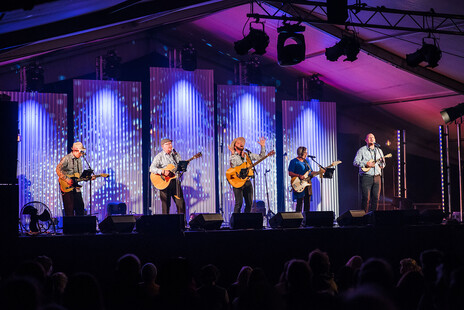
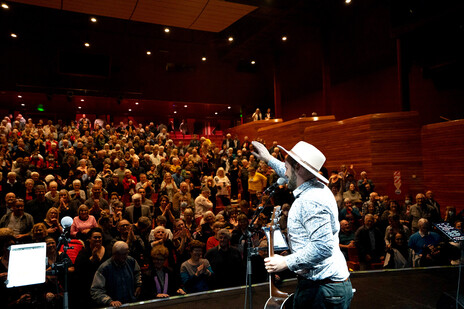
Who were these obviously skilled country music singers and pickers who were singing in te reo Māori and even shoehorning yodelling into traditional waiata?! Later they had the audacity to add te reo versions of bangers such as ‘Listen To The Music’, ‘Country Roads’ and ‘Go Your Own Way’. On paper, it shouldn’t have worked. But it did; Māori and non-Māori alike were enthralled.
Invitations rolled in to play at marae, festivals, parties and other venues
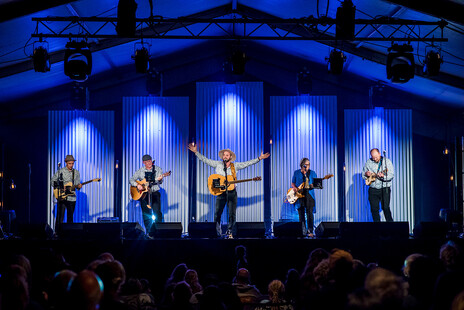
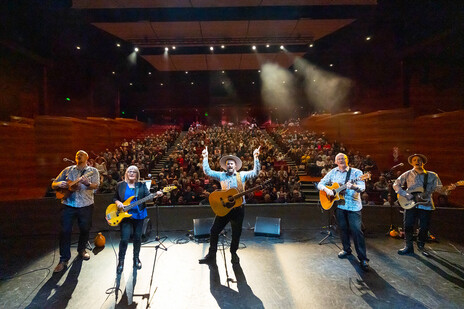
Invitations rolled in to play at marae, festivals, parties and other venues, and the jam videos grew to include collaborations with acts including Pere, Ria Hall, The Topp Twins, Dennis Marsh, and Marian Burns. On stage they were joined by Pere Kohu, guitarists Lance Murch and Dan Cosgrove, and Hamilton County Bluegrass Band banjo player Paul Trenwith.
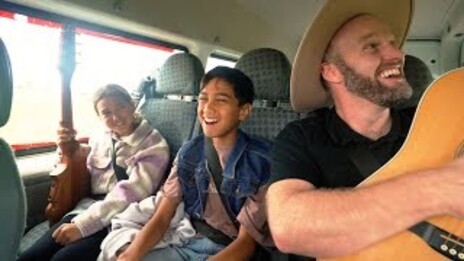
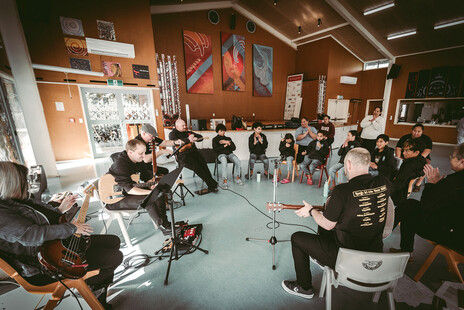
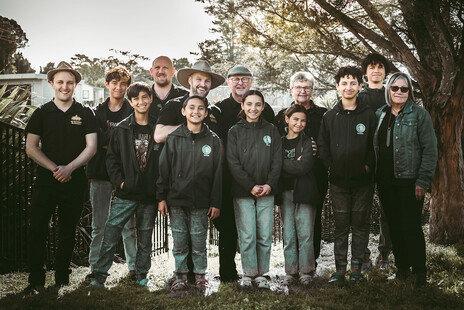
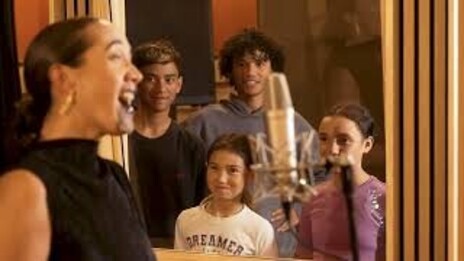
Released in early 2026, their third album, Manawa, was a collaboration with Northland tamariki singers Te Whānau Mānihera. “I always wanted to make a kids’ album after hearing the amount of kids’ songs in the world that aren’t in great keys for kids to sing in,” said Jeremy Hantler. “And I really wanted to create an album for students and students of te reo Māori where kids would sound great singing them in their school halls.”
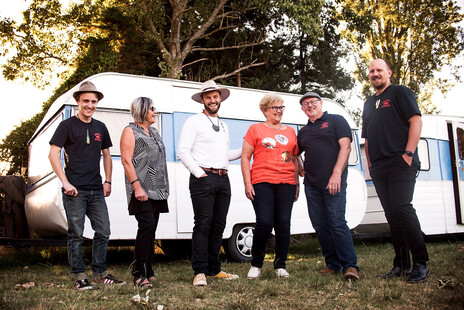
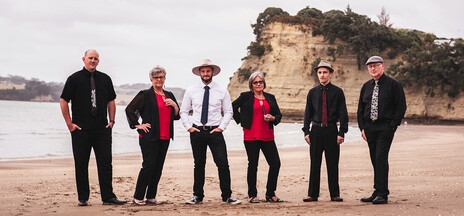
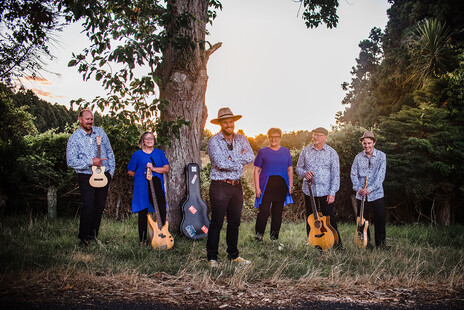
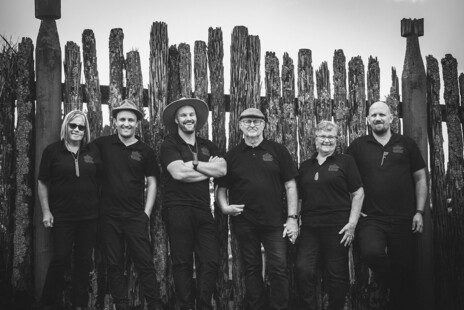
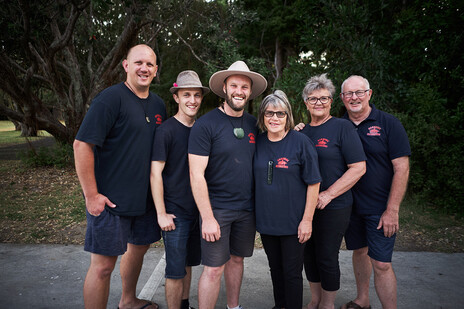
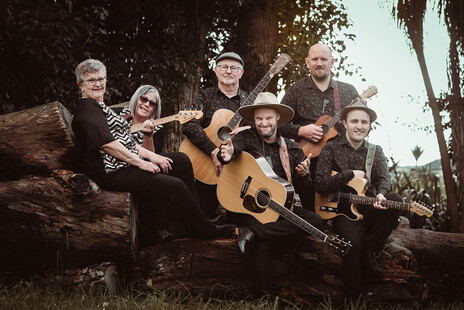
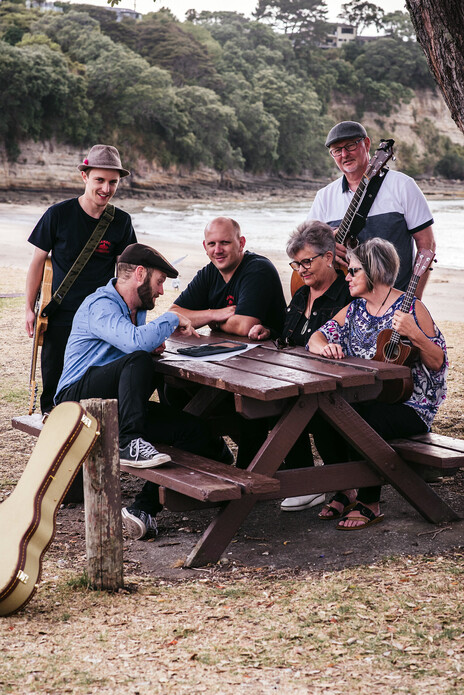
The Harmonic Resonators are made up of Jeremy Hantler, his parents Renny and Jenny Hantler, bass player “Aunty” Sharon McIntyre and her son Ryan McIntyre, and electric guitarist Ryan “Guv” Monaghan. The Hantlers and McIntyres met at the Morrinsville Country Music Club in the 1990s, but The Harmonic Resonators didn’t start playing together until the late 2010s.
Jeremy and Jenny whakapapa to Ngāi Tahu, and the McIntyres whakapapa to Tainui waka on Sharon’s mother’s side, and Ngāti Pāoa, Ngāti Maniapoto and Ngāti Raukawa on her father’s mother’s side.
The band’s championing of te reo came about while Jeremy was teaching at Welcome Bay School near Tauranga. He picked up on a song called ‘Tauranga Moana’ that talked about the two main iwi in the area. “The three schools I was teaching in knew it and we decided that we would do that song at the pub and have a singalong,” he said.
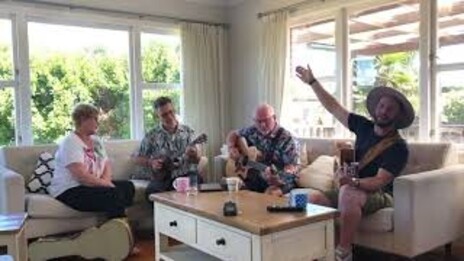
They uploaded a video of their countrified ‘Tauranga Moana’ rehearsal in 2018, and it blew up. “People thought it was a crack-up. They’d never heard that sort of spin on it. We sorta jazzed it up a bit. It’s a good song from the outset. The local Māori community thought it was really cool. They were really into it.”
a video of their countrified ‘Tauranga Moana’ rehearsal in 2018 went viral
At one point Jeremy received a text from a tangihanga at the Wairoa Marae in Tauranga. “It said, ‘Everyone was super sad and then someone showed all the aunties this video of you cowboys doing ‘Tauranga Moana’ and now they’re all cracking up!’ They said it was just a complete vibe shift and they loved it. We ended up being invited to play a show at the marae a little while later.”
An even more countrified performance followed when they uploaded ‘Ka Pioioi’ with Jeremy adding a yodelling intro and outro. “That one sorta put us on the map and people started hitting us up. Then we just started to do songs we liked, and it happened quite organically.
“At that time, we’d play at The Rising Tide [in Mt Maunganui], we’d do a couple of Māori songs, and we’d do some pop covers and then we started getting marae gigs, so we’d do a set of Māori songs. We started trying to do a local song when we played in an area, so we’d reach out to people.”
The tricky part sometimes was getting permission to perform the waiata, particularly with the origin of some in dispute. Other times, the whānau of a deceased songwriter believed they wouldn’t have looked favourably on being covered, as was the case with ‘Te Rina’, written by Tommy Taurima for his granddaughter of the same name.
“I talked to Te Rina on the phone,” Jeremy said, “and she was like, ‘Yeah, he just wouldn’t like it. He just liked kapa haka. The whānau would love it, but he would sit there and go nah!’ Every time we’ve tried to do that tune the camera’s stopped, the audio recorder wasn’t working, the camera shifted, just weird stuff. So, we just don’t do that.”
Surprisingly, Jeremy only stumbled upon his crystal-clear yodel in his 20s and it followed an interest in traditional Māori instruments and their varying timbres and sounds. “That whole game is less melodies and chops and it’s more just great pure tones and stuff, and there’s a lot of singing associated with that,” he said.
“Then I sort of got into the fact that the voice is the king of all the instruments and explored different things to do with the voice. I got really into throat singing for a while. Then I sort of realised I could yodel, and when I went back to the country music club to visit, I did a yodel just for kicks and it went down really well.”
A few pointers from Gore-based 1960s recording star Max McCauley (whose first three Viking Records EPs were Yodelling Out West, She Taught Me To Yodel and I Was Born To Yodel), and a YouTube deep dive, and Jeremy was off running. “The main reason I yodel now is just the way it makes you feel. It’s a real joyous sort of thing. You’ve gotta choose your moment, but people love it!”
Yodelling is “a real joyous sort of thing. You’ve gotta choose your moment, but people love it!”
Hastings-born Renny Hantler met Jenny Bunz at the New Zealand Country Music Star Awards in Tauranga. They married in 1982 and were members of the Napier City Country Music Club until Renny’s job at the New Zealand Post Office took them to Jenny’s home town of Christchurch in the mid 1980s.
Although music was rarely played on the stereo at home, the couple and their children – Suzanne, Matthew and Jeremy – were always making music. “We were always singing, always singing in the car,” Jeremy said. “Just classic country tunes. The Seekers were common, Dad played a lot of John Denver, ‘Mississippi’, ‘Thank God For The Radio’. Anything that had only three or four chords and had poppin’ harmonies was popular in our space.”
Having played in bands in Hawke’s Bay and Christchurch, Renny was looking to concentrate more on family when the Hantlers moved to Hamilton in the 1990s. They became members of the Morrinsville Country Music Club that provided an outlet for Renny’s playing in a family-friendly environment on Friday nights.
Bass player Sharon McIntyre (née Reidy) joined the Morrinsville Country Music Club in the second half of the 1980s. “I suppose it was probably within a year of joining I entered in my first awards while heavily pregnant with Ryan, singing duets with my sister Denise as The Reidy Sisters,” she said. When Ryan was around six, the Hantlers joined the club and he and Jeremy, who was around the same age, became fast friends.
Having done an honours degree in jazz drumming at university in Wellington, Jeremy was over being a drummer by the time he and wife Steph moved to Auckland. “You’ve got to be the first there and the last to leave.” He formed a band with friends where he could be the frontman and get back to singing the unpretentious music he’d grown up on. They called themselves The Harmonic Resonators.
After recording some songs and playing sparingly, the band folded when Jeremy moved to Tauranga in 2017. But he loved the band name and got the blessing of the others to use it when he started playing gigs as The Harmonic Resonators with his dad, who was still living in Hamilton.
“I got a gig here [in Tauranga] to give them the excuse to come over the hill to The Rising Tide,” Jeremy said. “And I used local guys, even hot jazz players, but it’s hard to just play simple bass. Actually, the trick is knowing a thousand songs, it’s not having chops to burn. Before long we thought, ‘Let’s get Aunty on the bass. She knows all the tunes.’”
With “Aunty” Sharon McIntyre on bass, they added electric guitarist Ryan “Guv” Monaghan, then in his teens. “I was a country music club kid,” said Guv. “I started there in 2013 just playing guitar for my sister then eventually began to sing myself. Jeremy and I played together for the first time in a covers band in Tauranga. We played a few gigs before he asked me to come and play for The Resonators.”
a “wholesome” scene started to build at The Rising Tide Brewhouse and Eatery residency
Quickly, a scene started to build at The Rising Tide Brewhouse and Eatery residency. “It was really wholesome,” Jeremy said. “It’s kind of a pub; there’s a lot of kids playing around. Mum always used to sit in and sing the last few songs. I do remember people being like, ‘Whoa,’ and the odd little tear. It was going off there and then we started getting offers to play other places.”
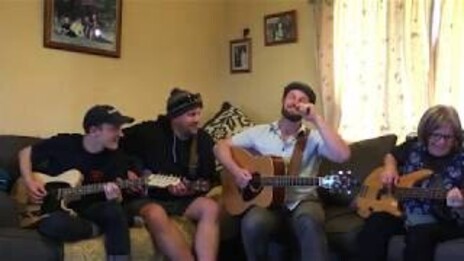
Whenever the band rehearsed, Sharon would bring along son Ryan, nicknamed Mac, Jeremy’s boyhood partner in crime. They’d play through the pre-determined new song and Mac would add a harmony. Before long he started appearing in their lounge-room Facebook and YouTube videos.
With an impending appearance before the Māori King at Tūrangawaewae Marae in December 2018, Mac was added as a permanent member. “I thought, ‘Well, he’s Tainui waka, and I think it would be really special for him to be in the band.’ He’s really found his niche. He’s got a lot of ukulele fans, and he also can sing a low C.”
When thinking of country songs to add, The Harmonic Resonators called on Renny’s archive of more than 5000 chord charts produced during over four decades as a backing musician at country clubs and awards shows. “He’s got the bank,” Jeremy said. “It’s on the Google Drive now, and you go in there and any bloody country song in the world almost is there. ‘I’ve got a chart for that!’ And then there it is in five keys!”
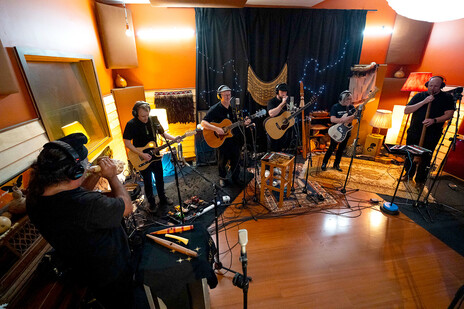
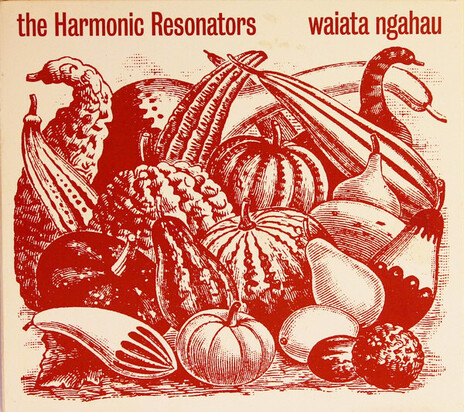
Their first album, Waiata Ngahau (2020), was recorded at Red Room Studios in Auckland with money put aside from gigs. It included favourites from their couch recordings, an a capella rendering of Hirini Melbourne’s ‘Purea Nei’, Les Wilson’s yodelling anthem ‘Rockonover River’, and even Lorde’s ‘Royals’.
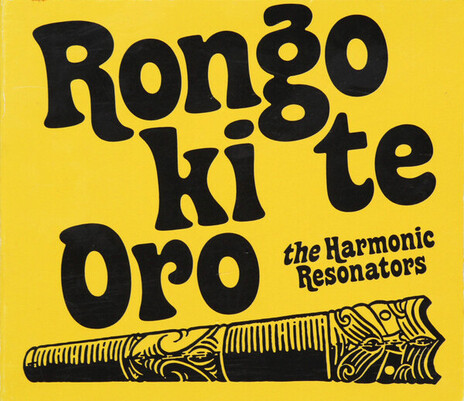
For Rongo Ki Te Oro, released in 2022, The Harmonic Resonators received funding from Te Māngai Pāho, the government agency charged with promoting the Māori language and Māori culture on radio and television. It was engineered by Evan Pope at Studio 11B in Tauranga.
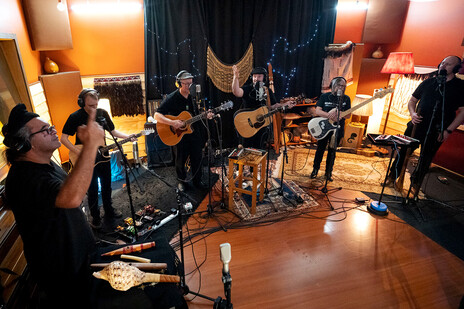
“Rongo Ki Te Oro was recorded straight live,” Jeremy said. “We videoed every track, which was ill-advised in terms of vibe, perhaps, but it captured what we did, which was just play live. It was a bit rough around the edges, but it also meant a hell of a lot less editing! We knocked out a whole album in a weekend.”
Affectionately referred to as “the Yellow Album”, it included te reo versions of pop hits by The Doobie Brothers, Bill Withers, Coldplay, John Lennon, Bonnnie Raitt, Elvis Presley, John Denver, and Fleetwood Mac, Tami Neilson’s ‘Roimata’, and a charming ‘Kaitaraiwa’ – ‘Cab Driver’, a harmony-heavy hit for The Mills Brothers in 1967 covered by practically every Māori club band thereafter.
the ‘Rongo Ki Te Oro’ Album included te reo versions of pop hits by many international acts
The translations into te reo were first undertaken by Jeremy before being run past his former tutor at Te Wananga o Aotearoa, Justin Kereama, for a big ka pai or a “let’s redo that one”.
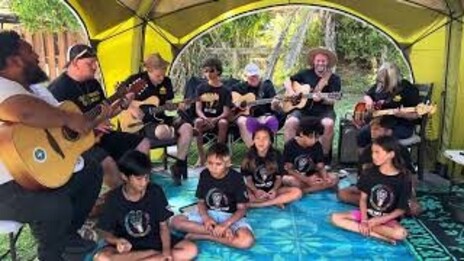
The seed for a children’s album was sowed when The Resonators shared a green room with Te Whānau Mānihera when both played the main stage at the Waitangi Treaty Grounds on Waitangi Day 2025. “We ended up popping around to their house the following day for a big jam,” Jeremy said, “and a video of the song ‘Whakarongo’ on their front lawn went down really well online.”
Jeremy reached out to Te Māngai Pāho and the project became a reality. “The whole whānau came down to Tauranga and stayed at Waikari Marae while we did all the tracking at Studio 11B with Evan Pope. Manawa is, like, a proper studio recording where we tracked things individually and we could get some levels and make it sound really good coming out of the stereo.”
Boasting a touring party of 10 to 12 and after playing the likes of wharekai, 80th birthday parties, theatres, and even Splore Festival, The Harmonic Resonators are looking to ease back on playing around the country in 2026. “We’re super excited to tour this project [Manawa] through Hamilton, Tauranga and Whangārei this year, but after that we’ll play every six weeks or so and focus on jamming,” Jeremy said. “The band is just super keen to keep meeting up in the lounge and playing music.”