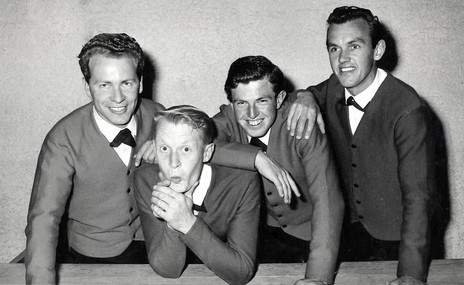
Born in September 1937, Malcolm Marshall was raised in Orari, about 8km south-east of Geraldine, in a house that sat between the town’s railway station and its racecourse. “They used to unload the horses off the train and walk them up the road past our house to the racecourse,” Marshall told AudioCulture. “The trains used to stop there and in those days, they had to unload all their coal into trucks and send it up to the town of Geraldine. It was quite a busy place.”
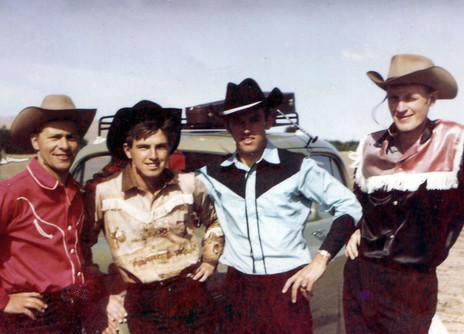
Marshall was a young fan of Australian singing cowboy Smoky Dawson’s radio programmes
Early on, Marshall became enamoured of Australian singing cowboy Smoky Dawson’s radio programmes that were broadcast on New Zealand stations. He befriended the musical Patrick brothers, who lived just a few doors away, and they started teaching him to play guitar.
When a concert party out of Timaru came to the Orari Hall, Marshall was one of the first in line to get in. “I heard these singers with their guitars, singing all these lovely songs, and I just fell in love with it from the start,” he said. “I wanted to be like that; I wanted to be able to sing on stage.”
On a return visit, the party’s singer and guitarist Lex Sinclair offered to give Marshall guitar lessons once a month. “He said, ‘If you come into Timaru, I’ll teach you. You can learn what I tell you, and you can [practise] that for a month and come back.’” Sinclair went on to join The Plainsmen and played upright bass on their first LP, … And Then We Wrote.
Marshall saw Cole Wilson and The Tumbleweeds when they toured Canterbury, and when Wilson appeared solo in Geraldine, Marshall and a friend bicycled from Orari to see the show. They were even invited to sing on stage. By that time, Marshall was a student at Timaru Technical College.
Also at the college, although a few years younger, was Malcolm Lilley, who sung in the school choir, played euphonium in the school band, and was a competitive track cyclist. Born in Christchurch in July 1940, Lilley spent time in Sumner before the family moved to the small rural community of Levels and then on to Timaru.
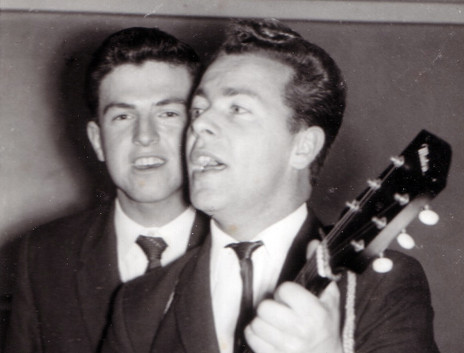
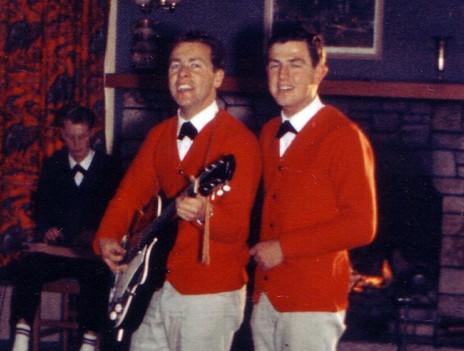
By the time Malcolm Marshall moved to Timaru, in 1957, Malcolm Lilley was an apprentice carpenter with A V Martyn. They first sang together at a party and were impressed by how well their voices blended. Calling themselves The Two Malcolms, they set about working up a repertoire.
In his self-published autobiography, Marshall wrote: “We practised very hard over those next months and sang wherever we could; at friends’ places, house parties, concerts and eventually, in 1958, we were invited to sing on Caroline Bay at a Christmas concert afternoon.
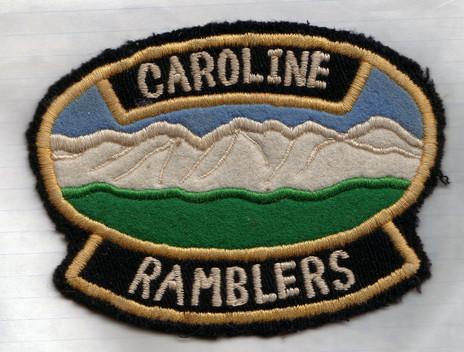
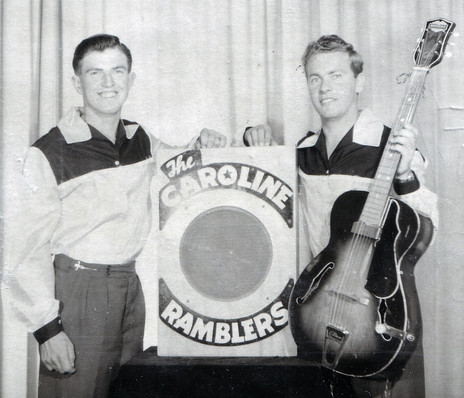
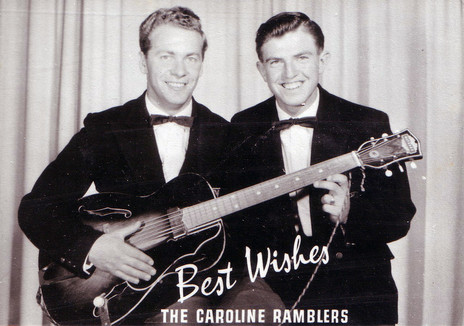
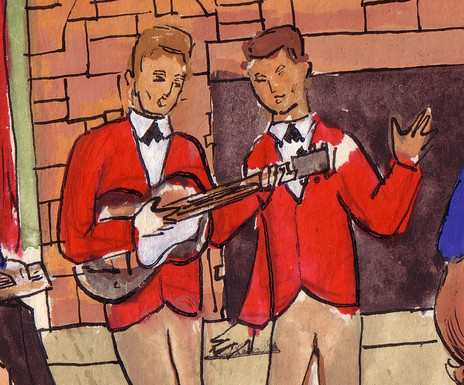
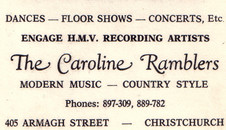
“This was a real breakthrough and gave us encouragement to keep on going with our singing. Up until this time we were known as The Two Malcolms, but we really needed a stage name just like a number of other local groups of that era: The Trail-riders, The Picasso Trio, The Plainsmen, and The Saddle Pals. After a lot of thought, we eventually adopted the name of The Caroline Ramblers, named after Timaru’s very popular beach, Caroline Bay.”
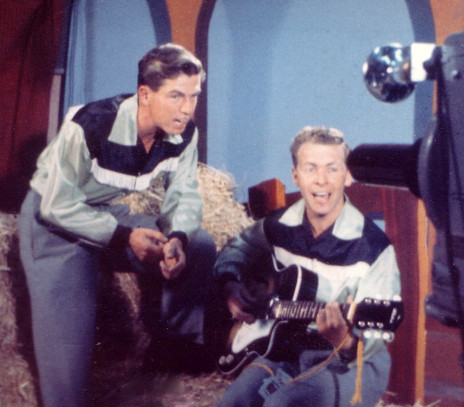
The duo became The Caroline Ramblers, after Timaru’s popular beach, Caroline Bay
The Caroline Ramblers auditioned for radio station 3XC in Timaru and made their first live broadcast from there in October 1960. They presented several 15-minute shows on Timaru Presents, in rotation with The Plainsmen, and Jack Denley and The Trail-riders.
Soon after, they moved to Christchurch, Lilley transferring his apprenticeship to future mayor Maurice Carter’s Carter Group. They played dances, cabarets, night clubs and concerts, were broadcast on 3YA and 3ZB, as well as Wellington’s 2YA, and were guest artist at the 1961 Miss New Zealand Contest in Dunedin. “Plenty of singing engagements were available for us, as this was the era that cabaret and floorshow guest spots were springing up everywhere,” Marshall wrote.
In September 1961, The Caroline Ramblers took third place in a Wellington talent quest sponsored by HMV, and a week later won a quest in Blenheim where the prize was a trip to Australia’s Gold Coast. During their six-week stay, they performed guest spots with local artists.
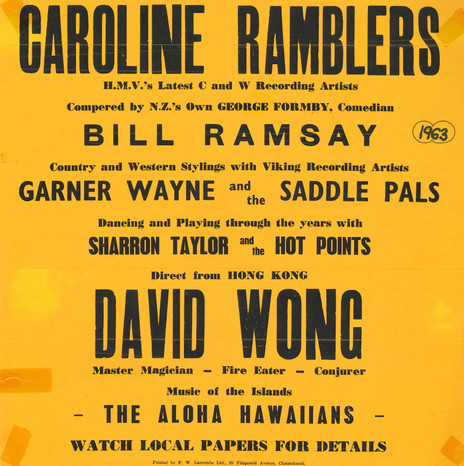
After sending a demo tape to HMV, The Caroline Ramblers were invited to Wellington to record. “As Rex Franklin predicts, 1963 may be a bumper year for local C&W artists,” New Zealand’s Country & Western Spotlight reported at the time. “Several new voices will appear on records this year. HMV have signed a Christchurch group, The Caroline Ramblers, who will be recording an EP in April.”
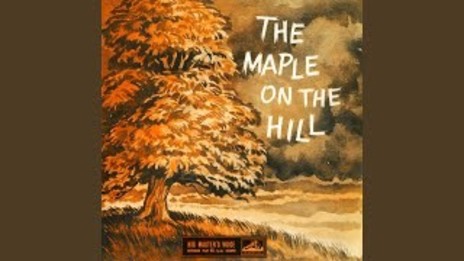
Augmented by session men Slim Dorward (bass) and Jim Baker (guitar), The Maple On The Hill was released later that year. The title track had been a hit in New Zealand for The Tumbleweeds in 1950, and had no doubt stuck with Malcolm Marshall since seeing The Tumbleweeds years earlier.
The Caroline Ramblers added steel guitarist Jim Morrison, and lead and bass guitarist Dave Johnston to the line-up in time for Friday night appearances on 3ZB’s Soundstage 1963 and a Saturday afternoon residency at the Pinehaven Restaurant in Kaiapoi.
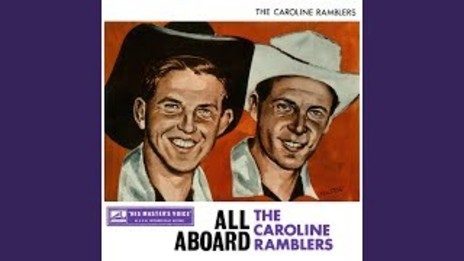
It was this extended band that travelled to Wellington in January to record more tracks for HMV. In his Country & Western Spotlight column, Marshall revealed that they had “left 10 songs in the can for a future EP” and had recorded two programmes for 3YA. The EP that followed, All Aboard, included a rollicking take on Tex Morton’s ‘Freight Train Yodel’ with Morrison’s steel guitar to the fore.
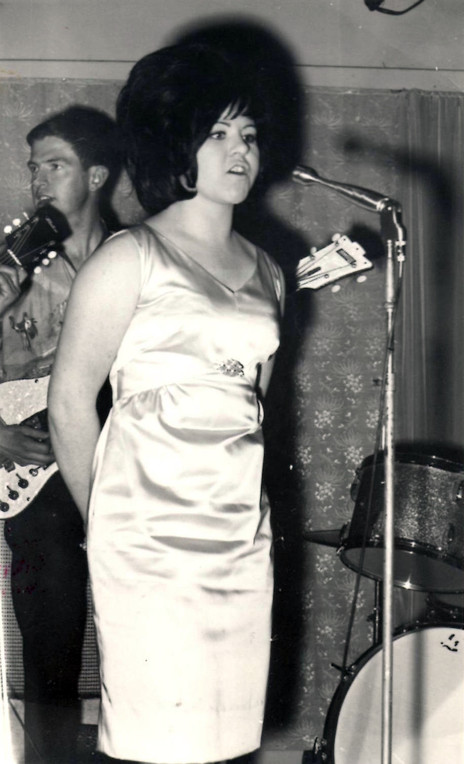
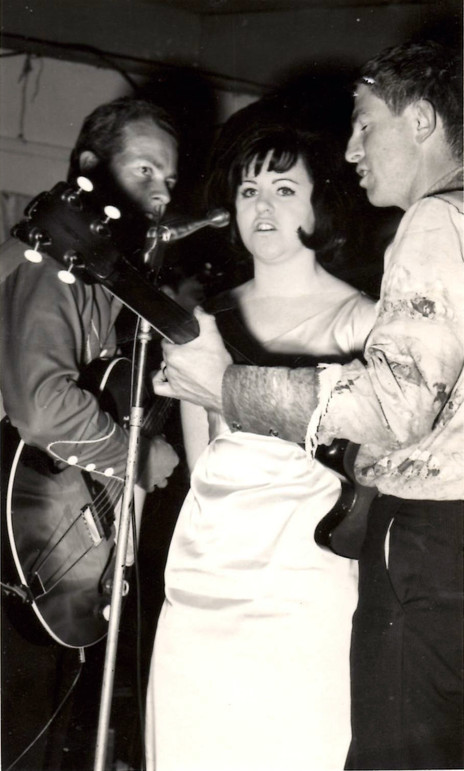
The Caroline Ramblers took on a popular residency at the Rendezvous Dance Hall in Christchurch, where they also backed floor show guests such as Max McCauley, Des Knight and Rangiora teenager Val Elliott. Guitarist Johnston’s day job took him to Ashburton, and he was replaced by Steve Mulqueen. The band also added drummer Dave Dunbar.
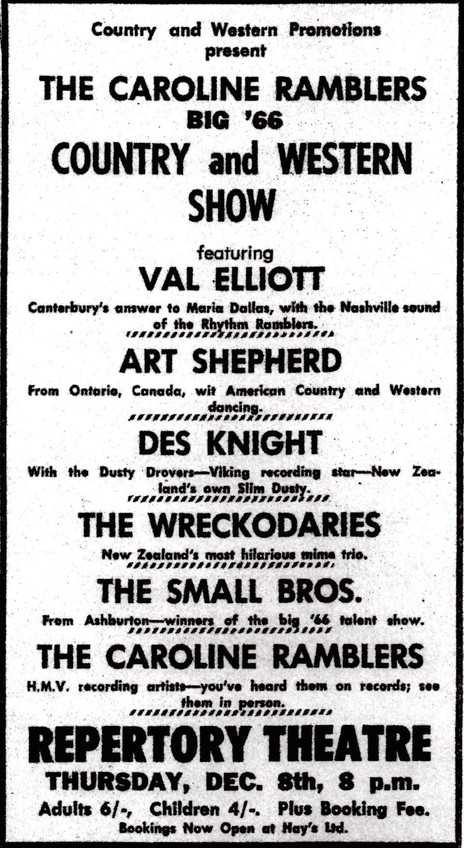
In 1966, The Caroline Ramblers switched from HMV to Salem Records, the label set up by former Viking employees Peter Caithness and Dennis Bailey. The band’s 66 Variety Show toured through the second half of the year and included guests such as Des Knight and The Dusty Drovers, Val Elliott and The Rhythm Ramblers, Ashburton’s The Small Brothers, and former Rambler Dave Johnston.
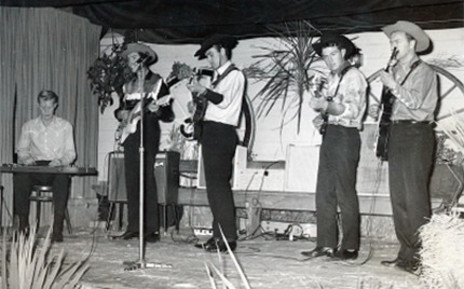
In his Country & Western Spotlight column early the next year, Malcolm Marshall announced the band’s demise. “Christmas time saw the finish of the stage and recording name of The Caroline Ramblers. Due to Malcolm Lilley and lead guitarist Steve Mulqueen going into retirement, and steel player Jim Morrison and drummer Dave Dunbar taking on full-time dance-band work, we found it impossible to continue as a group.
“the recording world is a hard climb, as only recording artists themselves know”
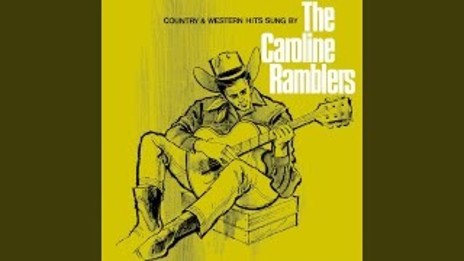
“I’d like to take this opportunity, on behalf of myself and the boys (including ex-member Dave Johnston) to thank all our fans and everyone who helped us climb up into the recording world. It’s a hard climb, as only recording artists themselves know.” The already-recorded Country & Western Hits Sung By The Caroline Ramblers was released in 1967.
Mark Lilley, son of the late Malcolm Lilley, believes he could be partially responsible for his dad’s retirement from The Caroline Ramblers. “I am the oldest child, born in July 1967. So, Mum was pregnant with me in December 1966. She doesn't remember any reason in particular for The Ramblers’ dissolving then, but likely, at least in part, my fault,” Mark Lilley quipped.
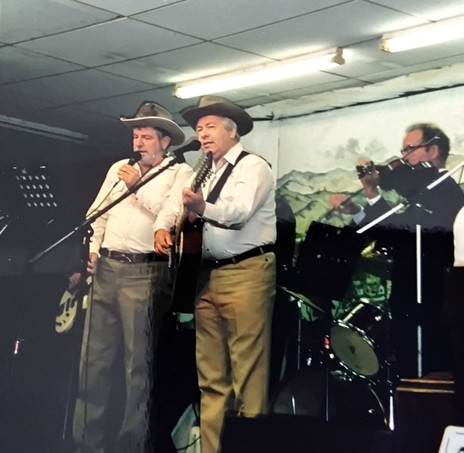
A few years later, Malcolm Lilley ventured back into live music, forming The Royal Knights with his former bandmates Dave Johnston and Jim Morrison. After that, all three were in Laredo Country, named after a range of cowboy boots stocked by Johnston’s shoe shop in New Brighton. Variations of that band lasted several decades, working with Patsy Riggir and often being enlisted as backing musicians at the New Zealand Gold Guitar Awards in Gore.
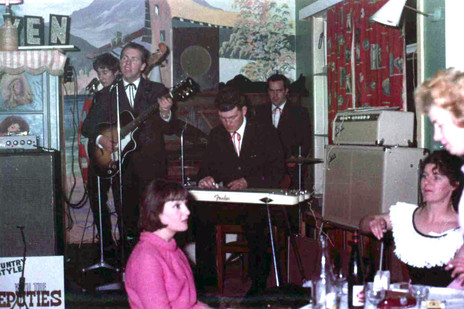
When The Caroline Ramblers wound up, Malcolm Marshall took over the band’s engagements, including the weekly Rendezvous Danceway, with a new group, Mal Marshall and The Deputies. Joining him were Murray Charteris on steel guitar, Dave Hamilton on violin, Roger Fairbrother on bass, and Herb Olsen on drums. Merv Thomas replaced Fairbrother [note: not this Merv Thomas], and by the middle of 1967, they were gigging as Malcolm Marshall’s New Caroline Ramblers.
In the early 1970s, Marshall went solo under the name Smokey Marshall, as a nod to his earliest inspiration Smoky Dawson, and at the end of that decade released South Island Country Songs And Other All Time Greats on Hoghton Hughes’s Music World label. He continued to independently release cassettes as a solo artist or with his own Smokey Marshall’s Old Time Country Band, which included his wife Lorraine on keyboards.
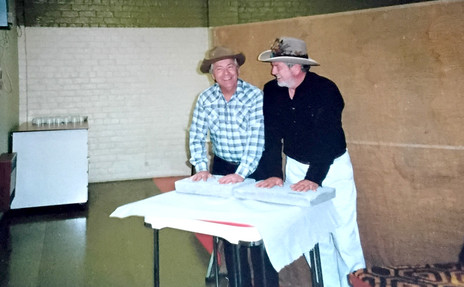
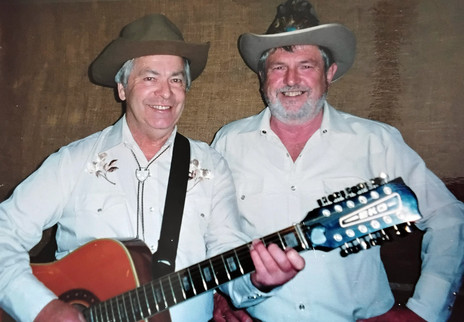
The original Caroline Ramblers, Malcolm Marshall and Malcolm Lilley, were included in the Gore Country Music Club’s Hands of Fame monument in 1999. Malcolm Lilley passed away on October 9, 2022.