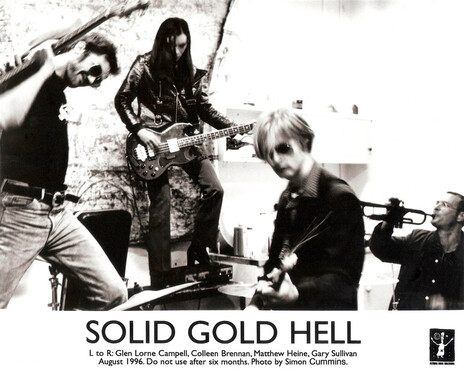
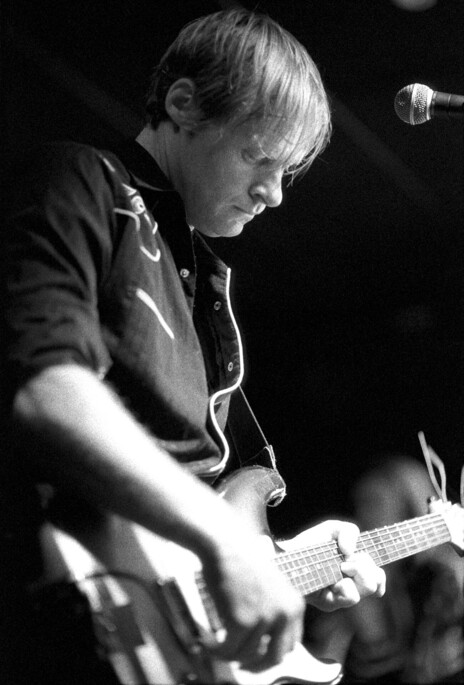
The band was formed by singer Glen Campbell and guitarist Matthew Heine. Both were former members of S.P.U.D., a band which focused on wild, assaultive drum beats and ferocious guitar lines, over the top of which Campbell would half-scream out nearly indecipherable lyrics.
Campbell and Heine always shared a far wider range of influences than this post-rock noisiness might lead you to expect. They loved loud bands such as Black Sabbath, but equally the unrestrained experimentation of Trout Mask Replica by Captain Beefheart. Heine’s father Derek was a jazz player, which had an influence on his musical interests, though he passed away when Matthew was still a child.
After S.P.U.D., Glen Campbell and Matthew Heine still wanted to work together
S.P.U.D. came to an end around 1992, after bassist Peter Buckton announced he was leaving. Campbell and Heine decided the band had run its course, but still wanted to work together. Heine found they naturally began moving in a slightly different direction from their former group: “S.P.U.D. was pretty complex rhythmically, but we wanted to do something slightly more groove based. There were already a few ideas and riffs that I was demoing. Among those very early songs were ones like ‘Bitter Nest’ and ‘Skinny Kitten’. We knew Gary Sullivan from S.P.U.D. playing with JPSE [Jean-Paul Sartre Experience], but one day I saw him on K Road and I happened to have a couple of Pere Ubu records I’d just bought and he seemed quite interested. I realised we had a bit more common ground rhythmically than I’d thought. Gary was keen to do some stuff outside of JPSE so he came on board.”
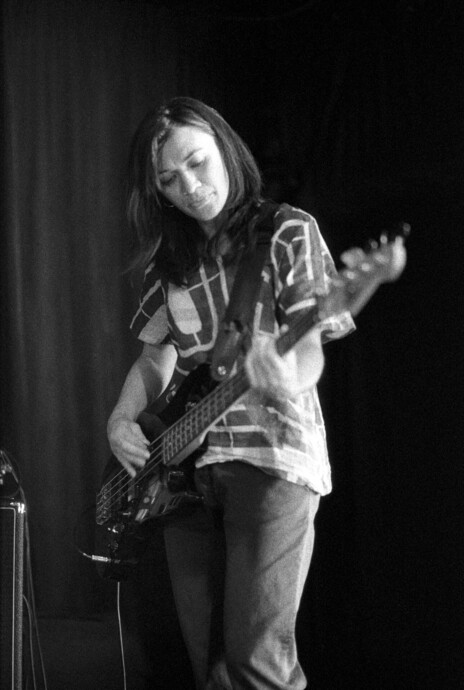
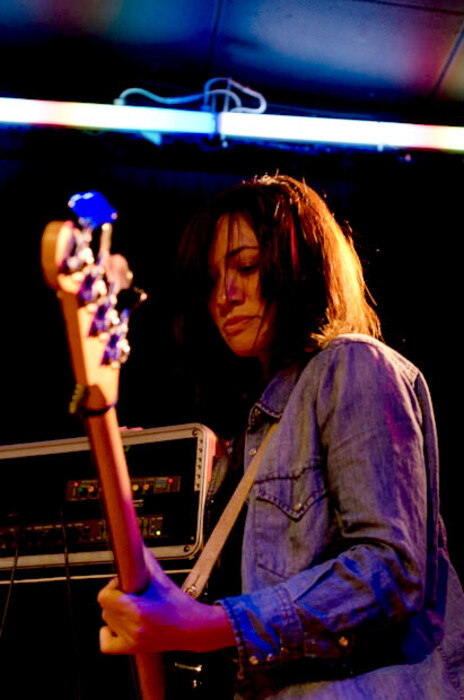
The final member of the band was bassist Colleen Brennan from the group Squaw (fronted by Cameron Bain), who were part of the Frisbee collective of bands. Heine liked the group so much that he joined them on drums.
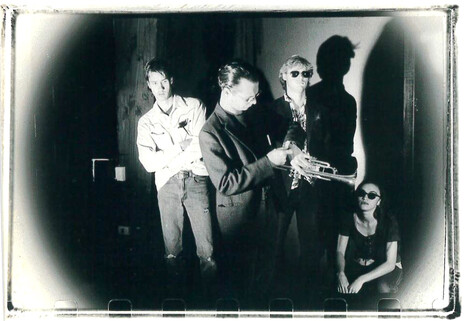
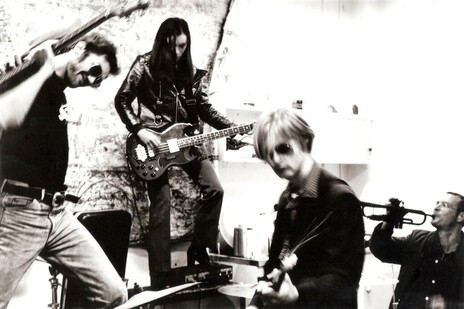
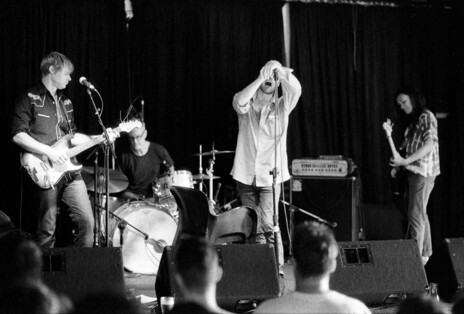
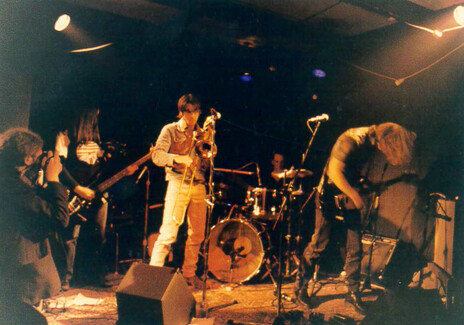
Solid Gold Hell replaced the heavy forward drive of S.P.U.D. with an off-kilter swing feel. A hint of jazz influence also came through in a warped way with their decision to add horns, despite not having any members who could play – Campbell would torture a trombone while Sullivan drummed one-handed so he could blast notes from a trumpet. So far, so unhinged.
Heine and Brennan were both sound engineers, so they also put their minds towards getting the most sludgy, ominous, distorted sounds out of their instruments. One of their early shows was joining Squaw at Riverina bar in Hamilton and by the end of 1993 they’d played their first international support, opening for Shellac at The Gluepot. They started the following year with a slot at bFM’s Albert Park Summer Series and took the chance to support Sullivan’s band, Jean-Paul Sartre Experience.
Their first recording session took place at the former Kiwi Bacon Factory in Kingsland.
“Bob Frisbee had a space upstairs in that building,” says Heine, “but we took a more grotty area where the old chillers were. We transported a 24-track using a taxi van and set up for a weekend. We basically didn’t go to bed. It would’ve been nicer to record somewhere less damp, but it had nice-sounding rooms.”
Nick Roughan recorded and mixed the sessions, which Heine found was useful since it was less stressful for him not to have to both play and engineer. The band were big fans of Roughan’s work in the Skeptics, so it was a good fit, given the emphasis on capturing the rhythm of a band playing together in a room.
‘Evil Cabaret’ was described as “burnt, wayward, drunken Vegas cabaret blues”
The first result was the 7" single ‘Sugar Bag’, an old tune Campbell and Heine had started developing in S.P.U.D. Starting out like a surf song, it doesn’t get far before the riff is interrupted by a strained blast of trombone from Campbell. It is hard to say which was more gritty – Campbell’s rumbling vocals or Brennan’s deeply-fuzzed bass part. New track ‘Evil Cabaret’ was on the B-side, which the New York-based CMJ New Music Report described as “burnt, wayward, drunken Vegas cabaret blues – Jesus Lounge Lizards, as the press release so rightly says.”
As in this quote, the band were often compared to Jesus Lizard in a lazy manner, but they only had a loose similarity to that band. They sounded even less like the grunge-influenced guitar rock that was popular at the time.
“We were always mucking around with feel and timing,” says Heine. “We had a surprising number of 3/4 songs, like ‘Skinny Kitten’ and parts of ‘Hearse’ … I was always a little bit cynical about aspects of grunge. Nirvana had some tracks I liked, but I wasn’t interested in what grunge turned into. We were mucking around with ideas from jazz and other older styles of music, so I don’t think it was comparable. We did play with a few grunge bands and doing a show with the Melvins was definitely pretty cool.”
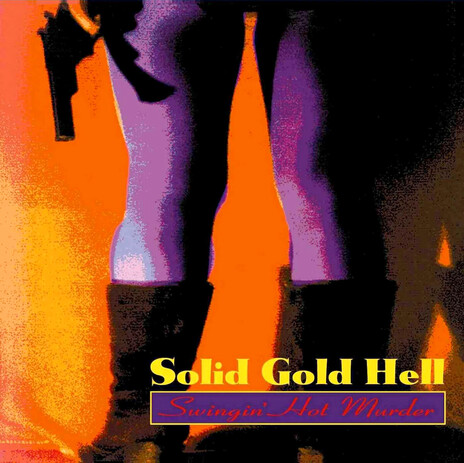
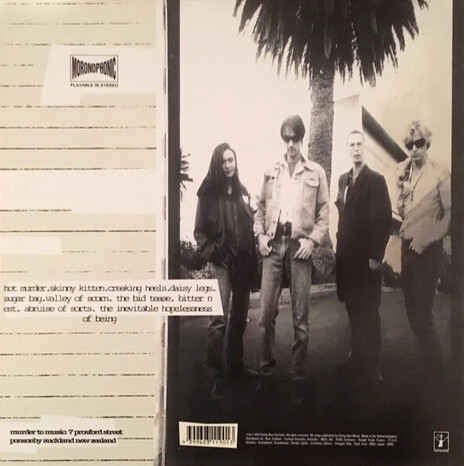
Heine also worked at The Lab Recording Studio on Symonds Street so they did sessions there to complete the album Swingin’ Hot Murder (1994). The opener ‘Hot Murder’ sounded almost industrial with its stop-start rhythm parts and drones of trombone, so it was all the more of a surprise when the next track, ‘Skinny Kitten’, started with solo piano and then moved into a 3/4 time signature. The album got noisier from there, with dirty guitars fighting against drums that refused to settle into a straight-forward rhythm. There was still room for a surprise at the end, with dark crooning track ‘The Inevitable Hopelessness Of Being’ sounding like an outtake by The Birthday Party.
The band backed the release with a set at the bFM Private Function event and a headlining show at Squid Bar. The following year, they appeared at the Big Day Out Festival, playing inside the Supertop tent.
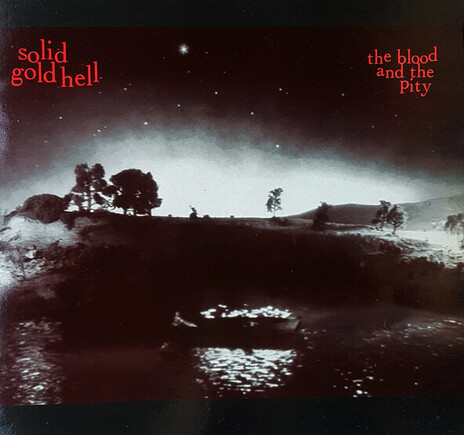
‘The Blood & The Pity’ album (1996) was recorded at York Street’s Shortland Street location
They booked the Studio B at York Street Recording Studio’s Shortland Street location (an old NZBC and TVNZ building) to record their second album, The Blood & The Pity (1996). Instead of using the main room they decided that a small, irregular-shaped wooden room at the back of the building would provide a more interesting drum sound. They also had the opportunity to slip into the main Parnell studio to record a couple of parts. Heine was pleased with how the band had developed.
“I still think the first record is good, but there is less of a vision than with the second record. It’s probably just because we’d been doing it a bit longer and we’d sort of developed into our own sound by then. There is a Southern Gothic element to it and also I’ve always been into jazz swing drumming, so there’s a lot of ideas that come from that. A song like ‘The Blood & The Pity’ is actually an odd take on ragtime, rhythm-wise. It’s junk jazz. On ‘Heavenly Badness’ the drum beat is almost like Bo Diddley. So here’s some quite old school ideas on that record, more than might be apparent at first listen. ‘Gloom Chaser’ is like a sick, fucked up sea shanty, especially in the lyrics. There’s a whole range of ideas on that album but it comes together into a coherent sound.”
Solid Gold Hell had signed to Flying Nun for both albums, so the music also reached listeners overseas. On one occasion, a journalist from UK magazine Melody Maker visited New Zealand to write about the label and wrote a live review of Solid Gold Hell at the same time, saying that given her expectations of Flying Nun, the band was “an atom bomb drop of a surprise”.
The band toured Australia supporting Kim Salmon and the Surrealists, and Rowland S Howard. This was a particularly fitting line-up since the name “Solid Gold Hell” came from the title of one of Salmon’s songs in his former band, The Scientists.
In early 1997, they returned to the Big Day Out, their scuzzy music providing an abrasive introduction to the event early in the day, though Heine found it worked well. “We played in the tent and, sonically, it had a nice boom to it, more so than the outside stages. That was even more apparent early in the day, so I remember enjoying our sets there a lot.”
As the nineties went on, Heine could see that the energy in the central city was moving towards dance music events rather than guitar bands and there were fewer places to play. At the time, it was hard to reach overseas audiences so – in a smaller city like Auckland – it was a struggle to keep a niche band like Solid Gold Hell going, especially with the tide against you.
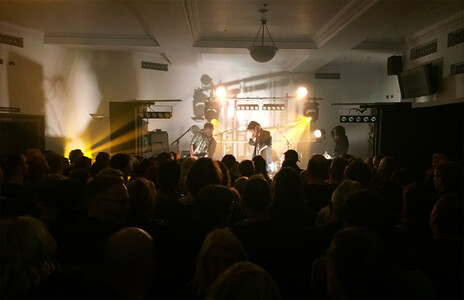
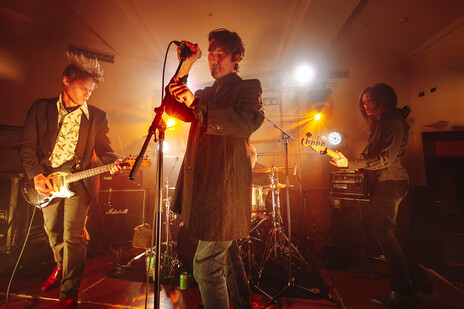
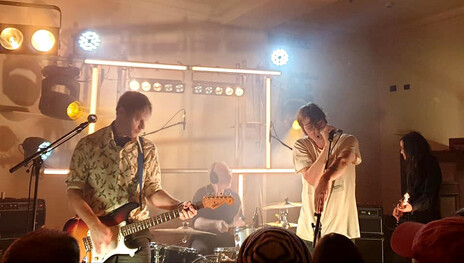
Solid Gold Hell faded away for over a decade before being asked to play a support slot for Ghost Club at the Kings Arms, as part of Flying Nun’s 30th anniversary celebrations. Heine was gratified to find that it only took a few practices to get back to their best and they went on to do more shows, most notably appearing at the Others Way Festival in 2015 and the Flying Nun 40th Anniversary event at the Auckland Town Hall in 2021.
Solid Gold Hell reunited for Flying Nun’s 30th and 40th anniversary celebrations
Outside of the band, most of the members have retained a connection to music. Sullivan had already begun playing with Dimmer towards the end of Solid Gold Hell’s initial run, and later formed Half Sister with his partner Greta Anderson (Superette) and Hermione Johnson (Ogadon and Drorgan). Heine continued to work as a sound engineer, both working with bands (he produced Loves Ugly Children’s album Showered in Gold) and doing sound for television. Brennan went on to play in the bands SF and Mothertrucker, then later in London joined The Mean Streaks (another band featuring Cameron Bain). She also worked as a recording engineer on Erny Belle’s acclaimed 2022 debut album, Venus Is Home.
Heine looks back on his time on Solid Gold Hell with fondness. “We did lots of great shows and I don’t recall too many that I’d consider terrible. We did a particularly good one with Dirty Three at @Luna on Symonds Street. Playing again more recently was enjoyable too. It felt like we’d had time to reflect on our music and having that distance made us a lot clearer about what it is that we do as a group. Though I’m most proud of our albums, because they’re a permanent record of what the band was like and I’m really happy with how they sound, even all these years later.”