AudioCulture
The noisy library of New Zealand music
Te pātaka korihi o ngā puoro o Aotearoa
Amelia Berry
aka Amamelia, The Forbin Project
Over the last 17 years, Berry has applied her skills as an instrumentalist, songwriter and producer to a range of bands and solo projects, including Nice Birds, Polyester (formerly Kip McGrath), Fimo, Old Chips, Pocari Sweat, Babyteeth, Gayblade, Van Staden & Böhm, The Forbin Project, and Amamelia.
Her solo project, Amamelia, a retrofuturistic dreamscape of breakbeat, jungle/drum & bass, techno-pop, downbeat and rave music, is arguably her most notable musical accomplishment. That said, Berry’s broader musical discography is an embarrassment of creative riches. Sometimes you can’t see the full picture until you look at all the details, and in Berry’s case, the picture is very full indeed.
The Early Days
Growing up on Tāmaki Makaurau’s North Shore, Berry discovered alternative music through her older siblings in the 1990s and 2000s. “When everyone else I knew was listening to the Backstreet Boys, I was listening to The Jungle Brothers and Kraftwerk,” she explains, speaking on a video call from Melbourne.
Being exposed to techno-pop, hip-hop, and electronica at a young age was a foundational revelation, but it had drawbacks. “It was annoying, because years later, I had to catch up on the Backstreet Boys when they came cool again,” she says, laughing.
Berry took piano lessons as a child, but what really turned her into a musician was the early 2000s pop-punk explosion. “Suddenly, Blink-182 were really big,” she says. “I wanted to play those songs, and I wanted to learn guitar.” She loved electronic music, but playing guitar felt realistic. “I’d been listening to these hip-hop and electronica CDs my siblings had, but I had no idea how that music was made.”
When Berry turned 15, she started a weekend job at a local supermarket. She recalled to the YOUR EX magazine/website in 2024, “Every Saturday I would get the bus to town after work and go to Real Groovy to buy bargain bin CDs – ones where I’d heard the artist’s name or the cover looked cool.” In the early 2000s, this sometimes meant Flying Nun compilation CDs.
As a lonely teenager, music became a big escape. “Digging was a big part of it”
As a lonely teenager, music became a big escape. “Digging was a really big part of it,” Berry says. “I’d go into the store and buy a My Bloody Valentine album, because I’d heard about it in an NME interview with Franz Ferdinand. I always think it’s interesting how accidents of history end up shaping people’s musical character.”
During these years, she began educating herself about music. “A lot of my experience has been older guys in record stores wanting to talk to me, or give me listening tips, because I know who [the groundbreaking gay US rock musician and actor] Jobriath is,” Berry recalls. “That’s happened to me many times. They want to take you under their wing and give you five other things to listen to.”
At age 16, she joined her first band and found a community in Tāmaki Makaurau’s all-ages music scene. “I met loads of people who I still know today,” Berry says. Outside school hours, she’d also visit a nearby friend and make music together. “I had hand-me-down gear from my older brother, my friend had fancy amps,” she says. In addition to his gear, Berry’s friend showed her the music software Cakewalk Sonar. “That was a big thing for me,” she says. Despite expecting she’d be making guitar music, her first recordings were ambient computer music.
Nice Birds, Kip McGrath
Berry’s next band was Nice Birds, a post-punk trio with guitarist Michael Macdonald and drummer Alexander Grant. In early 2010, they released their Swirly EP through the then Tāmaki Makaurau-based DIY label, Muzai Records. “When we played, people would tell us we sounded like Gang of Four,” she remembers. “Once you start listening to post-punk bands like that, it’s not far from there to early albums by Everything But The Girl.”
After high school, Berry enrolled at the University of Auckland. When Nice Birds ended, she was hesitant about another band. “I found it all too annoying,” she admits. However, she co-founded the five-piece indie-pop band Kip McGrath with Michael Garelja to play the 2014 edition of the Chronophonium festival.
Berry took on songwriting and guitar duties, with Garelja on bass, vocalist and percussionist Sylvia Dew, second guitarist Tane Marques, and a succession of drummers, including Reuben Winter and Keria Paterson.
At first, they wanted to sound like the influential 1970s US power-pop pioneers, Big Star. As things evolved, Berry and her friends realised they were more interested in sitting between vintage disco-funk and 1990s lounge revival records. “Chic and The Cardigans,” Berry says. They self-released two EPs, a self-titled debut (2015) and Sour Grapes (2016).
Kip McGrath prompted Berry to reconsider electronic music production. “I thought, I have to learn how to use the software now if I want to record my band,” she recalls. “The best way to do that is to make music you can make on your computer.” Another influence was her friendship with Winter, who taught her the basics of Ableton Live, a popular digital audio workstation (DAW), while they were flatting together.
An eye-opening experience was seeing live electronic music from Totems and Career Girls
An eye-opening experience in her late teens and early twenties was seeing Winter and his friend Lawrence Fergus Goodwin perform live electronic music under their Totems and Career Girls aliases. It was all still so mysterious.
Turning 18 and going to Ian “Blink” Jorgensen’s Camp A Low Hum festival was a real turning point as well. At the time, a significant shift was underway in the local alternative music scene, driven by rising interest in lo-fi beats, house, and techno emerging from London, Los Angeles, and Vancouver. There was something about these hazy sounds that felt welcoming to audiences raised on indie. “I have distinct memories of being in flats and a bunch of people I knew as guitarists, indie musicians specifically, putting on Mood Hut Records releases and saying, ‘Everyone should make music like this! This is the future!’” recalls Berry.
In the mid-2010s, she discovered a generation of British and US groups, such as Saint Etienne and Field Mouse, who blended indie, dream pop, and electronics into a sensibility the media dubbed “indietronica”. Berry was also fascinated by Japanese musicians Cornelius, Pizzicato Five and Flipper’s Guitar, who combined played and programmed music. These experiences made her realise she could make electronic music that bridged the gap with other genres she liked.
Polyester
Kip McGrath created a buzz in Tāmaki Makaurau, but then the penny dropped. They needed a new name. The rationale was simple: search online for Kip McGrath, and you’ll land on several pages of web links relating to a popular English and Maths tutoring system. In an increasingly online world, this wasn’t going to work. “We settled on Polyester because we were fans of [the indie-pop bands] Felt and Denim, and [the American filmmaker] John Waters,” says Berry.
Polyester released three singles, ‘Lucky Me’, ‘Different For A Boy’ and ‘Maybe’, leading to their self-titled debut album in 2018. The name change coincided with an increased emphasis on synthesisers and synth-pop production. Berry remembers the band’s reaction when she suggested these ideas. “Everybody said, ‘We’re not getting new members, so you’ll have to play the synths,’” she laughs.
Between 2016 and 2018, Polyester went from the band tacked onto the end of alternative hip-hop and laptop electronica show line-ups in inner-city venues to packing out venues, touring as a headliner, and performing at the 2018 local edition of St. Jerome’s Laneway Festival. “At the time, we felt like we were doing something that no other bands were really doing,” Berry says. “We were a pop band in a sea of math rock and loud, angular bands.” Later, she noticed a shift in the vibe: people were getting interested in synthesisers and disco again. Polyester helped lead the charge back to the dancefloor.
95 bFM
After finishing university, Berry returned to the campus at night to host a graveyard show on 95bFM. While she’d been studying, the Tāmaki Makaurau student radio station felt like a closed shop to her. Under Hugh Sundae’s management, things were different. Within a year, she was working as the station’s copywriter and hosting a specialist show on Wednesday nights.
Working at 95bFM, after a nine-to-five job at Auckland War Memorial Museum, was life-changing. In addition to copywriting, Berry would weigh in on playlist programming decisions, on-air content ideas, and discuss music all day long. If you listened to Amelia’s Secret, you were in for a treat. As she told Ableton in 2022, “You could tune in and hear an Ivor Cutler radio play into 20 minutes of socialist reggae tunes into Polish ambient synth from the 80s into a test flexi-disc demonstrating the capabilities of some old vocoder.”
After Polyester broke up, the logistics of forming a new band seemed like a nightmare
Polyester broke up near the end of 2018. When Berry thought about organising weekly practice sessions and the logistics of recording and touring, forming a new band seemed like a nightmare. However, after discovering the London-based proto-hyperpop record label and art collective PC Music several years earlier, she’d been producing breakbeat-oriented electronica.
“I’ve been messing around with electronic music, so I thought, ‘Why don’t I do that?’” she says. Thanks to the musical shifts in the mid-2010s, a few former indie rockers were playing weird dance music at tiny shows at venues like The King’s Arms sports bar. She performed with them under the alias Pocari Sweat, named after the Japanese sports drink, presenting a mix of chilled beats and messy lo-fi house tunes with breakbeats on top.
In June 2019, Berry released her first Amamelia single, a dreamy, breakbeat-driven bootleg remix of ‘Swing’ by the South Auckland rapper Savage titled ‘Drop It Low’. She recalls, “I’d actually started making the Savage remix years earlier, when I was first messing around in Ableton and trying to learn how to use that.”
Fimo
Although there was something there with Amamelia, it wasn’t her top priority. After Polyester, Berry still had a synth-pop itch. There was a set of demos she’d written and recorded for the band that needed to get into the world. After she connected with Moe Zass, who had previously been a member of Bandicoot, $noregazzzm, and scabs, she could see a way forward. “Moe [Zass] was keen to sing on my tracks,” Berry explains.
In February 2020, Berry and Zass released their first EP under the name Fimo. With True Love Fades, Fimo mapped out a sparkling, Polyester-adjacent synth-pop soundworld they dedicated to their trans and non-binary whānau. “There was something I really wanted to say with music then, and I didn’t know how to do it with Amamelia yet,” Berry reflects. “I only knew how to do it with synth-pop [like Fimo or Polyester]. It was about an emotional experience I wanted the listener to have.”
When Zass relocated to Australia, Fimo went on hold. “It was a weird time because I was doing a bunch of scrappy projects,” Berry says. “Fimo was probably the most important. The Amamelia stuff was fun, but I didn’t expect people to be that interested in it.” She remembers making improvised ambient performances in unconventional venues under the name Old Chips. Berry was also DJing house, disco, and italo at inner-city venues under the alias Mealy Worm, as part of the queer DJ trio PWB (Princess Womb Baby), alongside Princess Richard and Baby Zionov.
Amamelia
Not long after, the Tāmaki Makaurau-based publicist and musician Zac Arnold asked Berry to catch up over pizza. Arnold was starting an independent record label, Sunreturn, and wanted to release an Amamelia album. The offer was unexpected, but she went for it.
Around the same time, she was contacted by the Berlin/Manchester-based dance label INDEX:Records, asking her to contribute to a six-track EP of New Zealand electro, fittingly titled NZ Electro 2020. “I wasn’t making electro at the time, so they sent me an Egyptian Lover track as a reference,” she says. “It was more of a tribute to electro than a portrait of a scene.”
Three months into 2020, the country went into nationwide lockdown. Berry continued doing what she usually did with her free time: messing around with music in her bedroom. Ultimately, it proved to be productive. As well as completing an album, she formed a UK happy hardcore-inspired production duo, Van Staden & Böhm, with her then wife-to-be, Madison Van Staden, of the experimental pop group Moody.v & the Menstrual Cycle. Later, Berry and Van Staden began playing together in the queer pop-punk trio Babyteeth with drummer Sam Denne (Skody Banks).
Berry found making music with Madison Van Staden inspiring
Berry found making music with Van Staden inspiring. Similarly, digging into UK happy hardcore and early rave music unlocked something. She was equally blown away by the modern American producer/DJs Eris Drew & Octo Octa’s T4T LUV NRG label. “For whatever reason, UK happy hardcore had passed me by until then,” Berry says. “It was interesting in that it did something similar to what 1990s Japanese electronic music did, combining jangly pop with serious electronic production from a totally different angle. It really opened my eyes.”
WOW!
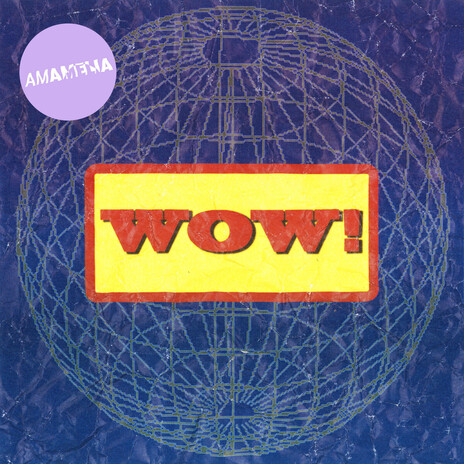
In October 2020, Sunreturn released Berry’s debut Amamelia album, WOW!. Inspired by early rave, UK happy hardcore, jungle/drum & bass and ambient electronica, Berry made WOW! stand out by imbuing it with some of the sugary pop sensibilities she cultivated in Polyester and Fimo. For ‘Hot Bitch Dot Zip’, she teamed up with her friends Baby Zionov and bb gurl, blending languid spoken word refrains with a marching percussive groove.
Two crucial album tracks were ‘Primavera’ and ‘Sad & Lonely’ featuring Jennifer-Rose Tamati, aka Junny. Today, Berry sees them as marking when she began using laptop music to convey emotion, as she had with her synth-pop projects. WOW! developed a cult reputation, leading to Berry being nominated for the Auckland Live Best Independent Debut Award and Favourite Solo Act at the 2021 Taite Music Prize and Student Radio Network Awards, respectively. Ultimately, she went on to win the Favourite Solo Act award.
Several weeks before the release of WOW, Berry’s friend Reuben Winter passed away. “He introduced me to a lot,” she reflects. “When I was making WOW!, a lot of what I was trying to do was impress Reuben. I thought, maybe I’ll make a track he will like.”
On the surface, Berry knows her story looks like she released an album that did well, then followed up with another that did even better. From her perspective, the reality was more complex. “He was the glue holding a bunch of disparate groups of people and scenes together,” she says. “After he died, I was in a bit of a hole for a while. I thought, ‘What’s the point?’ My idea of my story is that I put out an album people kind of liked, and then everything became very terrible for a while.”
While Berry was working through her feelings, the Amamelia train kept moving. When they’d started working on WOW!, Arnold proposed doubling the album’s life with a collection of remixes. Berry drew up a list of her favourite local producers, and he approached them. It all came together smoothly.
WOW! The 2021 Remixes, Van Staden & Böhm, Babyteeth, Gayblade
In April 2021, Sunreturn released WOW! The 2021 Remixes, featuring Liam K. Swiggs, Alexa Casino, Citacsy, Imugi이무기, Dbldbl x Trapjaw Kelpie, Tei & bb gurl, Jack Russell, Eyeliner, Big Fat Raro, and Go Nuclear. For Berry, the co-sign from her contemporaries and elders felt more significant than any music award.
Gayblade is the dungeon synth project Berry shares with Baby Zionov
That year, the Related Articles label released Van Staden & Böhm five-track EP, Hardcore. Berry and Babyteeth also self-released the Poser EP. Adding to the noise, the skaventhrone label released Craniofacial Pain by Gayblade, the dungeon synth project she shares with Baby Zionov. Berry also became an in-demand remixer for local and international acts, including Baby Zionov, cc(tv), Grecco Romank, Null Object, Samara Alofa & PollyHill, Imugi이무기, and Hallelujah Picassos.
Alongside remixes, Berry also found herself busy DJing and performing. In 2022, she came to Ableton’s attention, leading to a profile on their blog. In their words, “WOW! is a joyous, sun-kissed celebration drawing on rave motifs – breakbeats, chunky basslines – and matching them with pop sensibilities, all shot through with a queer panache that links the album to Berry’s other myriad ventures.” Things were looking up.
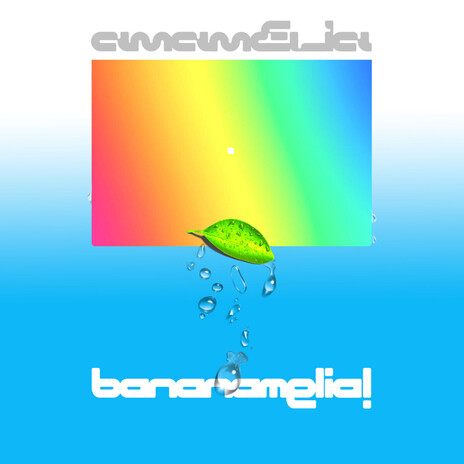
BANANAMELIA!
Unfortunately, it all got difficult again far too soon. Just before her 30th birthday, Berry was diagnosed with arthritis. Playing guitar became a struggle, putting an end to Babyteeth. After spending several years making music constantly, she had to come to terms with new limitations. As she began working on her second Amamelia album, Bananamelia!, Berry wondered if it was the last record she’d make. “My friend had died, I was chronically unwell, and I felt pretty bleak about the world,” she admits.
Before the Bananamelia! sessions, Berry deepened her interest in 1990s UK happy hardcore and jungle/drum & bass. She became interested in UK street soul and downbeat as well. Thinking back, she remembered Winter talking about how he always tried to take inspiration from American and British dance music producers, while putting his own twist on the results.
As a palette cleanser, Berry recorded a series of genre-based electronic EPs under a new alias, The Forbin Project and uploaded them on Bandcamp. “It was only three weeks of making stuff, but it was intensive and really helped me get into a creative headspace,” she says. Between albums, Berry also produced jungle and street soul versions of a standalone single, ‘Love is Useless’ featuring Junny. In the style of a 1990s CD single loaded with multiple versions, it was accompanied by a dub remix from Baby Zionov.
Headed into Bananamelia!, Berry’s emotional influences were her health issues and grief. She asked herself, “What have I been wanting to do that I haven’t been able to do yet?” The album also allowed her to work with Van Staden again as a vocalist. “She’s basically become the voice of Amamelia,” Berry says.
In terms of what she was exploring stylistically, Berry was also thinking about 1990s Japanese electronic music and the London label Kickin Records’ Hard Leaders and Hardcore Leaders’ breakbeat, hardcore, and jungle/drum & bass compilation albums. “There were these tracks where the rhythm never repeats itself,” she says, enthusiastically. “I wanted to do that.”
After Sunreturn released Bananamelia! in November 2022, listeners started asking Berry about early 2000s PlayStation PS1 video game soundtracks. “I wasn’t thinking about PlayStation music then as much as I am now,” she says. “But I had been listening to [the Japanese electronic music producer] Soichi Terada over and over again, who is the same dude who did The Ape Escape soundtrack.”
In the Radio New Zealand Music 101 show’s feature discussing great albums of 2022, Under the Radar’s Chris Cudby described Bananamelia! as “A sonic joyride through realms of breakbeat-driven electronica, swoony trip hop exotica, YMO-esque synth-pop, dreamily emotive balladry ... A fruitful, vividly detailed collection.”
A big thrill of ‘Bananamelia!’ was having the album come out on vinyl
Feedback notwithstanding, the big thrill of Bananamelia! was having the album come out on vinyl. “It was really important, because I made the album in two parts,” she says. Another thrill was working with the respected Te Whanganui-a-Tara director and animator Simon Ward, who has created crucial music videos for the likes of Mokotron, Eyeliner, Princess Chelsea, and Coco Solid.
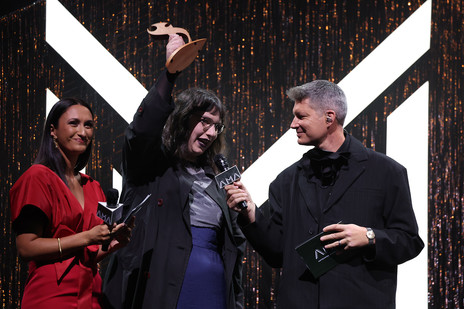
After Bananamelia!, Berry and Van Staden relocated to Melbourne. Two years later, Berry briefly returned to Tāmaki Makaurau when she was nominated for Best Electronic Artist at the 2024 Aotearoa Music Awards. In a similar experience to the 2021 Student Radio Awards, on the night, she was ultimately announced as the winner. “That was really crazy for me,” Berry says. “Because I’d been out of the country and hadn’t been playing shows, it was hard for me to understand how much people were enjoying the record. With WOW!, I got to see how people reacted to the songs on the dancefloor.”
Back To The Future
Recently, Berry has been working on two different projects. The first is her third Amamelia album, provisionally due for release in April through Sunreturn. The second isn’t new music at all. Instead, she’s going through a process with The Alexander Turnbull Library in Te Whanganui-A-Tara to create a permanent digital record of Bananamelia! in the national archives. It was a surprise, but it’s also an honour.
“One thing that hasn’t really come up, and has contributed to the sound of Amamelia, is that I am very contrarian, very specifically when it comes to music,” Berry admits. One of the reasons Bananamelia! sounds the way it does is I was hearing a lot of music with big synth layers, lots of reverb, everything sounding like it was a million miles away. I didn’t hate it. I just was like, ‘Well, I’m not going to do that. If everyone’s doing that, I’m not doing it.’”
When she began writing her third album, Berry asked herself a question. She already knew what it was like to write an electronic album inside a computer. This time, she wanted to see what would happen if she used all the music gear and instruments she’s acquired over her adult lifetime. “The new record is the record collector side of me coming out,” she says. “I wanted to make an album that sounded like me sitting at home putting on the weirdest records in my collection.” These qualities are on display all over her two 2025 singles, ‘The Floating Opera’ and ‘Summerlong’. Fittingly, ‘The Phantom Opera’ was accompanied by a video directed by Simon Ward, with assistance from Ashley Brown.
At the beginning of our conversation, I asked Berry how she felt about the distance between the way she imagined what making music would be like as a teenager and the realities of what she’s experienced. Her answer was telling and, I’d wager, relatable to many musicians out there. “It’s really weird, because I think a lot of the things I wanted to achieve when I was a kid, stealing my brother’s CDs, I’ve actually done,” she says, before continuing with a laugh. “I just imagined it would mean it would be my job and that I would get paid lots of money for it. I thought it would be a lot more glamorous.”









Amamelia: Shattering NZ Music's Glass Ceiling (2024)
Amamelia profile on Ableton (2022)
Visit our sister site
NZ On ScreenMade with funding from
NZ On Air