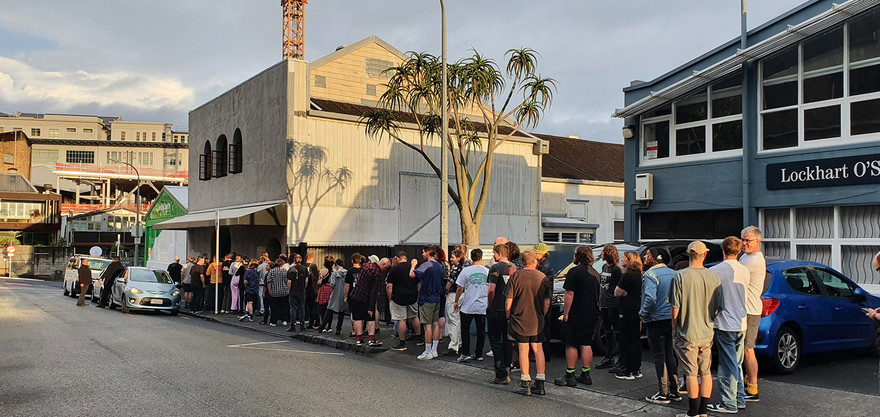
Form an orderly queue: Galatos bar and venue
The Galatos stage has hosted some mighty acts, from internationals such as the Foo Fighters and Coldplay through to the world-beating local talent including Lorde, Fat Freddy’s Drop, Bic Runga, and Nadia Reid. However, its history as a music venue reaches back much further.
It was first opened as the Druids’ Hall in 1908 and hosted regular dances, which ran until the 1950s.
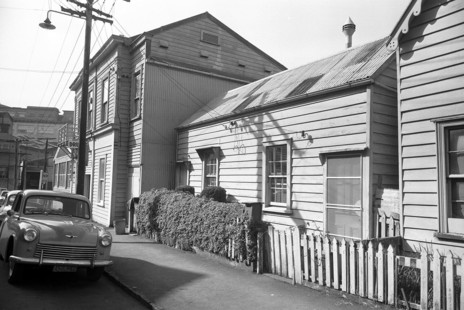
The Druids Hall on Galatos Street (formerly North Street), Auckland 1963, later to become the Galatos bar and venue. The photographer is thought to be Ernest Ian MacLaren. - Auckland Libraries Heritage Collections 580-07664
The building was constructed by the United Druid Order of Auckland, who were similar to the Freemasons – an organisation that brought together local businessmen and politicians to network, while also taking part in secret rituals that knit them together as a group. They wanted the hall to benefit the wider community, so constructed a dancefloor in the main room and also allowed the space to be used for public talks and meetings.
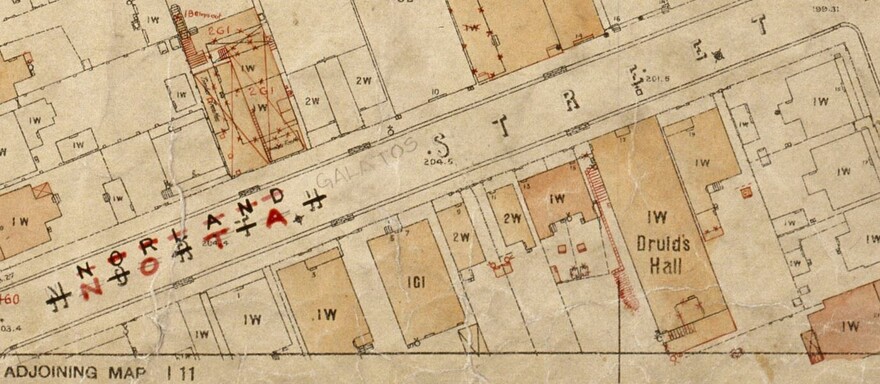
An early map of Galatos Street from the city archives, showing the location of Druids' Hall, and its earlier names, Norland and North streets.
The Druids Hall first opened on 6 May 1908 and the Auckland Star announced the event: “The hall itself, which was built by Messrs. Wylie and Bagnall, is a commodious and up-to-date structure, the acoustic properties being particularly fine. In addition to the hall, there is a large lodge room, and several cloak rooms, retiring room, and a supper room, are provided. The hall itself measures 60 feet by 30 feet, and the floor has been laid down with especial regard to the requirements of dancers, and will seat 400 people.”
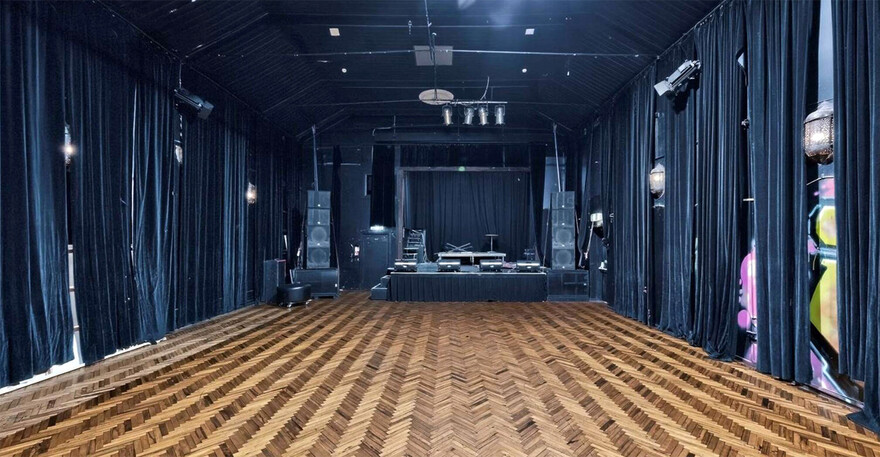
View from the dance floor to the Galatos stage, 2026
The parquet floor in the main room remains in place to this day and is a beautiful patchwork of small rectangular wooden tiles, which is sprung for dancing. Within a year of opening, the first dances began being held. For example, at the end of April 1909, T. W. Robson held a “Long Night Social” which saw dancers accompanied by Heiey's Orchestra. At this point, the venue only had two levels – the ground floor with its high-roofed main room and the basement area – but in 1921 a mezzanine was built at the rear of the hall, which was later enclosed to become the upstairs room that exists today.
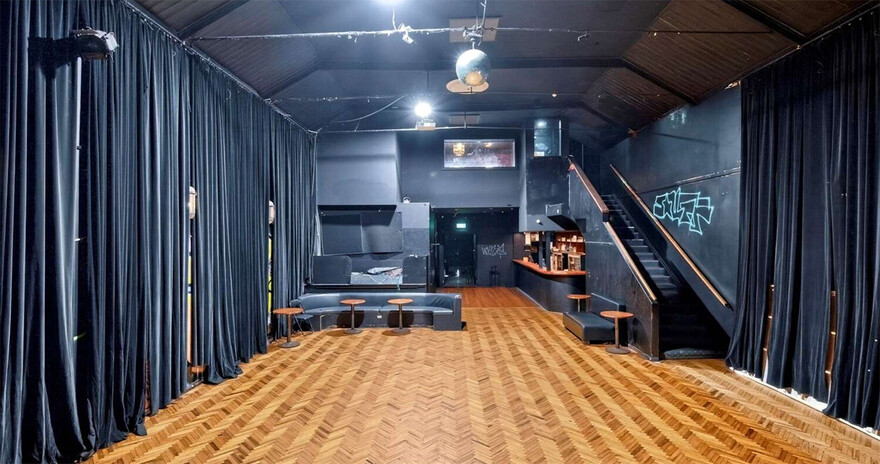
View from the stage, looking at the dance floor, main Galatos bar and entrance, 2026
The advertisements from the 1920s listed a range of enticements for potential dance attendees. Not only was supper provided – most likely eaten on your lap while seated on chairs around the dancefloor – but there was also gambling (‘Monte Carlo’) and “streamers, chocs, and cigs.” The era of 6 o’clock closing had begun in 1917, so these were booze-free affairs (unless patrons snuck their own drinks in) and there was a formality to the dancing, with each dancer requiring a partner.
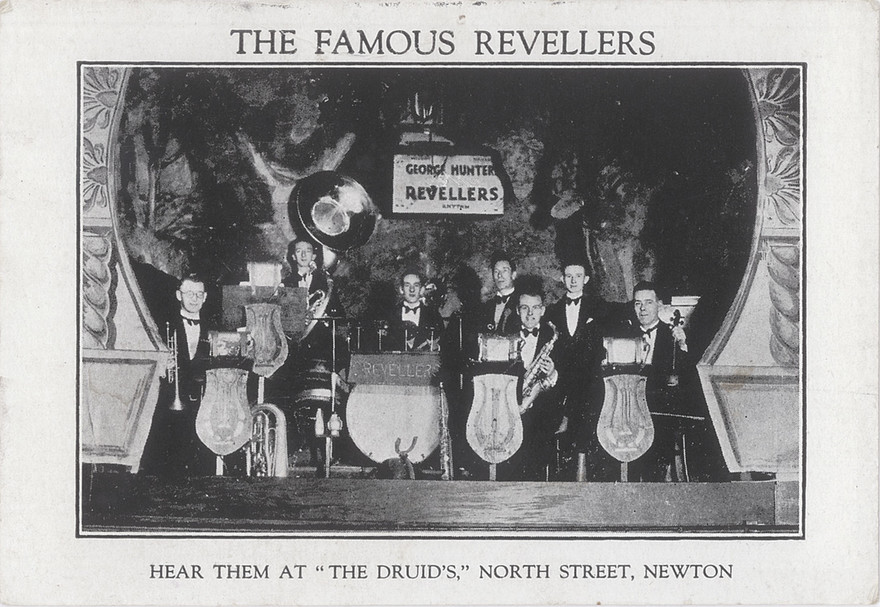
Musician and songwriter Kāren Hunter's grandfather George Hunter's band, The Famous Revellers – "Hear them at 'The Druid's,' North Street [now Galatos Street], Newton." George Hunter was a pianist. The Druid's Hall is now the venue called Galatos. - Kāren Hunter Collection
The street where Druids Hall stood was originally named North Street, but it was renamed Norland Street in 1939. In the 1940s, there were proposals to change the name to Nota Street or Gambia Street, before it was finally renamed Galatos Street in 1946 to commemorate a battle involving New Zealand troops that took place in Galatas (Crete) during WWII.
There are anecdotal stories of US troops turning up during the war, dressed in their formal best wearing white gloves, hoping to impress the local girls. The dance events extended through until at least the early 1950s, but the scene changed markedly over this decade, with the arrival of rock’n’roll gigs for teens and late-night cabaret shows for adults. The competition was clearly too much and the Druids’ Hall gradually ceased being a venue.
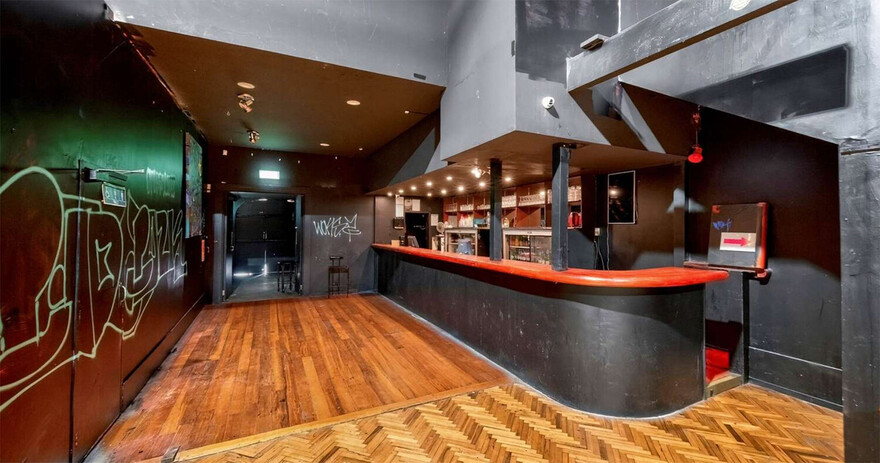
View of the Galatos entrance and bar, 2026
From the mid-sixties onward, the building was home to the All Golds Cosmopolitan Club, which was named after the legendary New Zealand rebel league team that visited Australia and Britain in 1907 (many of the players were also All Blacks, but were kicked off the team as a result). The focus was on drinking, playing pool, and talking about old league games rather than music. Then in the mid-90s, the All Golds Club moved to Edinburgh St, then to its current home in Avondale Racecourse.
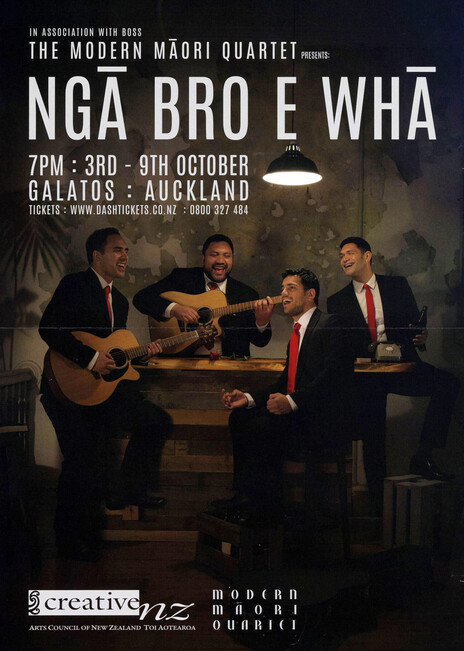
'Nga Bro E Wha', presented by the Modern Māori Quartet. Galatos, Auckland. October 3-9, 2013. - Auckland Libraries Heritage Collections Eph-Post01074
Meanwhile, Galatos Street had regained its role in the music scene, with the Galatos Street Theatre (across the road from Galatos) hosting dance parties in the late 1980s, while further down the street the Headless Chickens had their practice room.
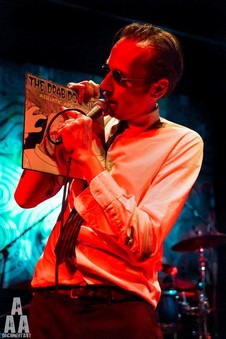
Karl Steven with The Drab Doo-Riffs at Galatos, Auckland, 2013. - Courtesy of AAA Documentary.
In 1998, journalist, editor and magazine publisher John Minty was drawn to the Galatos venue by the fact that the building itself was for sale, unlike most other clubs in the city which were leased from landlords. However, it had gone through a couple more owners by that stage, as Minty explains:
“A group of Koreans ran it as a private karaoke club, with cubby holes near the door where you could keep your whiskey. Then Korea had a big financial collapse, so these two women took it over and tried to convert it into a swingers’ club. Their plan was to sign up 1000 members. From what I heard from the neighbours, there were some very flash cars pulling up outside – lawyers and businessmen, who had money to invest. The women started to redecorate and the upstairs lounge bar was turned into a Roman grotto, with long flowing curtains and a circular bed in the middle of the bar. The karaoke rooms down in the basement were obviously going to be the business end of the operation. In the end, they suddenly flew off to Thailand with the money.”
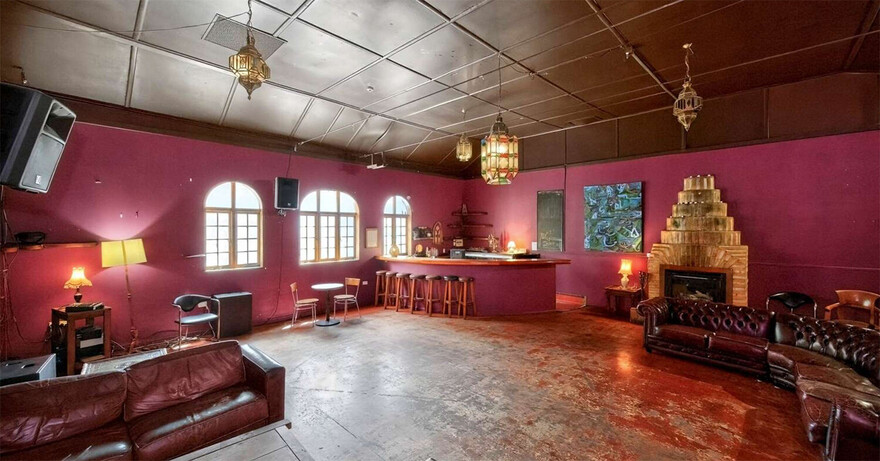
Upstairs lounge bar, Galatos 2026
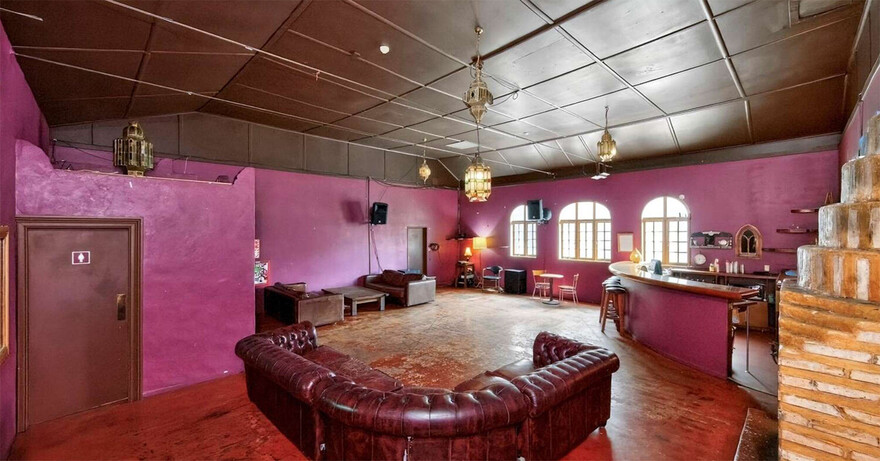
Upstairs lounge bar, Galatos 2026
Minty turned it back into a music venue, alongside his partners Gene Jouavel and Tony Johnson who were two expats with West Indian roots (Johnson’s family were Jamaican, while Jouavel had been born in St Lucia before his family moved to the UK). Jouavel moved to New Zealand in the late 1980s, where he helped set up Aotea Markets and then got into hospitality through starting the legendary Queen Street club, Khuja Lounge. Minty and Jouavel had met through their wives, who were both Fijian and had befriended one another.
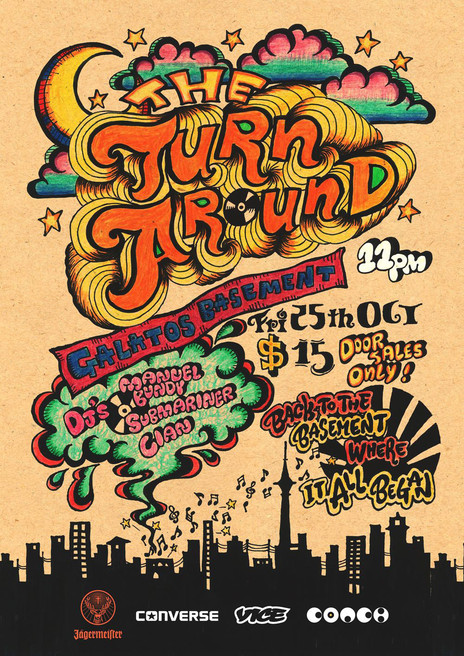
The Turnaround at the Galatos Basement, with DJs Manuel Bundy, Submariner, Cian - 25 October 2013
During their renovations, they found an old rostrum with stag heads which dated back to when the Druids had owned the property. The new owners were open to having any kind of music, though many of the early events were dance music/electronica related since this is where their connections were (Minty would later take over running dance festival, Splore). For example, in 1999 the shows included Carl Cox and Mark de Clive-Lowe doing a double-header, and a multi-media event Solitan ‘99 curated by Mike Hodgson (Pitch Black) and Lara Bowen, which combined electronica, short film, video, contemporary dance and performance.
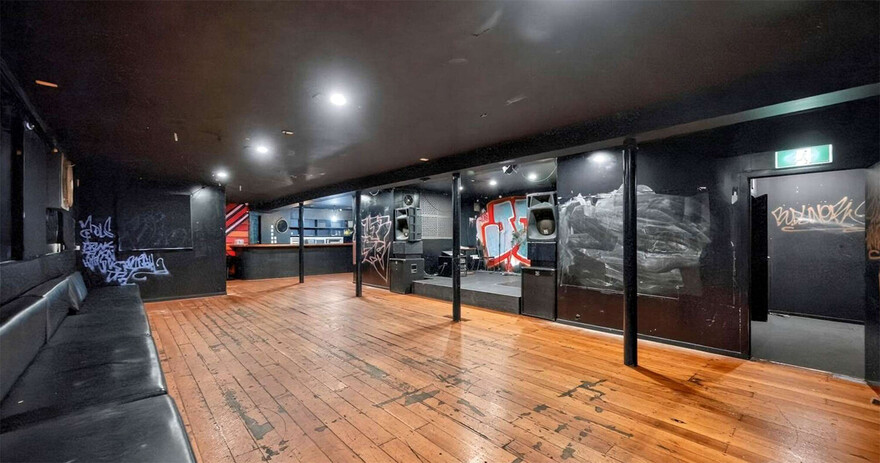
Basement bar and venue, Galatos 2026
By the early 2000s, Johnson had left the partnership and Jouavel departed a year later. This left Minty in sole charge, though his efforts to run a profitable business were aided when he was offered a run of international acts:
“Etienne Marais and his team who ran the Big Day Out got in touch. They knew we had opened a 400-capacity room and thought it would be a good place for the bands they were bringing over to do a gig in the run up to the festival, since New Zealand was the first of the series. Coldplay was the first one. They had only just put out Parachutes [in 2002], so my partner Gene hadn’t even heard of them when someone contacted us to see if we had Thursday night free. I said, ‘What do you mean? Coldplay? Really?’ We even charged for the privilege. That was magic, because obviously a lot of people had heard of them by the time they arrived. We used the basement as our green room, so when Chris Martin and the guys finished their gig, they went down there. They had no management with them, so I just went down to thank them for the gig, and had a chat. It was pretty cool.”
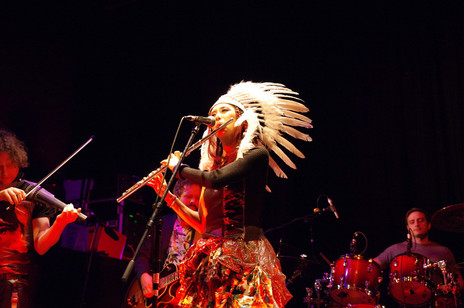
Miho's Jazz Orchestra performing at Galatos in 2018.
Big Day Out publicist Nikki Streater later recalled to The Spinoff that she had been asked to arrange the gig by Coldplay shortly after they arrived in Auckland and so had just 24 hours to make it happen. In 2003, Foo Fighters wanted to play a similar warm-up gig and packed their massive backline of gear onto the tiny stage. In the same Spinoff article, Etienne Marais recalled how the audience’s jumping pushed the limits of the sprung dance floor:
“The floor was bouncing so much that the security guy was literally trying to jam road cases on top of each other under the floor to stop it from flexing so much. He thought it was going to break. He was totally freaking out. He said we should stop the show.”
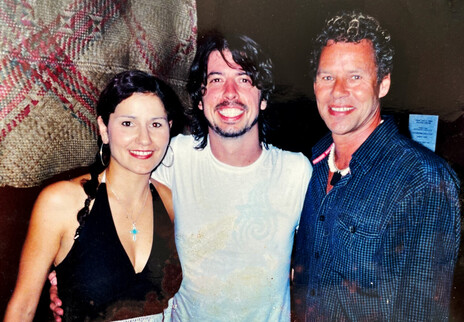
John Minty (right) and his daughter Nadine (lounge bar manager) with Dave Grohl after the Foo Fighters warm-up show at Galatos.
John Minty was equally surprised when Metallica popped in to attend a gig:
“Their bodyguards were Samoan guys and they knew our guys at Galatos, so they got in contact with them and said the band wanted to check out Mars Volta, who were doing a Big Day Out side show. So they turned up and we took them up to the lounge bar. I remember sitting on the steps watching Mars Volta with Lars just below. He said, ‘fuck, I wish I could drum like that.’ Then we took them down to the basement afterwards so the bands could meet each other and they knocked back a lot of tequilas … Other international cameos included Taj Mahal doing a show at 24 hours’ notice; Kelis holding a spontaneous after-party from her St James show in the basement and members of Gomez and ZZ Top popping in for a late drink in the Lounge bar.”
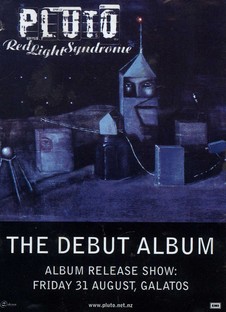
The poster for the launch of Red Light Syndrome at Auckland's Galatos, August 2001
One of Galatos’ more peculiar claims to fame was that it also had a show by Phantom Planet, a band which had the actor Jason Schwartzman as its drummer. The venue also had the best local talent of the time coming through its door, which included Goldenhorse, Evermore, Shapeshifter, Trinity Roots, Kora, Pluto, and Brooke Fraser.
In 2005, John Minty took over the Splore festival, so no longer had time to run a venue. He sold Galatos to the charitable trust, Moving Image Centre (MIC) Toi Rerehiko, who continued to run it as a venue, but also used the space for film screenings and other art-related events. This meant that there were fewer gigs, though it still hosted both international (Jolie Holland, The Exploited) and local acts, including a 10-band mini-festival of metal music.
MIC closed up in 2011 and the venue was sold to married couple Andrea Clark and Dean Whaitiri – a saxophonist from the showband era, who had played alongside Howard Morrison. One of the first gigs they oversaw was an early show by Lorde, who was on the cusp of an international breakthrough, as Clark later described to the NZ Herald:
“It was invitation only, and they invited a representative from Universal in New York to come and listen to her. She was only 16 and was absolutely petrified. She only had about three songs, but one that she did sing was ‘Royals’. Then, probably three months later, she did her first show in our main room, and that sold out within minutes.”
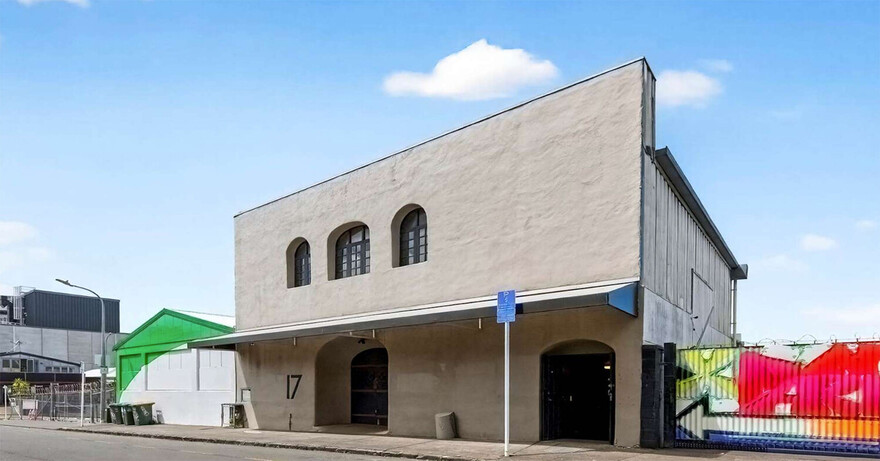
Galatos, 2026. - Supplied
Clark and Whaitiri got the venue back into full swing, with regular shows by both locals and internationals, as well as hosting the Taite Music Award. In 2015, it also became part of the newly-launched Others Way music festival, held across venues in the vicinity of Karangahape Road. This saw it host sets by internationally successful local artists including Bic Runga, Nadia Reid, Princess Chelsea, Tiny Ruins, and Purple Pilgrims.
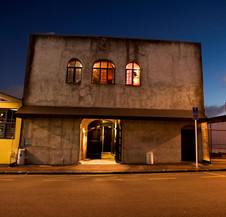
Galatos bar and venue
In 2026, Clark spoke to the NZ Herald to announce they after a decade-and-a-half of running Galatos, the pair had decided to sell up.
“We’re not spring chickens. We traditionally have a break every summer because it’s the time for outdoor festivals. At the end of last year, we made the decision to retire. The last gig was in December.”
At the time of writing, the future of the venue looks unclear. The building may be over 100 years old, but it doesn’t have heritage status, so the new owners are free to use the property for whatever purpose they see fit. Whether or not it survives as a venue, Galatos has had an incredible run. Given that it opened three years before the Auckland Town Hall, its musical history likely reaches back further than any other venue in the city. It certainly deserves to be remembered for having two separate multi-decade runs at the heart of Auckland’s music scene.
--