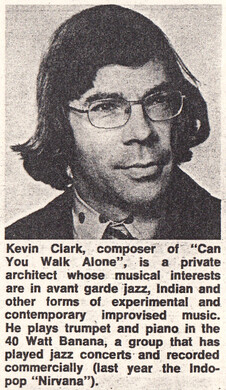
South African-born Clark’s early musical memories are Xhosa lullabies and tribal songs
But it wasn’t the only music in the house. His mother played piano, as did his grandmother who lived with the family, and singalongs around the piano were a regular activity. His father picked up some Italian during the war and would serenade the household with bursts of ‘O Sole Mio’ and ‘Torna a Surriento (Come Back To Sorrento)’. In the streets he would hear Black labourers singing constantly as they worked.
At around the age of seven his mother taught him to play a ukulele. His first public performance was playing ‘Home On The Range’ in a talent quest – the under-12s category – for which he won a box of chocolates.
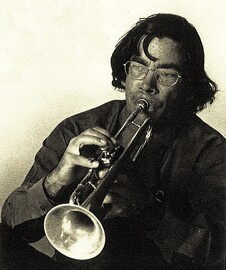
He played in the school marching band, initially as a drummer, which he credits with establishing his sense of time. He moved on to bugle, then at 15 persuaded his parents to buy him a trumpet; it quickly became his passion. Early gigs were with a school dance band playing popular Afrikaner songs, derived from Dutch and French polka music. He was briefly enamoured of the trumpet player Eddie Calvert and won a talent quest in Port Elizabeth with a rendition of his signature tune ‘Oh Mein Papa’. But he was starting to hear US jazz trumpeters – Louis Armstrong, Dizzy Gillespie, Chet Baker – and knew this was the direction he needed to take. He also began dabbling on piano.
In 1958, having finished school, he moved to Cape Town to study architecture. While at the University of Cape Town he studied trumpet part-time at the Conservatory. At night in the city’s jazz clubs he was receiving another kind of education. Musicians such as Hugh Masekela, Chris McGregor and Dollar Brand (Abdullah Ibrahim), all of whom would become major figures in the global jazz scene, were playing regularly in the local clubs, developing a distinctly South African jazz sound.
“I knew all those guys. The guy that really put me on the path of jazz was Hugh Masekela. Hugh put me on to [trumpeter] Clifford Brown. He said, You must listen to Clifford Brown, he’s the master.
The Cape Town music scene was amazing. At the time, “There was no apartheid in music.”
“It was amazing scene, and it was an integrated music scene there. In spite of apartheid, there was no apartheid in music. And Cape Town is a bit different from the rest of South Africa. The rules didn’t apply there, and people lived together, mixed. I couldn’t believe it when I went back years later, when they brought in the Group Areas Act where they separated out the races. Because when I was there the whole area of Cape Town, whites, coloured, Indians, were trying to all live together. And if you didn’t like it, you go somewhere else.”
In 1961 he spent a year in Port Elizabeth, completing the practical part of his architect’s degree in an architectural office. While there he furthered his music studies with Robert Selley, conductor of the Port Elizabeth Symphony Orchestra, which he played in for that year, even performing Purcell’s ‘Tune and Air For Trumpet’ as a soloist with the orchestra. He also jammed with Xhosa musicians in the nearby townships.
Returning to Cape Town the following year, he found that the apartheid government had begun ramping up its powers to enforce segregation, which ultimately resulted in many of the musicians, both Black and white, leaving for the United States and Europe.
Clark was ready to leave too. After completing his architectural degree, he set off for London. “Once you graduated, we were encouraged to go overseas, the big OE, and do a study tour and look at the architecture of Europe. You could actually get credits for it if you went over and did an approved tour and came back and did a report.”
Though Clark would take an adventurous motorcycle trip from London to Baghdad in 1964, studying the architecture along the way, he never made his report. But within days of arriving in London, he had secured his first gig.
In London he was asked, “Would you like a gig? The sax player’s leaving next week.”
“There was a place called the Overseas Visitors Club that catered for expats, Australians, South Africans, Canadians and whatever, an adult sort of hostel thing that you could stay until you found a flat, and they had a bar and a restaurant and a dance floor because everyone had dance floors back then, and a band playing sort of pop kind of stuff. And I went and spoke to the guy on the break and said, I’m a musician from Cape Town, blah, blah. He said, ‘What do you play?’ I said, trumpet. He said, ‘Would you like to sit in?’ So, I got my trumpet and played with the guy and he said, ‘Would you like a gig? The sax player’s leaving next week.’ I walked straight into it, couldn’t believe it.”
He also walked into a few pub gigs as a piano player, mostly playing the kind of singalong favourites he had learned around the family piano as a child. For his own satisfaction he would occasionally slip in some boogie woogie, which is what he was playing one night when a punter sidled up to him with his card. The man was an agent for an R&B band which was looking for a piano player, and Clark spent the next few months playing R&B gigs in and out of London.
Another gig – with a West Indian drummer and South African bass playe – ended one night on the Greenwich docks when the rhythm section, unable to agree on which of them was dragging the beat, came to blows. Most of the drum kit ending up strewn across the venue’s furniture.
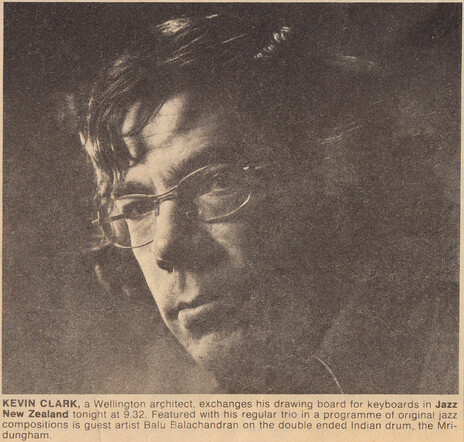
By 1966 Clark had met his wife, a New Zealander, and moved to New Zealand, where he had learned there was a demand for architects with experience in multi-storey buildings. As for what work he might find as a musician, that was unknown. He placed an ad in the classified section of the Evening Post: “Pianist and trumpet player, just arrived from overseas, available for gigs. Tel. 727-845.”
The first call he got was to play a wedding, but the line-up of sax, piano and drums – no bass – made him sceptical, so he turned it down. A week later the caller rang again, this time doubling the fee. Clark needed the money so accepted, but as he had suspected the gig was a fiasco. Whenever he called a standard – ‘Lady Is a Tramp’ or ‘Sunny Side of the Street’ – it would draw a blank from the other musicians. When he eventually asked the sax player what songs he knew, he was treated to a primitive rendition of the old Cockney vaudeville tune ‘Henry the Eighth’ followed by ‘I’ve Got A Lovely Bunch of Coconuts’. This was neither what the audience wanted to hear, nor what Clark wanted to play. When the despairing guests pleaded with the band to play something they could dance to, Clark resorted to ‘Rock Around the Clock’. It was hard to tell whether the other musicians knew the tune or not. Eventually one of the guests left and returned with a record player.
In Wellington, Clark hit it off with Geoff Murphy and his jazz club cohorts.
Certain there had to be more to music in Wellington, he asked around the music shops and was directed to Don Richardson, a saxophone player, bandleader and arranger, who among his other credits had run variety concerts in the 1950s under the banner Festival of Jazz with drummer and fellow entrepreneur Vern Clare. Over a beer, Richardson and Clare asked the new arrival who his favourite musicians were and what did he play? Clark enthused about Thelonious Monk and Miles Davis. “Vern Clare kind of choked on his beer and they looked at one another, and the conversation died a bit, because Don was a funny guy, pretty crusty. And he said, ‘Oh, then you better go and speak to Geoff Murphy and John Charles. They’re more into that sort of stuff.’”
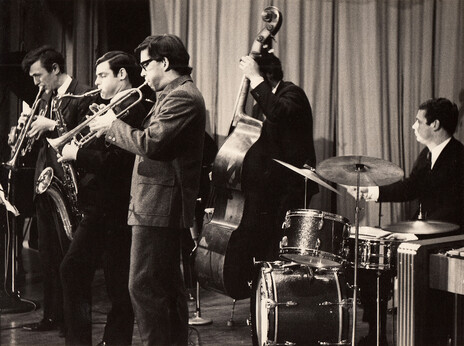
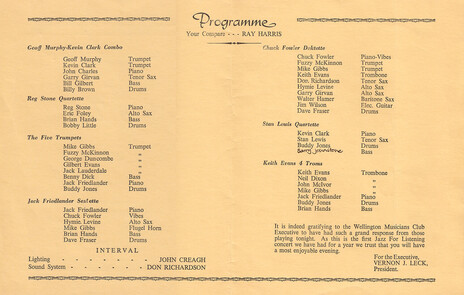
Clark hit it off with Murphy, a fellow trumpet player close to Clark in age, and the pair organised a concert for the Wellington Jazz Club, of which Murphy’s brothers-in-law – pianist John Charles and drummer Bruno Lawrence – were also members. “I came up with a silly idea of starting off with ‘God Save the Queen’, and then on the last phrase going straight into ‘Straight No Chaser’, the Thelonious Monk tune. The audience didn’t know what to do. Some people kind of stood up, because that’s what you did at the cinema in those days when they played ‘God Save the Queen’. Geoff and I clicked, you know. We were both sort of cracking jokes and would just bullshit all the time.”
Another gig he played around this time involving Murphy and Lawrence was the launch in 1967 of Cock, Chris Wheeler’s underground political satire magazine. It was held at the Star Boating Club, the original premises of Downstage Theatre. The whole set-up was decidedly alternative: weird poetry, satirical sketches and anti-authoritarian rants. There were avant-garde films, strobe lights, kaftans and headbands. The official launch introduced Cock’s formal mission statement: “To overthrow the New Zealand government by ridicule.” The counterculture had reached Wellington.
There were more conventional engagements too. It was the era of dine-and-dance – restaurants with a bandstand and dance floor – and over the next few years Clark would play just about all of them: Giovanni’s, La Normandie, the Jolly Frog, The Pines, the White Heron. There were cabarets: Clare’s, the Majestic, Claridges, the Las Vegas. And there were rugby clubs. These could provide a quick induction into the local culture. One night at a dance for the Watersiders’ Rugby League Club in the Railways Social Hall a punter asked Clark if he could play ‘Ten Guitars’. Unfamiliar with the unofficial national anthem, he replied, in all honesty: “No, but I can play piano and trumpet at the same time.”
Could he play ‘Ten Guitars’? “No,” said Clark, “but I can play piano and trumpet at the same time.”
At the end of an evening, he would often adjourn to the Wellington Musicians Club in Wigan Street, where fellow musicians would meet for a drink and a jam. Sometimes visiting overseas musicians would drop by as well – Oscar Peterson, Dudley Moore, Jose Feliciano – and join the locals for an informal session.
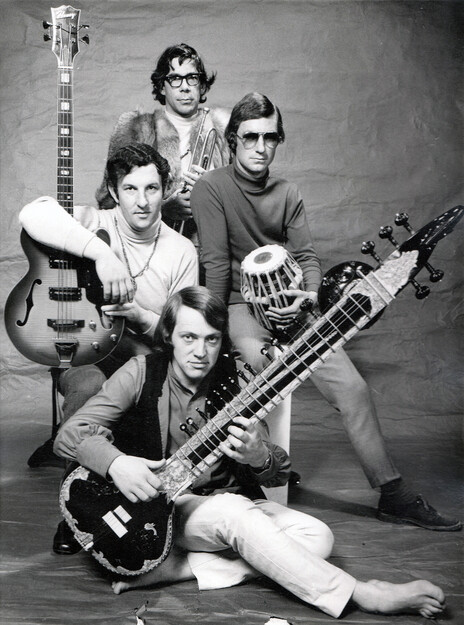
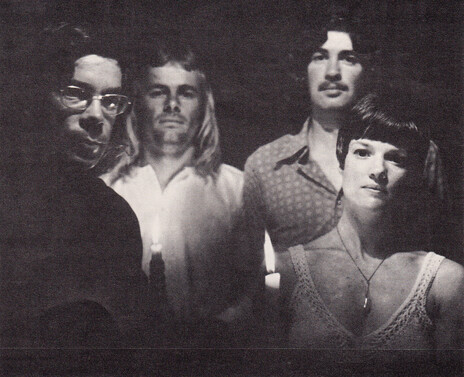
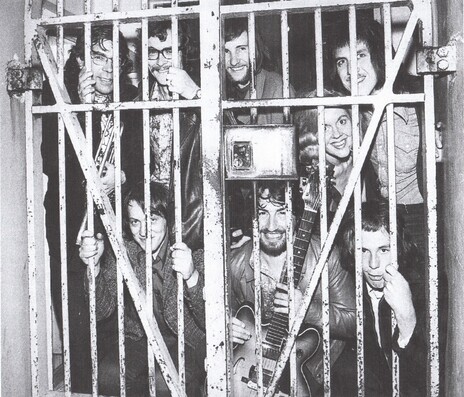
Though Clark played with a variety of musicians during this time, two frequent collaborators were bass player Dave Day and drummer Dave Parsons. In the late 1960s, Parsons was developing a passionate interest in Indian music, learning tabla and sitar and eventually travelling to India to further his immersion in the music. Meanwhile Clark had extended his experimental side by purchasing one of the early synthesisers. With Dave Day on electric bass, and inspired by recent albums such as Miles Davis’s eclectic and electric Bitches Brew, the trio began to experiment with a fusion of Indian music and jazz.
“We were getting into prog rock stuff, and I’d bought a synthesiser, and Dave suddenly got interested in the synthesiser and said, Can you just make a drone?’ I said, Yeah. And that started sparking something. And the next thing, he got the sitar, he started working on that, and we started getting together just trying to figure out what we could do with this, and it blossomed from there.”
So began the musical adventure that was The 40 Watt Banana, which you can read about here.
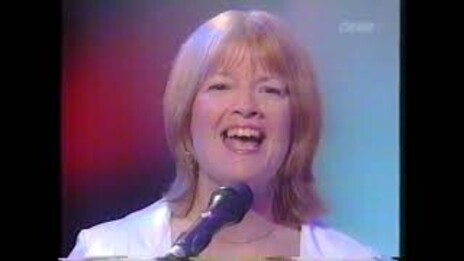
Clark first accompanied singer Fran Barton in 1971 when he was filling in for pianist Dave Fraser at his residency at the Beefeaters Arms, and was immediately struck by her great sense of time, pitch and taste. Originally from Britain, she had sung in London folk clubs and had a knowledge of English folk music, but also knew her way around the Great American Songbook as well as having an ear for a good contemporary tune.
When Clark got a call from the manager of the Waterloo Hotel asking if he would put a group together for Napoleon Room, the hotel’s “fine dining” restaurant, Fran immediately came to mind. The group would fill the classic dine-and-dance brief, playing quiet bossa nova and cocktail funk for the first hour, before the dancing kicked in at 9pm. Then they would break out their more upbeat material, drawn from the sophisticated end of contemporary pop: Stevie Wonder, Carole King, Joni Mitchell, songs from Hair and Jesus Christ Superstar, slipping in some Chick Corea or even Thelonious Monk when they could get away with it.
In addition to Fran’s vocals, Clark enlisted bass player Dave Pearson – a funky electric player who had been working with The 1860 Band – and drummer Mike Fullarton, who had recently left the Wellington rock band Mammal. “I’d had enough of jazz drummers who couldn’t play pop stuff so I recruited Mike, who didn’t know anything about jazz but I gradually weaned him into it,” says Clark. Not quite over his predilection for silly names, Clark called the new group Grunphuttock’s Revenge.
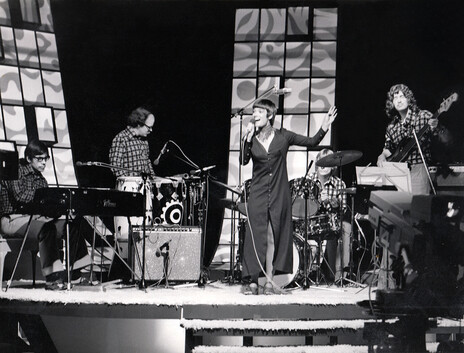
For the ‘Edwards on Saturday’ show, Grunphuttock’s Revenge became the Kevin Clark Group
They had been playing the Napoleon Room every Friday and Saturday for about a year when Clark got a call from Tony Rimmer, a producer at TVNZ, inviting him to be the musical director for Edwards On Saturday, a new late-night live television talk show fronted by Brian Edwards. Grunphuttock’s Revenge would be the house band. There was just one stipulation: the name would have to go. Grunphuttock’s Revenge reverted to more staid Kevin Clark Group.
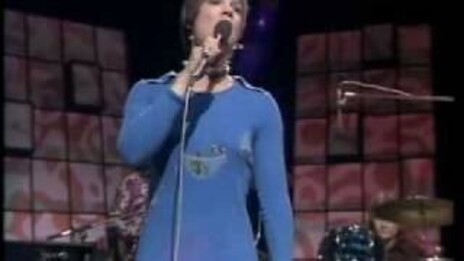
The show was a hit and the group were perfectly suited to the format, interspersing the talk with musical interludes, accompanying guest singers as well as performing material which Fran would sing. Guests included Mark Williams, Annie Whittle, Andy Anderson, Peter Cape and a Caribbean steel band. Each week’s episode would revolve around a different hot topic – prisons, pets, UFOs, sexual dysfunction, alcoholism – and Clark would scan the NZBC’s music library each week for material that commented on the theme. For the prison episode, for instance, they worked up a version of Graham Nash’s ‘Prison Song’. On Saturday lasted for around 30 episodes, beaming the Kevin Clark Group into the nation’s living rooms and enabling them to double their fees for live performances.
At the end of 1975, just after the First series had ended, they recorded an album for Ode, The Kevin Clark Group with Fran Barton On Saturday, showcasing some of the songs and music they had performed on the show and featuring guest instrumentalists such as saxophonist Colin Hemmingsen and harmonica player Andrew Delahunty. Like the 40 Watt Banana single, the album has since become a collector’s item, with a copy selling on Discogs in 2025 for over $500.
Not long after, Mike Fullarton left for the UK while Dave Pearson headed into the countryside to grow flower bulbs, eventually moving to Vietnam. Clark put a new quartet together for the Napoleon Room, with Fran again on vocals, Maurice Phillips on drums and Dennis Quaintance on bass. The residency continued until Christmas 1976 when the fine diners went down with a case of food poisoning and the kitchen was shut down by the Health Department. Though the establishment reopened the following February, the restaurant never recovered its reputation, and anyway the dine-and-dance era was coming to an end. By the end of March, the residency was over.
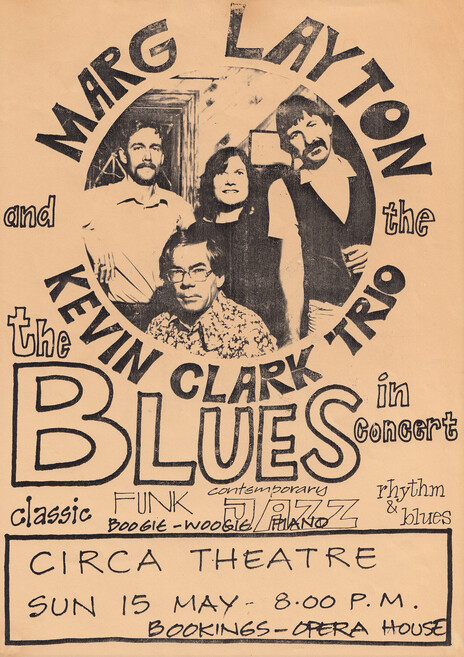
But the music never stopped. Clark would continue to write, play and perform in the usual variety of styles and settings – jazz, standards, brass bands, occasionally even country music, everywhere from Italian restaurants to Parliament Buildings, while becoming increasingly drawn to the rhythms and modes of the Middle East.
When he retired from architecture in the early 90s, he went back to university. “I’d done some music study in South Africa, but didn’t have any formal qualifications, so I bowled up to the conservatory and said, I’d like to do a degree in music. And they all looked at one another like, ‘We don’t know what to do with you, you can play already.’
“Eventually they said, we’d like you to do the theory, just to make sure you know your theory from first year. You don’t have to come to the lectures. You just come and sit the exams, which is what I did. So I went first year and just did the theory papers. And they said, well, we can’t just give you a degree, so would you like to do third year? I said, yeah, I’ve got nothing else to do, I’m retired. So I went to a third year, and then I thought well I may as well do honours as well. So that’s what I got into all this ethnomusicology stuff and whatever.”
A commission from the vicar of St Peter’s in Willis Street led to him composing the music for the Feast of Pentecost. “I said, Yeah, fine, but I’m not a believer; I had to admit it. But I understand spiritual music, and he said, Oh, that doesn’t matter.
“And I thought, so what am I going to do? Because they had processional music when they all came in, and then there was meditative music, and then there was the commitment when they had the communion – all sorts of things, and you had to follow the different styles. Because I’ve been to Brazil and Cuba and got familiar with some of the voodoo stuff, I dialled up a lot of voodoo music, and I got some ideas for the rhythms, and it was all kind of very droney, spiritually, Coltrane kind of stuff. And we did sambas and things, and had all these kids with banners running around the church. It was great fun, and they got a big crowd. Everyone thought it was great, and in fact the tune that I wrote for the communion, I’ve played it on gigs occasionally, because it’s like a gospel thing, just a very serene hymn. In fact I’ve played it quite often as ‘Sikelele u Mandela’, a tribute to Mandela, in the style of an African hymn. But I admit I was chuckling, playing this voodoo music while these guys are doing a Christian ceremony.”
“I was playing this voodoo music while these guys are doing a Christian ceremony.”
When British free jazz exponent William Parker visited to New Zealand in 1999 as a featured guest at the Wellington Jazz Festival, Clark was called on by the local avant garde to play trumpet in a free jazz big band. Promoted accurately if perhaps misleadingly as a concert of big band jazz, it drew a number of elderly punters that Clark recognised as traditional jazz fans, and who were not prepared for the high-volume cacophony unleashed on Parker’s instructions. Clark recalls with amusement that what started as a full house was quickly reduced to just a handful of hardcore free-jam freaks. But he says he personally enjoyed the total freedom offered to him that night, and regards the bizarre solo he unleashed, freed from worrying about the right scales, chords, notes or beats, as a singular achievement.
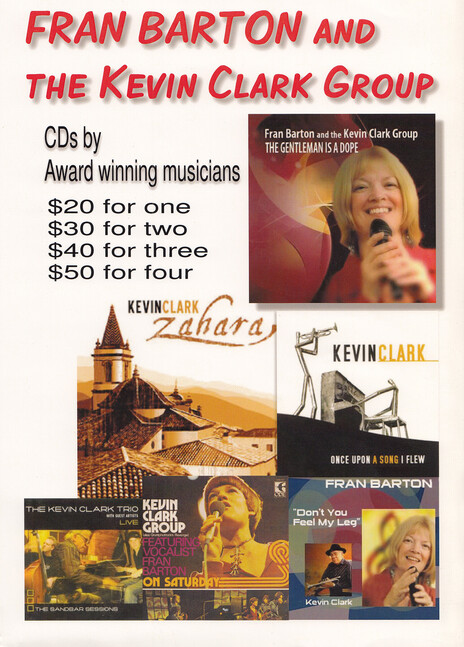
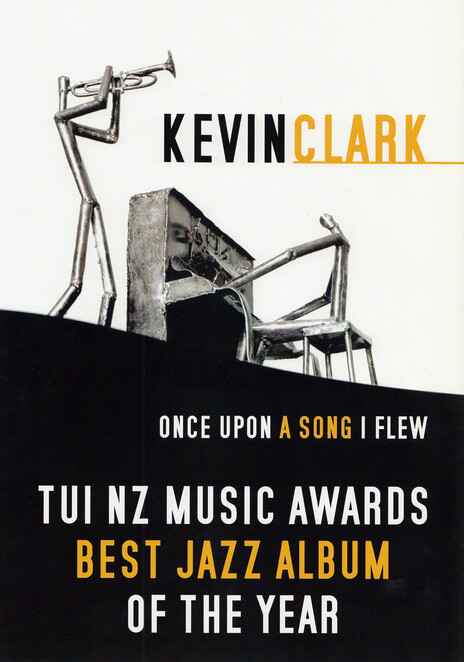
In 2003 he recorded and released Once Upon A Song I Flew, an album showcasing his original compositions, drawing on influences from jazz to pop, from Latin America to the Middle East to South Africa. It won a Tui for Best Jazz Album. The live Sandbar Sessions, recorded at a gig in Paremata with his trio of Rowan Clark (bass) and Reuben Bradley (drums) – augmented with guests including Colin Hemmingsen and vocalist Hannah Griffin – was released in 2005. It won Clark another Tui.
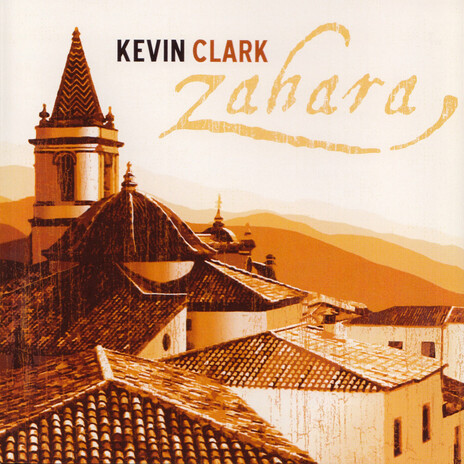
In 2007 he further explored his interest in Middle Eastern music, and the rhythms found in flamenco, in Zahara, a finalist in that year’s Music Awards.
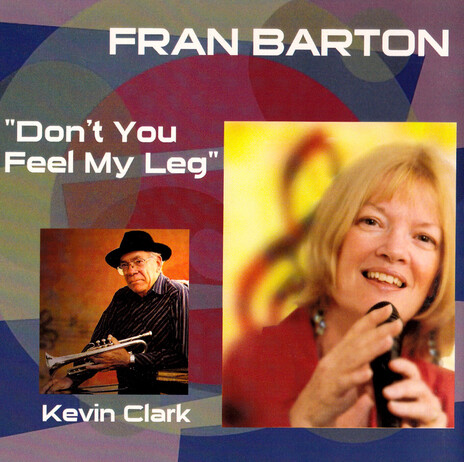
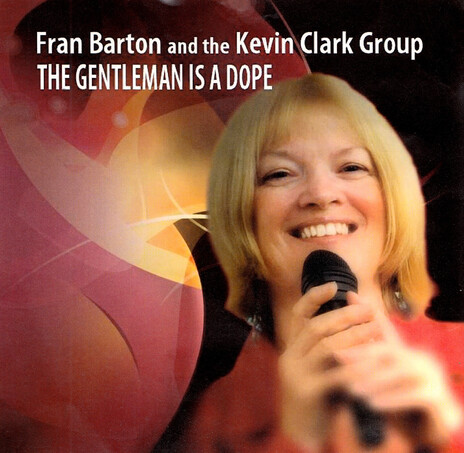
He has continued to perform with Fran Barton in a musical partnership that has now lasted well over 50 years. Clark still enjoys finding or self-penning material for Barton that showcases her voice while satisfying the quirky sense of humour they share. Fran Barton and the Kevin Clark Group released the albums Don’t You Feel My Leg in 2008, The Gentleman Is A Dope in 2011, and Dancing On A Wavetop in 2025.
He continues to field enquiries about The 40 Watt Banana. And he’s keeping an eye on Discogs to see what other items in his back catalogue might be about to enjoy a second life.
Read more: The 40 Watt Banana