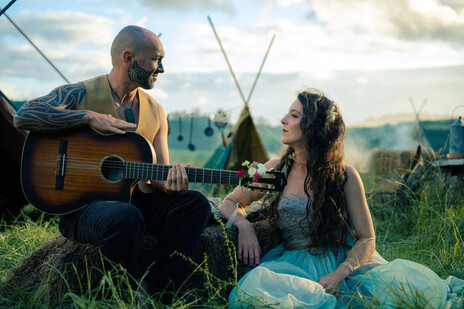
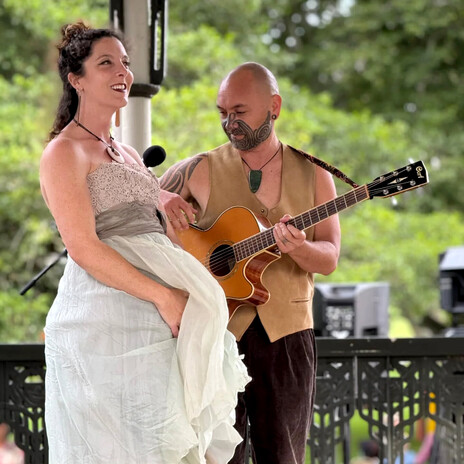
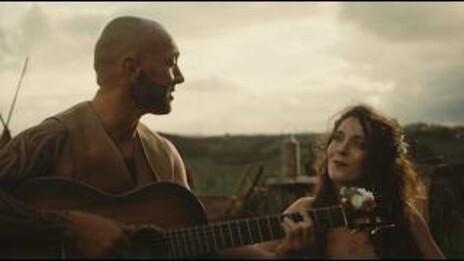
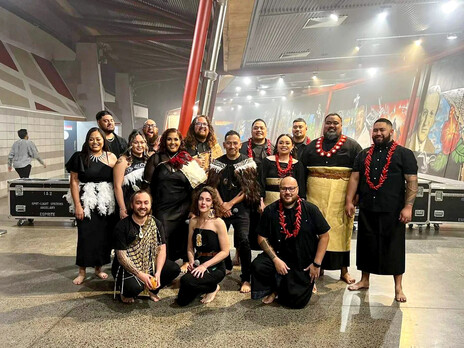
Aro’s mahi is grounded in the timeless values of kaitiakitanga and manaakitanga
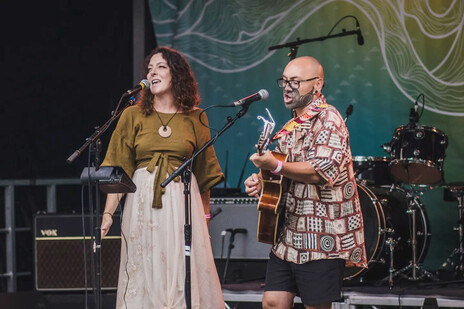
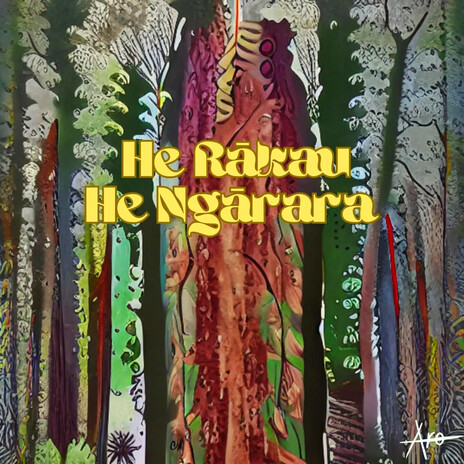
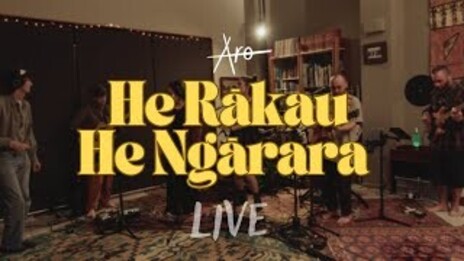
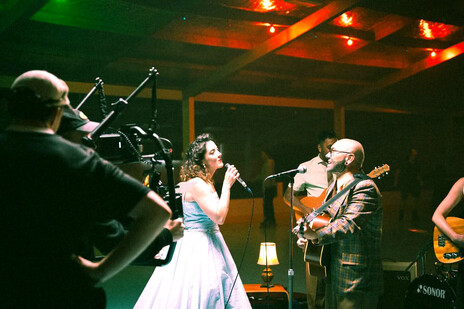
In 2019 they were nominated for the APRA Maioha Award, and were nominated for Best Children’s song at the Waiata Māori Awards twice, in 2019 and 2023; their 2024 album He Rākau, He Ngārara won Best Pop Album. In the same year, they received the NZ On Air Best Music Video award for ‘Tōtara’, and were longlisted for the APRA Silver Scroll Award. They have undertaken four nationwide tours, and performed at festivals around the country.
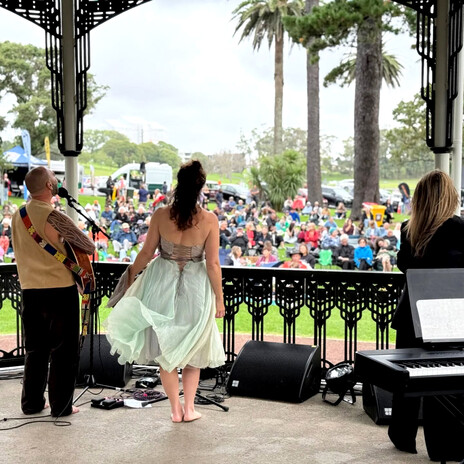
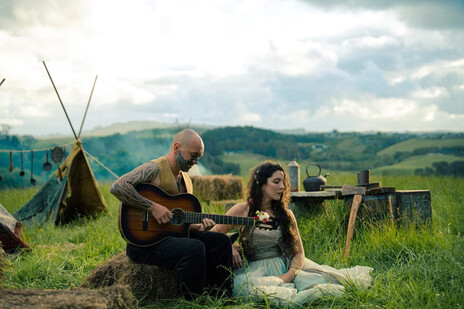
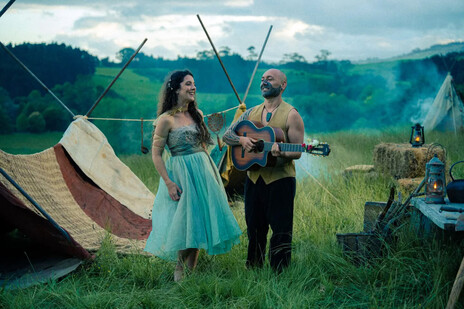
Their 2026 Secret Sun tour saw them delivering both booked and spontaneous performances almost anywhere their custom-fitted Rugged Kiwi caravan home pulled into. Naturally itinerant (they have also worked as cruise ship performers), living on the road has positioned them well to observe the five elements of te taiao, which guided the creation of their early run of concept releases.
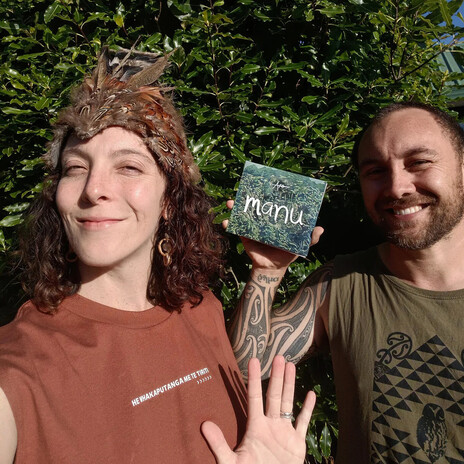
Emily explains: “When we lived in a van, back in 2017, we just kept hearing these beautiful manu calling and thought, when we hear a different bird, we should find out what the stories are about it, then write a song. That’s where Manu (2019) came from. Then we thought, ‘We could do creatures of the water, and then we could do trees and insects … let’s do this big project.’”
They have developed a programme of workshops – informed by mātauranga Māori of Aotearoa New Zealand’s natural environment – which they tour to schools and Kura Kaupapa Māori. Their whānau-friendly vibes make them a natural fit for the Kiwi Kids Music network, although Emily says they have never set out to write a children’s song.
“When we were writing Manu, we didn’t have kids. We wrote it 2017/18, when we lived on the road, then recorded it, and released it in 2019. Our producer Vivek Gabriel – his kids were really young when we were in the studio recording it with him. His daughter came in and was just dancing to ‘Korimako’, and he was like, ‘Oh, my gosh, my daughter loves the song!’
It was never Aro’s intention to write kids’ music, but they love writing songs kids enjoy
“We had no idea how popular the album would become in the music world for children. It’s used in schools; school plays have used it as their backing choir. It never was an intentional thing to write kids’ music, but these days we love it when we write a song our kids enjoy, and the music workshops are a massive part of how we are sustainable as Aro.”
Charles’s background in education stems back to helping his mum, helping young people in kōhanga, and delivering music workshops at kura Māori. Following his Bachelor of Music degree, he took the opportunity to undertake a scholarship teacher training programme at Ako Mātātupu, where he works now.
Emily had admired Charles’s voice at university, but was a couple of years ahead of him, nurturing a solo career, and performing with her band We Stole the Sun. In 2016 she set off with a one-way ticket to Europe to pursue her own musical aspirations, while Charles undertook his first year of education training. Across her 10-month absence, they maintained their connection through letter-writing. When she returned to Aotearoa – forming the duo Chem with Charles, while still playing with her band New Jungle Order – he was stoked, feeling one of the “spiritual impressions” that guide his movements as strongly as any logic. Indeed, they married soon after.
“I will lean towards the more spiritual impression because it’s something deeper, I guess,” he says. “The more I can’t explain it, probably the more obvious choice it is. Em and I both grew up in church, and I – much later on in life – started to listen to the different things that were being taught, and trying to find my way through that as a Māori. So, there’s a couple of things I’ve done just from an impression. Em and I are now aware of this. Like, after this recent tour – oh, man! – there were really couple of golden moments there where we felt like we could feel or sense the reality of our dreams.”
“Golden” is a key word when you embark on a series of shows called the Secret Sun tour. Charles explains the intention behind the adventure.
“‘The whakataukī that led us in our Secret Sun Tour was: ‘Aroha mai, aroha atu.’ And that was because we took a business risk, really, to just put our show on for free, no expectation of koha, and to tour around during a crisis of cost of living and fuel. It was another act of faith. We saw a vision. We took time, because we were trying to work with venues, determine cost and fees, and it was okay, but something just wasn’t sitting right. So, we took just two minutes – by ourselves, in silence, candlelight, stream of consciousness – to write what we envisioned. When we just dream about what this looks like, what does it look like before it was even called Secret Sun? And singing to the sunset was the most consistent thing between us. People hanging around just having a picnic.
“Aotearoa whānui are looking for something like this to just feel at peace during these times”
“We went about trying to make that happen, but we saw there was no promise of income. So – cool – aroha mai, aroha atu. There’s a reason we have this vision. Let’s do it! I believe that Aotearoa whānui are looking for something like this to just feel at peace during these times. And I think they’ll acknowledge it in all their different ways. We were blessed by every community we stopped at, be it in financial koha, something for our kids – colouring books, toasties, pancakes … That really spurred us on. It felt like a pay it forward. Aroha mai, aroha atu.”
He sees this as running alongside the rationale behind the band’s naming.
“When we first called ourselves Aro, naturally, a slightly different whakataukī came out of that, which was: aroha mai, aroha atu, aro hā – basically a call to just be attentive and understanding to what’s happening in front of us, and that’s the aroha mai bit. So, the things explored in our waiata – also inspired from our oral traditions – continuing those in an accessible way for, hopefully every generation, but especially our young ones. And then atu is like, what does that mean in your context now? Take that back into your life. And the hope is that aroha is the outcome. That’s always been a part of everything we do, every song we write. That always leads the way: aroha mai, aroha atu, aro hā.”
He believes his faith in the process has been reflected back on the band by both the environments they have played in, and the people they have played to. He thinks back to the beginning of their first tour, for Manu, which started in at the Quarry Gardens in Whangārei.
“During our gig, a pīpīwharauroa, the shining cuckoo – which you hardly ever see – sung its song as the sun was setting. Then, at the end, this wahine Māori comes up, and says ‘My family was really strict on how to be Māori,’ to the point where she was put off completely by our culture and our language, but that these songs have helped her see the beauty in our language, and she wants to learn it now, as a middle-aged woman. That was like, ‘Cool, that’s all I need.’”
The duo had initially called themselves Chem – a play on words linking their names and chemistry – but the eventual name they settled on reflected even deeper preoccupations.
Charles explains: “I attended a tangi of one of my cousins who, unfortunately, decided to take his life, and that really rocked me. A whole lot of other youth workers and ministers who worked in the Far North region said that this is an issue in our takiwā. It just sent me on a bit of a journey, and it all came back to identity. The motivational inspiration to do something about that is where Aro comes from for me.”
Charles suggests Emily is motivated by the idea that people shouldn’t be alone, that we’re meant to be in community. They each have a role in how they achieve their overarching harmony.
Emily: “He’s really good at laying the foundation. I’m really good at keeping it warm. We’re very different in a lot of ways, which works so well for our parenting and our music making. We bring really different strengths to the table. Even in the studio, when we were recording Tāwauwau, Charles can hear all the different rhythmic kind of stuff. So, we decided, he became the musical director. My mind’s always just going straight to the harmonies and the colourful bits, the string arrangements, and that side of things.”
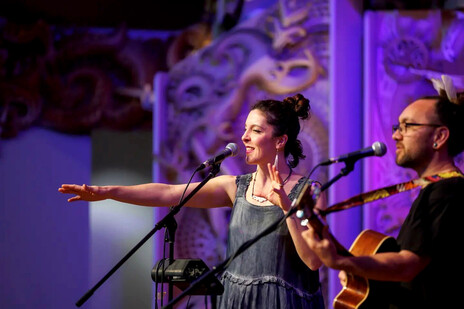
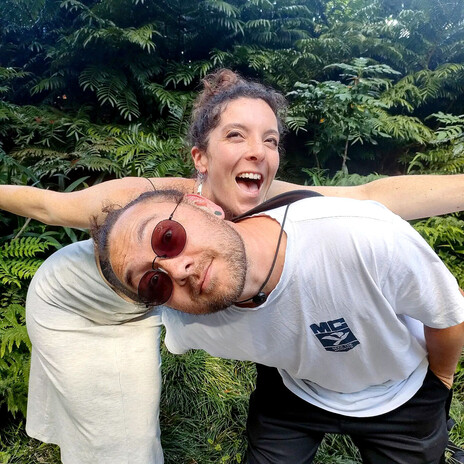
They manage to make music and write songs while caring for three children in a caravan
As for how they manage to achieve anything at all while caring for three children in a caravan, sometimes they can flesh out songs while they drive, but night time is precious, and they work late into it while the children sleep. Charles attributes the judicious planning that supports their flexible lifestyle to his teaching background.
“Emily’s quite happy to be inspired when she wakes up and go do all those inspirations,” he says. “Whereas I need a bit more preparation to be able to complete a task.”
At the end of 2024, Aro were recipients of the Te Māngai Pāho Oro Kura Roa grant, allowing them to dive deeper into building the band and its brand. This allowed them to spend all of 2025 writing, recording, producing, and (in 2026) releasing Tāwauwau. Emily describes the Te Māngai Paho support as “incredible”.
“It not only supports you as the artist and the writing of the project – which is the first time we’ve actually been paid anything from a grant, personally – this grant also had a bit towards the business growth, setting Aro up as a company and and talking to accountants, the legal side of things. Working out what’s our strategy and what’s our brand?”
Charles says: “I’ve never given so much time. Every project we’ve created has been while I’ve had full-time work. The biggest thing I’ve learned during this period, with Oro Kura Roa, is to not get hung up on whether everybody likes us or not, because that’s not the point. Looking at it strategically, the more authentic we are, the easier it is for the people who want to find us to find us, rather than trying to spread it out and cover all these bases.
“A biblical reference the organisation I work with loves to use is, ‘Iron sharpens iron’. A friend sharpens a friend, but when iron strikes iron, there are sparks, so, tension – conflict – is almost necessary to sharpen our perspective in our views and our position. So, sparks will fly and it helps us navigate whenever we have disagreement.”
This understanding has allowed the couple to develop as songwriters too.
“I feel like our songwriting keeps evolving,” says Charles. “We started off trying to write something together, and have realised that both of us carry something and both can happen at the same time. It exists within both of us. We just recognise who Em and I are as individuals, in the collective of Aro, and that our character archetypes are really contrasting, but they obviously work. They complement each other. It isn’t a point of tension; it is a point of celebration and excitement.”
In all things Aro, Charles and Emily live in close proximity to their children’s worlds
With a very new member of their whānau to factor into all things Aro, Charles and Emily look set to be living in close proximity to their children’s worlds for some time yet, which has proved symbiotic with their creative process to date.
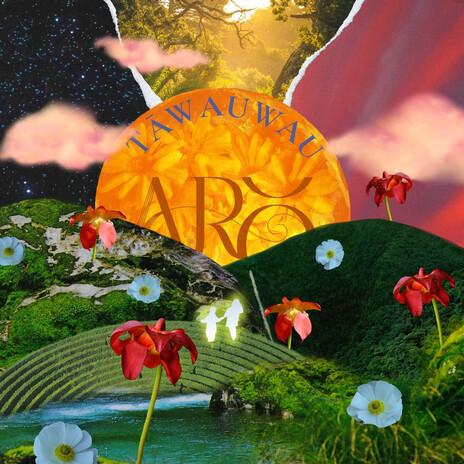
“That’s literally what inspired our new album, Tāwauwau,” says Emily, “just following the kids around, following little mushrooms and moss, and imagining that this is where fairies live, just going back to that magical place. I used to think fairies were real, and want to know where they lived. You see a little hole in a rock, that’s obviously a cave to someone’s little house, so it’s probably magically lit inside. Your brain, your mind and imagination is just so full of colour as a kid … kind of like Tāwauwau, this place beyond perception, a place we knew as kids. It’s like finding a way to be back there again, now as an adult, with all the baggage, but still being able to find that childlike joy. That’s where a lot of our conversations were coming from when we started writing this album. It is our deepest, most personal body of work.”
It’s easy to see why they picked the most famous line from the well-known Mary Oliver poem ‘The Summer Day’ to embed in one stand-out track, ‘Fly High’. When Emily sings, ‘What is it you plan to do / with your one wild and precious life?’ you get the feeling Aro live the answers with every creative act they undertake.