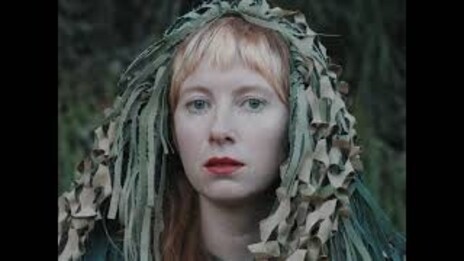
Around that time, Brady met bassist and vocalist Lucinda King, who was living at None Gallery, an experimental music and arts space in central Dunedin. When a room came up at the gallery, Brady moved in, and they began writing and recording weird electronic pop songs together. “It seemed to make sense,” says Brady. “I’m still in Dunedin now. I wanted something different and was attracted by the people.”
A big part of the attraction was the community of artists who either lived in or congregated around the gallery. As King puts it, “There was always something being made there. It was a convenient place to live, and the rent was pretty good.”
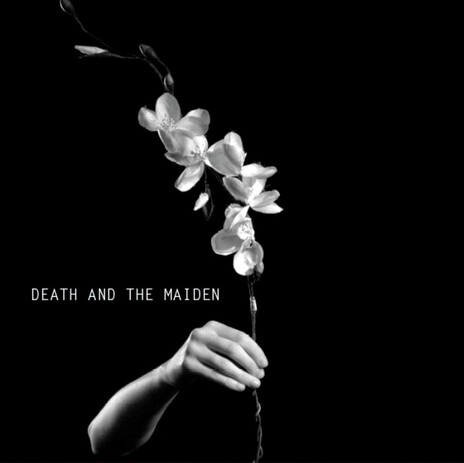
Before Brady and King went from writing and recording live, King went overseas on a tour with Dunedin space-pop group The Blueness. While she was gone, she discovered the late 19th-century Norwegian painter and printmaker Edvard Munch. “I ripped his picture ‘Death and the Maiden’ out of a book and carried it around with me in my wallet,” she recalled in a 2013 interview for Rip It Up. Ultimately, ‘Death and The Maiden’, an artwork steeped in mythology that explores the dark boundaries between love and death, strength and frailty, beauty and decay, was the perfect name for their project. Ironically, it wasn’t until later on that they realised it could also be read as a reference to the Flying Nun band The Verlaines’ signature song.
Death and the Maiden quickly knew they were moving in the right direction
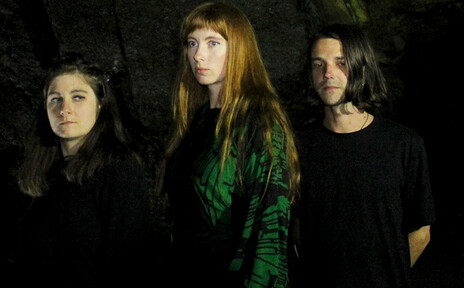
After King returned to Dunedin, she and Brady began performing live. “We did a couple of shows playing bass and singing to backing tracks, but it kinda sucked and felt weird,” Brady told Courtney Sanders for Under The Radar in 2013. After thinking about it, they approached King’s High School friend, guitarist Hope Robertson. Having played music together since they were 16, King and Robertson already had a tight connection. They were also playing together in the guitar-rock band Bad Sav.
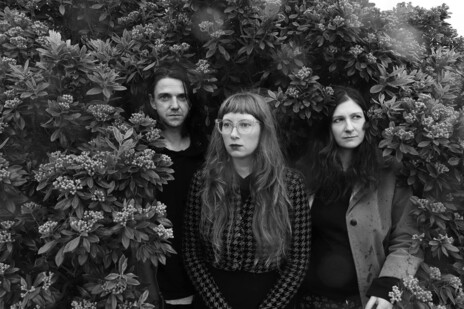
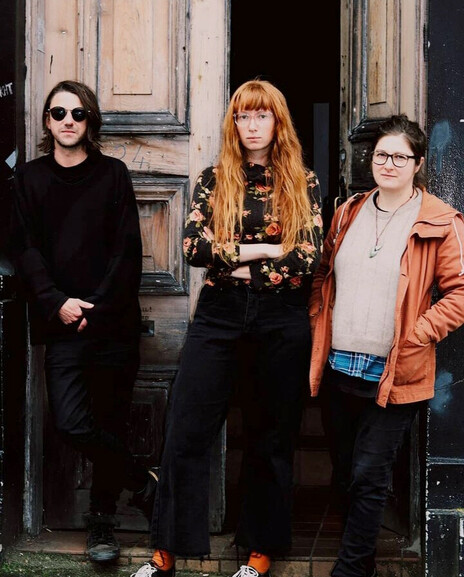
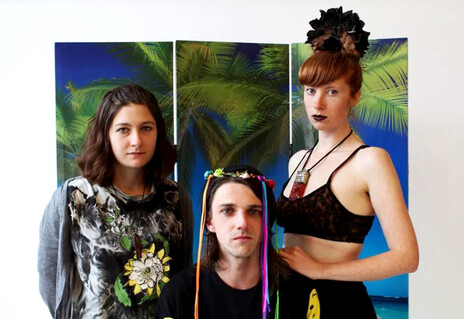
By the end of their first practice as a trio, Death and the Maiden knew they were moving in the right direction. “It seemed to all happen very naturally,” Brady explains. “I’d been trying to hone my electronic music production skills. Coming back from Berlin, I was super entrenched in dance music. After I met Lucinda [King], we started to meet in the middle between that and her songwriting.”
Brady, King, and Robertson found common musical ground in listening to a range of adjacent but disparate musicians: the Portland electronica band, Chromatics, American dream-pop/ambient musician Grouper, and The Cure. “I got quite obsessive with … Disintegration,” Brady admitted in a 2015 interview with Amanda Mills for New Zealand Musician. “I got all the outtakes … It’s really interesting, hearing all the processes.” Brady was also fascinated by German producer/DJ Superpitcher, who made him realise how effectively you could explore sadness through house music. King remembers this period as one when Grimes was going mainstream and the New Zealand art-pop star Lorde had arrived with ‘Royals’.
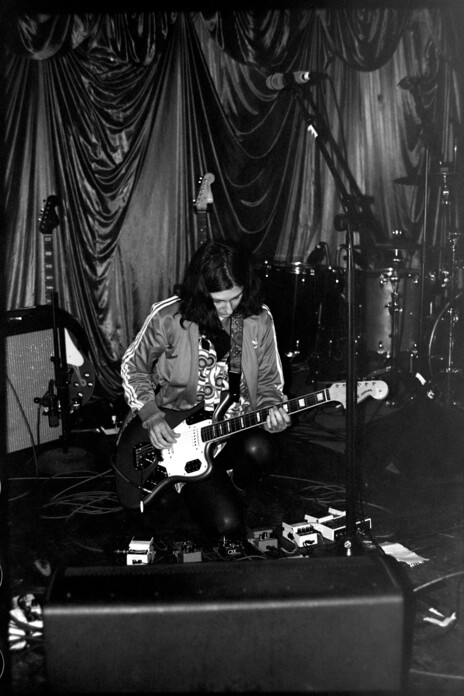
Between 2012 and 2015, Death and the Maiden wrote, recorded and performed. They developed a workflow centred around Brady on drum machines, synths, samplers, and engineering; King on bass and vocals; and Robertson on guitar. “I guess we were sort of working towards making a solid body of work,” Brady says. “I think it may have taken us a while to hone our sound. We went through a few different styles to find a sound that’s unique to us.”
Along the way, they were influenced by the experimental noise and electronica musicians in the None Gallery scene, as well as Dunedin’s climate, social and geographic landscapes, and culture. “None Gallery could be quite a grim place to live,” Brady says. “It was dark, dingy and cold.” Thinking back, he’s amazed at how cheaply they were able to record their debut in his room. “I didn’t even have proper studio monitors,” he says laughing. “Just broken hand-me-downs. When you’re limited with what you’ve got, it makes you more creative.”
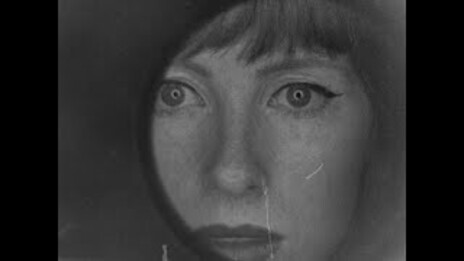
In 2013, Death and the Maiden released their first single, ‘Dear _____’, later accompanied by a haunting music video directed by Erica Sklenars. Over seven-and-a-half minutes, they mapped out a gothic post-punk sensibility tinged with elements of dream-pop and techno. The following year, their second single ‘Flowers For The Blind’ appeared on T E M P O R A R Y – Selections From Dunedin’s Pop Underground 2011-2014, a compilation released by Dunedin label Fishrider Records. In a review for Stuff, Grant Smithies described ‘Flowers For The Blind’ as “Rolling ethereal female vocals over a hypnotic bassline, throbbing synths and reverb-heavy Twin Peaks guitar … a gorgeous slab of Otago electro with a sinister funk edge.”
In 2015, Death and the Maiden released their self-titled debut album through Fishrider Records and the UK label Occultation Recordings, who made it available on CD and vinyl. For that record, and the two they’ve released since, King has handled the art direction and design with collaborators including Ted Black and Esta de Jong.
Having the album pressed to vinyl was a major life achievement. He remembers walking past the now-shuttered Dunedin record store Disc Den and being humbled by seeing the first Death and the Maiden LP on display in the window. “We owe a lot to Ian Henderson from Fishrider,” Brady says. “He was someone who could do something with what we’d made,” Robertson says, while noting that by and large, Dunedin’s older musician community has always been supportive and encouraging.
The Otago daily times said the trio’s debut was “An emotive trip through dance and techno”
That year, Sam Valentine writing for the Otago Daily Times described his favourite parts of the album as “An emotive trip through dance and techno, with the reverbed-out guitar and punch of post-rock and post-punk.” Writing for New Zealand Musician, Ania Glowacz called the album, “A mesmerising, enchanting and quietly ethereal body of work within seven special tunes.” She also noted, “This electronic, mellow, haunting and moody collection touches on such influences as 80s goth, Boards Of Canada, The Cure, Cranes, Cocteau Twins, Portishead, a chilled-out HDU. The brew is heady, a tasteful depiction of light and dark with none of the cliches.”
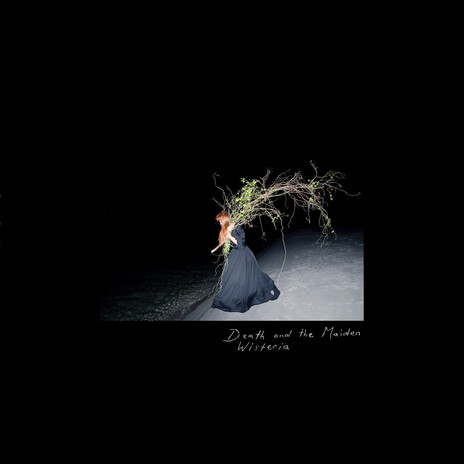
Three years passed before Death and the Maiden reconvened with Fishrider Records and Occultation Recordings for their second album, Wisteria.
“We would all have the songs for a long time, but it would take us ages to end up recording them, or doing the steps afterwards,” King explains. “There are a few gaps there where we probably wouldn’t be very productive,” Brady continues. “Life happens, but then we work together on something solidly, get it done, and break for a little bit.”
During the intervening years, a new generation of Dunedin bands like Gromz, The Shamblés, Soaked Oats, Marlin’s Dreaming, and the Jack Berry Band emerged on the national stage. For Death and the Maiden, however, it was business as usual in their world. “We’ve always been quite detached from what’s going on,” Brady explains. “Maybe it’s even hard to know where we fit in.”
By the time they got to Wisteria, Death and the Maiden had more experience with writing, recording and performing, including an appearance at the 2017 APRA Silver Scroll Awards in Dunedin, with Shayne Carter as music director. That night, they had to contend with technical difficulties that led them to reevaluate their live performance approach. “We’re always really harsh on ourselves,” Robertson admits. “It takes [the engineer] Tom Bell coming into our practice and saying that sounds alright, before we’re okay with it. That performance could have gone well, and we probably would have said it was bad.”
For the Wisteria recording sessions, Death and the Maiden set up in a warehouse space King’s sister was renting for her clothing label at the time. “She let us work there after hours,” King says.
This time around, they decided to focus on live drums and percussion alongside drum machines, aiming for a more coherent sonic sensibility. “People say they like putting the second album on and listen to the whole thing,” says Robertson. This time, they had some recording assistance from the engineer Nick Graham. Bevan Smith, who mastered their debut and all their albums since, helped with mixing.
‘Wisteria’ aimed to celebrate the excruciating beauty and crushing weight of everyday life
At the time, Death and the Maiden described Wisteria as aiming to celebrate the excruciating beauty and crushing weight of everyday life. It was a statement that seemed wholly appropriate to Radio New Zealand’s Tony Stamp, who identified a blend of melancholy and optimism in the music. In his words, “Songs tend to linger on the same chords, ploughing themselves into a gothic groove. But there’s always a flash of light shining out of the gloom.”
On release, Wisteria received some very favourable press overseas. For The Quietus, Mick Middles praised the album for how successfully the music reminded him of a “pre-Madchester Manchester [moment in the mid to late 80s], when a curious ethereal mist settled over ghostly dancefloors.” In his words, “This is the perfect soundtrack for the enveloping heat of a new season. Beautiful, scary and endlessly evocative. It can be whatever you want it to be.”
Death and the Maiden’s second album was also praised at home by Graham Reid for his Elsewhere website. “This is a fine collection of assured songs and structures which are focused and economic, have a pop sensibility at their dark heart (as did Joy Division, of course, hence the danceable New Order) and repay time spent,” he wrote. “Spectral psychedelic music where the colours are bleached out and a repeated phrase like ‘I’ll be this forever’ is as much a threat as a promise.”
Six more years passed before Death and The Maiden released their third album, Uneven Ground, through Fishrider Records and Occultation Recordings. Between records, the group went dormant while life happened to the members again. Brady spent some time back in Berlin, King became a mother, and Robertson moved to Christchurch. Despite the geographic distance and the passing of years, Brady never had any doubts that they would record again.
“I always think bands last forever, unless you properly break up,” he says. “We understand each other a lot, and what each other’s limits are,” King continues. “As a musician, being set up all the time is important,” Robertson adds. “If you come home from a gig and you don’t set up your pedals for when you do feel like playing, you might not get your shit out and practice.”
Across Uneven Ground, the trio recorded with Tom Bell, while drawing back the velvet curtain on their shadowy dream world with nine songs that exemplify their slow-motion fusion of underground electronic dance music and post-punk guitars, all washed through with psychic unease.
After the release, Dunedin’s Relics Music and Hifi Store paid them a high honour by letting the group know they’d been using the album to demonstrate their high-end hi-fi systems to prospective clients.
In 2024, they were invited to open for the British gothic rock/post-punk band The Cult at Spark Arena in Auckland. “Ian [Astbury] from The Cult has been really supportive,” King enthuses.
In a review for Radio New Zealand, Tony Stamp identified that “Uneven Ground aims to evoke the sensation in its title; you always feel like you’re in safe hands, but things are treacherous underfoot.” He also noted that he thought of New Order, Headless Chickens, and The XX while listening to the album, before ultimately determining that the group remains distinct. Of note was the track ‘Not Like’, which features scratching from Whanganui-based DJ Alphabethead. Ultimately, the album’s emotional core was ‘Leanest Cut’, a song King wrote while worrying Brady might not return from Berlin. “I still get emotional when I listen to it,” Brady admits.
At present, Death and the Maiden are pondering what the future might hold for them
At present, Death and the Maiden are pondering what the future might hold for them. After three years of motherhood, King has developed a new appreciation of time management. “I’m in a big songwriting phase,” she says. “My whole approach to writing songs is very different now, because I can’t be loud at home, I have to do everything in headphone land. I’ve been picking up keyboards, synths and drum machines, and having a lot of fun.”
After recently quitting his day job, Brady is looking forward to spending more time playing and producing his own music. “It’s practice to get better at the production side of things for the next Death and the Maiden album,” he says. Further north in Christchurch, Robertson has been playing guitar in a few bands, spending time at the Ride On Super Sound record store, and listening to a lot of music. She’s been thinking about new ways to approach Death and the Maiden, and trying ideas out on keyboards as well as guitar.
When I ask them what they have left on the bucket list, King offers up a final thought. “We’ve never been a proper big-time touring band. I’ve always regretted that we never travelled more.” But who knows? Maybe in a couple of years, after they release another album, they’ll get to scratch that touring itch properly. Stranger things have already happened.