Former New Zealand cricket captain John Wright received his first guitar lesson at primary school. Over the years there would be many more – some from prominent New Zealand musicians of the day – but it wasn’t until one last wrestle with ‘Sultans Of Swing’ in an Indian hotel that Wright decided he would be better off penning his own songs.

All rounder: singer/songwriter and former test cricketer John Wright
From 2000 to 2005, he was the first non-Indian to coach the Indian cricket side and his trusty Yamaha guitar was a constant companion on the team’s tours. When the day’s coaching duties were done, he would sit in accommodation from Bridgetown to Nottingham trying to master the songs he had collected in two massive songbooks.
“I’d been trying to play ‘Sultans Of Swing’ for about two or three years, or forever, it seemed,” Wright said. “I was in a room in the Trident Hotel, practising in the bathroom because it’s got better resonance, and I played ‘Sultans Of Swing’ and I thought, ‘That still sounds pretty rubbish.’
“I thought, ‘If I can’t play these damn songs, I’ll write my own.’ And that’s what started it, to be honest. I thought, ‘At least I might be able to play my songs. Bugger it, I’m gonna try and write my own songs from here on in.’”
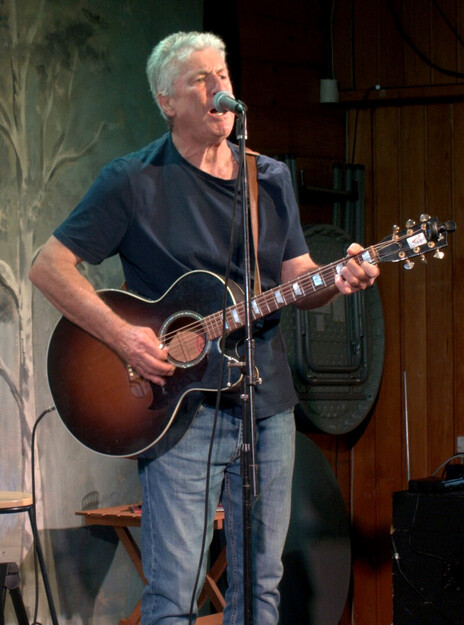
John Wright performing at the Christchurch Folk Music Club, April 2025. - Judi Smitheram
And the inspiration came quickly. ‘Christmas Away Blues’ was about being far from home in Melbourne or Dhaka (Bangladesh) on the eve of Boxing Day cricket tests and missing family and friends. ‘Bumps’ was inspired by the Christchurch earthquakes and fears in general. The reggae-tinged ‘Kingston’ celebrated his love of the West Indies. ‘Pike’ was his reaction to the 2010 Pike River Mine tragedy.
The pick of 15-odd years of material made up Wright’s 2016 debut album Red Skies, initiated after a backstage meeting with multifaceted musician and former Narcs keyboardist Liam Ryan. That was followed by digital-only EP Jump The Sun in 2019, and CDs Walking Tracks (2021) and Flat Out (2023).
Wright told AudioCulture he reckoned he’d had more guitar teachers over the years than cricket coaches. Initial lessons with bandleader and one-time 1480 Village owner Clarrie Light at West Melton School didn’t continue because “the strings were about two miles away from the fretboard. So, I learned D, G and E minor, but to be honest, I was really more interested in sport in those days.”
But while at university, Wright was given pointers by Dunedin supergroup Lutha’s lead guitarist Graham Wardrop, and folkie Wayne Baird. The latter, upon moving to Auckland in the mid 1970s, was part of Bamboo, Rick Bryant’s Jive Bombers, and Gentle Annie before fronting his own long-term band The Alibis.
In the 1980s, Wright received lessons from Hello Sailor guitarists Dave McArtney and Harry Lyon in exchange for batting tips that could prove beneficial in the annual Auckland musicians’ cricket match. Lyon recalled Wright having the Sailor pair face a bowling machine at an indoor nets session at Auckland’s Eden Park; alongside them were New Zealand players Bruce Edgar, John Bracewell and John Reid.
“He told Dave and I to get down to the wickets but stand well clear, like, three to four metres,” Lyon said. “He fired up the machine and said, ‘This is what it’s like facing [West Indies quick] Malcolm Marshall.’ Well, we nearly shit ourselves. The ball hit the back of the net with incredible force and speed before we could blink. Anyway, we padded up and he gave us a go facing a fast one, but with a tennis ball. With me, much to his amusement as I copped them in the kisser, ribs, etc, before moving a muscle. Dave fared a little better.”
Wright, however, had to pass up the opportunity to meet Dire Straits leader Mark Knopfler in 2005. Indian master batsman Sachin Tendulkar invited Wright to accompany him backstage after cricket tragic Knopfler’s concert in Mumbai. Tendulkar swapped a signed bat for Knopfler’s signed and used red Fender Stratocaster. For Wright, it could have been the meeting that revealed the secret to finally nailing ‘Sultans Of Swing’, but coaching duties intervened.
John Geoffrey Wright was born on 5 July 1954 in Darfield, west of Christchurch, and grew up on the family farm in nearby West Melton. “We had one of those old radiograms, and the music that I remember was basically musicals,” Wright said. “The soundtracks to My Fair Lady and South Pacific. I wouldn’t say we were really a musical household.
“I went to a very small country school of 24 people, and there wasn’t a lot of music there. But there was a guy called Clarrie Light who used to zoom through the country districts, so I had some very rudimentary guitar lessons when I was probably in standard four or five or six. We played all the sort of hits, and I did have a guitar for about two or three years and tried to do a little bit of practice.”
As a boarder at Anglican secondary school Christ’s College, in Christchurch, Wright was part of the cricket teams and the choir. “I started off as a treble and then nature took its course when I was in the fifth form and I ended up being a tenor,” he said. “I still have two albums which we made as a choir – one was a live performance in Dunedin Cathedral, and one was a mixture of carols and anthems.
“It was a very good choir. We had a guy called Robert Field-Dodgson, who was the music master, and we had chapel every morning and then Evensong in the evening, and we would perform anthems and all sorts of stuff. It’s probably the best team thing I’ve ever done. Mr Field-Dodgson, or Poppy as we used to call him, was a stickler and if anyone was out of tune, he could hear it.”
For the first time, Wright’s ears were opened to the hits of the day. “Everyone had a record player in the common room or the study. We were woken at about seven o’clock, I think, by the radio and it was the greatest hits blaring through the dormitory.
“I can remember [The Beatles’] Abbey Road. That was played in our boarding house almost constantly. Everybody had their favourite band. Mine was Crosby, Stills, Nash & Young. Jethro Tull, Led Zeppelin, Beatles, Stones, you name it. It was just part of being at boarding school, really.
“I didn’t play a lot of guitar, but in fourth form, Paddy Burgin from the choir wanted me to play bass in a band he was forming. I went to a couple of practices, but I’d never played bass. The strings seemed a bit big for me. Paddy is now a Wellington-based luthier.”
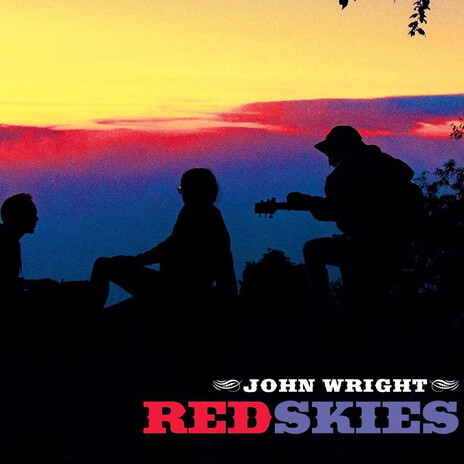
John Wright – Red Skies album cover, 2016
After Christ’s College, Wright did a Bachelor of Science in biochemistry at the University of Otago. “I knew one thing, that I didn’t want to go back on the farm at that stage, so I decided I’d go to university, and I decided I’d do Med Intermediate. Thankfully, I didn’t get in. I passed, but my grades weren’t high enough.”
Fellow Christ’s College chorister and guitarist Sandy Hazeldine introduced Wright to the music of Canadian singer/songwriter Gordon Lightfoot and soon Wright was fingerpicking his way through Lightfoot’s ‘Talking In Your Sleep’. He bought a Yamaha FG-180 guitar and found his way to the Dunedin Folk Club. “I was right into going to folk club. The girls were pretty; the music was good.
“One of the things that inspired me was I went to the folk club one evening and in walked a fellow that had a jacket a bit like David Crosby’s, long blond hair, and it was Graham Wardrop from the band Lutha. And Lutha were big in Dunedin in those days. And Graham played note-perfect and sang ‘Suite: Judy Blue Eyes’, which I loved, and ‘You’ve Got A Friend’, James Taylor. I remember that very vividly and thinking I’d love to be able to play something like that.”
A nervous Wright and his biochemistry lab partner Simon Leverton performed at least once, maybe twice, at the folk club, but Wright preferred the less stressful refuge of his bedroom. “I couldn’t stop my fingers from shaking. Playing in your room was a hell of a lot different from playing to a live audience.”
Completing his studies, he returned to Christchurch where cricket became his focus. Unable to break into the Canterbury provincial team, he answered a call to move to Gisborne where he was selected to play first-class cricket for Northern Districts in the 1975-76 summer.
Spending the New Zealand winters playing cricket in England, where he quickly progressed from the Kent second XI to becoming a professional with Derbyshire, Wright spent the next couple of summers in Gisborne playing for Northern Districts and working in the record department at sports and music store Guy and Dunsmore (later known as Sight and Sound).
“I think we sold $8000 or $9000 worth of records the day before Christmas [1977],” he said. “It was the time when [Fleetwood Mac’s] Rumours came out and, also, Hello Sailor had a fantastic record out. They’d tour and they’d come to the Sandown hotel in Gisborne. When bands came through Gisborne, it was a big deal.”
Wright and his workmate Jody Webster put a jug band together, but the only engagement Wright remembered was for an asthmatic society dance. “I often joke that we could only play four or five numbers because they were out of breath after that. It was the only gig we did. They might have done some more, because I had to go away to England, of course.”
John Wright made his New Zealand test cricket debut in the historic first test victory over England in Wellington in February 1978. For the next 15 years, he opened the batting for New Zealand in tests and one-day internationals and captained the team from 1988 to 1990, along the way becoming the first New Zealander to score 5000 test runs.
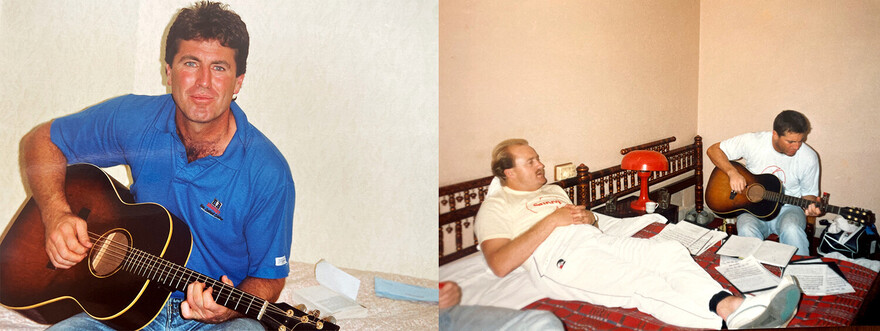
John Wright and his Gibson guitar, c. 1990, shortly before it was "smashed to bits" in an aircraft hold. Wright bought the early-1950s parlour guitar in Los Angeles on his first overseas trip in 1976. At right: New Zealand cricket teammate Mark Greatbatch sings along to Wright's songbook. - John Wright Collection
“If we went on a long overseas tour, I’d take my guitar,” he recalled. “Of course, we shared rooms in those days, so it was pretty tough on the bloke I was sharing with, listening to me try and play Simon & Garfunkel’s ‘Sounds Of Silence’ or whatever. But now and then, if we had a victory, we’d strum along with a bit of a singalong and a few beers.”
In 1996, Wright became coach of the Kent County Cricket Club where he received guitar lessons from cricket-mad former Strawbs lead guitarist Dave Lambert. “I had lessons with Dave three or four times a month. He’d say, ‘Well, what sort of song do you want to learn?’ He’d work out the tab, and I’d spend the next month or six months trying to learn the damn song!”
Progressing to writing his own songs, Wright coached India from 2000 to 2005, was appointed New Zealand coach in 2010, a post he resigned from in 2012, and then coached the Mumbai Indians in the Indian Premier League Twenty20 competition. He spent New Zealand winters as an adviser and scout for the Mumbai Indians and in coaching and admin in England until COVID-19 hit.
There was never any serious thought put into recording his songs although he laid down some demos with his old folk club ally Graham Wardrop. “I did about two or three with Graham, and he was helpful, but they weren’t quite what I wanted,” he said.
Things changed when Wright paid a backstage visit to Hello Sailor at the Great Kiwi Beer Festival at Hagley Park, Christchurch, in March 2015. The band was taking its first tentative steps after the passing of Dave McArtney and planning a 40th anniversary tour later in the year. Unfortunately, the Hagley Park event would turn out to be frontman Graham Brazier’s last gig before his death in September that year.
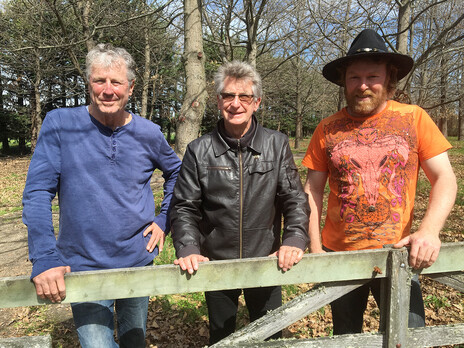
John Wright (left) with his musical allies Liam Ryan (centre) and Dean Hetherington (Coalrangers) around the time of Wright’s debut CD Red Skies, 2016. - Aly Cook
Hunkering down for a beer and a catch-up, Wright was introduced to Sailor’s fill-in keyboardist Liam Ryan, then performing-arts manager at the Christchurch Polytechnic Institute of Technology. The men got chatting, Wright revealed he wrote songs, and Ryan suggested he send some to him.
“I was so excited,” Wright said. “I got home and I got my Gibson guitar, and I fingerpicked all these songs, every damn song I had, and I sent them all to Liam. He was so encouraging, because it’s a little bit out of my comfort zone. You say you write songs, and people say, ‘What’s this old cricketer doing writing songs?’ I still think people think that.”
Over the next 18 months, Ryan quietly worked on arranging the songs at his home studio and overdubbing session musicians before sending them back to Wright. “I’d get a track in from John, and I’d cut it up and put a BPM down and we’d lay a framework out for the song,” Ryan recounted. “Then I’d send it through to Dean [Hetherington] and he’d put a guitar track on it, and it worked out really well.”
Wright: “There was a song called ‘Last Orders’, which was basically about the pub and the publican where I used to drink in Derby, and that was the first one I got back, and it was like getting a Christmas present. It had everything and I just had to put the vocals on, which we did in two days at his place.”
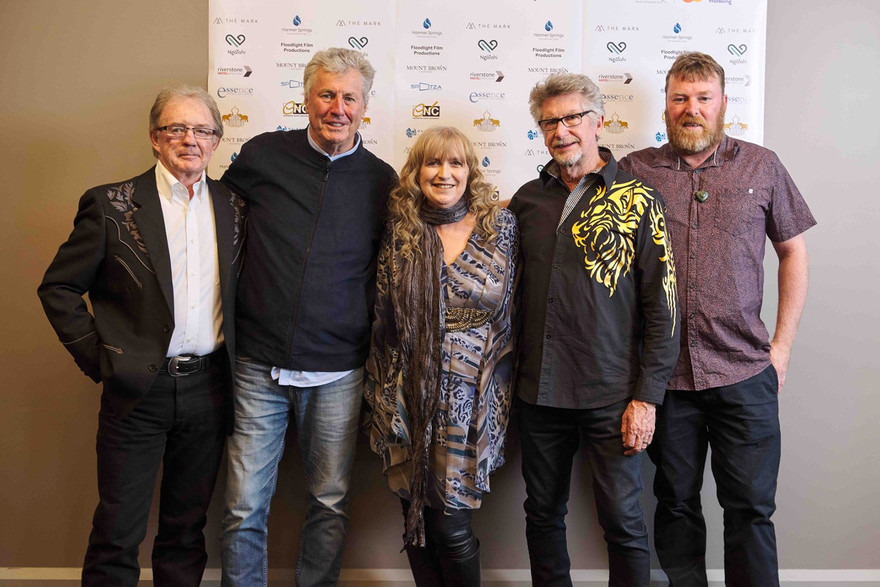
John Wright with The Sou'Westers, 2019. From left to right: Paddy Long, John Wright, Aly Cook, Liam Ryan, Dean Hetherington. - Aly Cook Collection
Red Skies was launched in April 2017 at Motueka’s Memorial Hall, in honour of the opening track ‘Mot’, with Wright backed by Ryan’s band The Sou’westers, which also included singer/promoter Aly Cook and guitarist Dean Hetherington, formerly of The Coalrangers. The album featured contributions from Ryan and Hetherington, New Zealand’s most-recorded pedal-steel guitarist Paddy Long, and blues legend Midge Marsden on harmonica.
“I knew Dean, particularly Dean’s father Des [another Coalrangers member] because I sold Des my Martin, which I’ve always regretted. Des was a great guitarist and the Martin needed to be played. He deserved a great guitar, and he played it right through The Coalrangers. Then I got to know Dean, because I loved The Coalrangers. I thought they were a fantastic band.”
Follow-up EP Jump The Sun was unique in that Wright, in India on cricket duties in October 2018, put down 16 vocal takes for four songs at Nathaniel School of Music’s studios in Bangalore while Ryan supervised from his home studio in Waihi. A few hours later, the files were downloaded and dropped into Ryan’s Logic sessions 12,000km away.
Walking Tracks was different again; it was recorded while in lockdown during the pandemic. By that time, Ryan had set Wright up with a Focusrite Scarlett interface so he could record acoustic guitar and finished vocals at home in North Canterbury. Bass guitar was added by Peter Stroud, who was part of troubled Fleetwood Mac founder Peter Green’s Splinter Group. Besides Ryan, the other musicians were guitarists Hetherington and Chet O’Connell, Paddy Long, drummer Jeff Baker, and saxophonist Hayden Baird.
Christchurch guitar gun Phil Doublet produced Wright’s 2023 album Flat Out after being introduced by Coalrangers bassist and songwriter Geoff Farmar. Wright said the shift from Ryan to Doublet gave the songs “a little bit of a different flavour”. Whereas Ryan was adept at splicing the best vocal phrases from various takes together, Doublet preferred to have Wright sing the songs right through.
“It was quite challenging,” Wright said. “A lot of those songs I sung many times to try and get the right take. I enjoyed it. And Phil’s such a great player. I mean, anything with strings, he was fantastic. We did that pretty quickly and then Graham Wardrop helped mix it.”
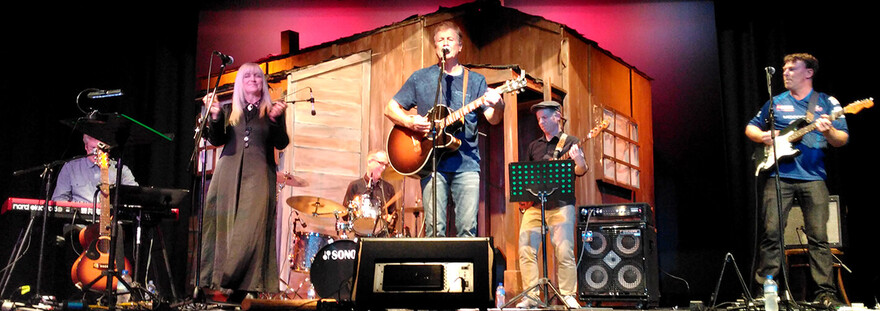
John Wright and an extended Sou’westers at the Motueka Memorial Hall, 2017. Left to right: Liam Ryan, Aly Cook, Doug Stenhouse, John Wright, Fraser Campbell, Dean Hetherington. - Liam Ryan collection
Wright has performed sparingly since the initial handful of gigs with The Sou’westers when Red Skies was released. From 2025, he has appeared alongside Christchurch jazz singer/songwriter/pianist Liz Braggins, “who papers over my cracks and is a great performer and teacher”. He’s a regular addition to Des and Dean Hetherington’s Sunday night residency at the Woodstock Hotel in Hokitika and has opened for Graham Wardrop.
“I’ll never forget Des Hetherington saying to me, ‘When you play on your own, John, it’s a different animal,’” Wright said. “And I certainly found that out when I opened for Graham. I prefer the comfort of having people around me who can play. It’s quite interesting comparing my experiences as a professional batsman to being a performer. I’d rather bat in front of 80,000 at the MCG than sit on a stool and play by myself. I find that quite terrifying, actually, because at least you can get out and walk off when you’ve got a cricket bat.”
--
Links