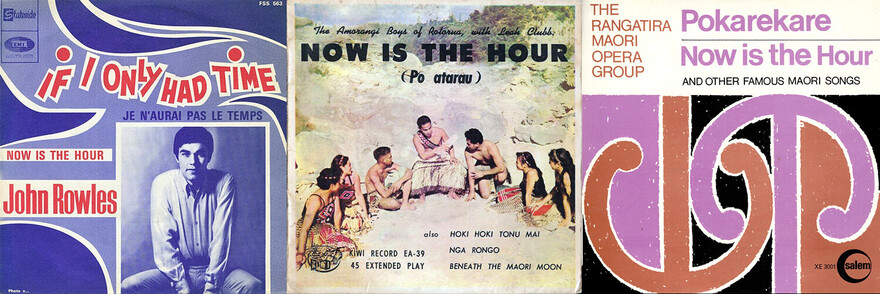
Releases of Now is the Hour / Pō Atarau’ by John Rowles (France: Stateside, 1968), the Amorangi Boys of Rotorua (NZ: Kiwi, 1960), and the Rangatira Māori Opera Group (NZ: Salem, 1965).
The inclusion of the seminal Aotearoa song ‘Pō Atarau’ in the 2026 science-fiction film Project Hail Mary took New Zealand audiences by surprise. The 1976 recording, by the Turakina Māori Girls’ Choir, caused many a tear to fall. It also stimulated discussion about the composition of the song, and its complicated gestation and history, which interweaves an Australian melody with ‘Now is the Hour’, ‘Haere Rā’, and ‘Pō Atarau’. This essay by Wellington ethnomusicology lecturer Allan Thomas perceptively covers the connections between the songs. – AudioCulture
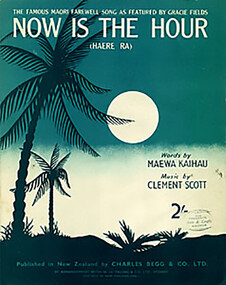
Now is the Hour / Haere Rā - a post-war edition published in New Zealand by Charles Begg
‘Now is the Hour’/‘Haere Rā’ is a popular song of the first half of the 20th century; a particularly New Zealand song. I wondered how to account for its popularity, and what endeared it to New Zealanders. I wondered why so much thought, argument and litigation had been spent on the song’s origin and development, who wrote the words and music. I was intrigued by its recording history, and its entry into our language as a saying, “Now is the hour”, which is still used as a newspaper headline or conversational filler, half a century after the peak of popularity of the song.
In my studies, this song joined with a number of its contemporaries in what I have called “nation-building songs” or “songs that made New Zealand”. These songs covered the preoccupations of the immediate post-settler generation: the distance from “home”, action in sport and war, and relations between Māori and Pākehā. These are short and concise to list, but New Zealand’s identity depended on the development and resolution of these themes, and the solving of the conundrums that they presented.
But, to the delight of the ethnomusicologist in me, these were not just songs that reflected current preoccupations, but actively promoted their view of manliness in sport, of the cooperation of Māori and Pākehā, and, in our great ‘Haere Rā’, the loneliness of New Zealand and the anguish of separation when people went away. Think of the first line of the song, the inward swoop from Clement Scott’s original tune – is it not introspective, a cry of anguish, and an experience of anguish held up with the whole song for public contemplation and for the acceptance of this emotional realisation in New Zealand? (1)
The songs also revealed, and this is especially true of ‘Now is the Hour’, multiple origins; at their origin I think they were “quasi-folk songs”, existing in an oral tradition, free-floating and adaptable, before they were published and accredited to a composer.
Of course these songs were a gift to ethnomusicology – why does some music become popular, what makes it relevant, and how do these factors change? And how does the song creation participate in the wider musical values, in this case of Māori and Pākehā traditions? (2)
Now is the Hour When We Must Say Goodbye / Haere Rā
In the 1930s and 1940s the song that farewelled every passenger ship leaving New Zealand was ‘Now is the Hour’. The song was played by a brass band as a ship moved away from the wharf, tearing apart the streamers held by travellers and their loved ones on shore. Janet Frame writes in her autobiography:
I stood on deck among a crowd of passengers, all throwing streamers that were caught by watchers on the wharf ... went downstairs, just as the band was playing ‘Now is the Hour’, and the music reached down like a long spoon inside me and stirred, and stirred. (Frame 1984:195)
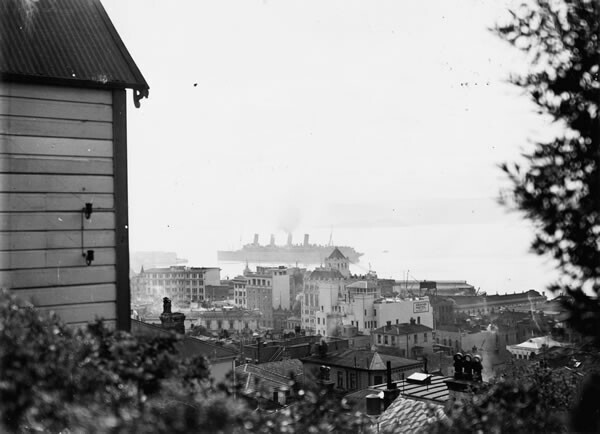
The troopship RMS Aquitania leaves Wellington Harbour, 1941. A year earlier, Māori Battalion soldier Ruru Karaitiana wrote 'Blue Smoke' while on board the Aquitania as it steamed towards Britain through the Indian Ocean. - Evening Post Collection, Alexander Turnbull Library, Wellington; ref 1/4-049250-G
The emotional force of the song came from the way in which it arrested time; it drew out the impending separation, the last moment of parting, extending the experience of the farewell. Frame later experienced a forlorn departure without the song:
My departure from London was sad and strange. With scenes in my mind of my journey from New Zealand, of my father, Uncle Vere and Aunt Polly waving from the wharf sheds in Wellington; streamers, the ritual playing of ‘Now is the Hour’, the fearful apprehension that came over me when I watched the hills receding, the rising sense of adventure when I realised there was no turning back. I tried to imagine how it would be now, leaving London. The wharf, the embarkation, sailing down the Thames to the open sea ... but where were the people to say goodbye in a city where my only family was the city itself? (Frame 1985:156)
An earlier New Zealand writer who used the song was Robin Hyde, in a novel about the First World War called Passport to Hell, published in 1936. Hyde uses the song much closer to a farewell to the dead on the battlefield, in a stark and fearful image of the potent song:
… they were told they were evacuating Gallipoli ... A New Zealand captain, marching at the head of the Māori Pioneer Corps, started them off singing the Māori waiatas ...
Now ... ees ... the time
When I ... mus’ say ... farewell,
Soon ... you’ll be sail-eeng
Far away ... from me. . .
When you’re ... away. . .
Kindlee ... remember me. . .
When you return, you’ll find me
Wait-eeng here.
... O, listening dead upon the hillsides of Gallipoli and in the deep gullies of the little bitter-tasting bushes! – it is the voice of your country that is bidding you farewell. (Hyde 1986 [1936]:103, 104)
During World War Two the emotional force of the song increased dramatically: “For some of the men on the troopship the Māori song would inevitably be a last farewell.” (3)
As the Queen left the 1974 Commonwealth Games the crowd sang, impromptu, ‘Now is the Hour’; earlier, as the Springbok team completed their last match of [the 1956] New Zealand tour, the crowd also sang this song.
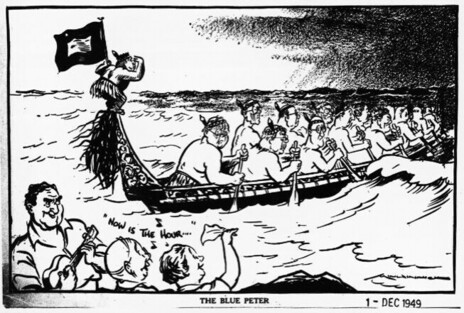
The NZ Herald's longtime cartoonist Gordon Minhinnick uses Now is the Hour to portray the departure of Peter Fraser's Labour government after the 1949 election. Farewelling them on the ukulele is incoming National PM Sidney Holland. - Allan Thomas Collection
‘Now is the Hour’ not only served travellers. Almost any gathering could conclude with the song: a local church meeting, marae gathering, school function, tramping club trip, private and national occasions. It was common for the last dance at a community social to be a waltz to the tune, inevitably sung by all present. A band member recalls that in the 1960s, Australian dance bands played this tune when New Zealanders were present and reported an accumulated weight of sadness and of personal memories.
In its first decades, the song had a number of forms which reflected the occasion. Each of these was marked by the farewell function and was permeated by feelings of sadness and loss. The song seems to reflect a mournful trait in the national character, and to explore, on an emotional level, “distance from the homeland”, a primary feature of New Zealand’s situation for those generations.
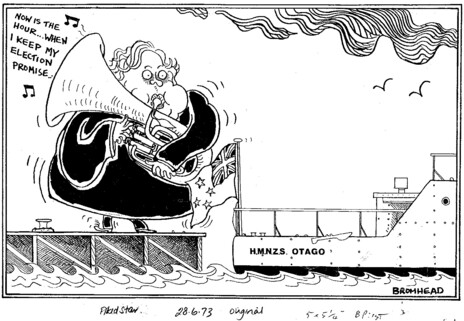
"Now is the hour … when I keep my election promise." Cartoon by Bromhead published in the Auckland Star, 28 May 1973. Peace Media sent the Fri and Spirit of Peace to Mururoa atoll with the objective of preventing the detonation of nuclear devices. The Labour government led by Norman Kirk sent the frigates Otago and Canterbury to observe.
The early years of the song throw up several different pieces of music which contribute to “the song” in the long run. These versions impart a folk-like character to the early history as several sources contribute to the mature song. Some of that early history is in an oral tradition and is now unable to be retrieved, but enough is recorded to show that this song (and the others that I have studied) is not a conventional composition in our sense. Operating here is a Māori and a British propensity for adapting and rearranging songs for specific occasions.
‘Swiss Cradle Song’
The origin of the tune of ‘Now is the Hour’ is the piano music, ‘Swiss Cradle Song’, published in Sydney in 1913. This would seem to be one of the least controversial of the facts surrounding ‘Now is the Hour’, yet there has been dispute about the named composer Clement Scott, which may have been a nom de plume of Mr A B Saunders of Sydney (4) or of Mr C S Darling. The publisher, Nicholsons, who was the successor to the original publisher, noted that the first printing of ‘Swiss Cradle Song’ was cancelled and withdrawn, to be reprinted with the name of the composer changed from Marcell Christian to Clement Scott. (Annabel 1976:234). Which of the four names represents the composer of the piece?
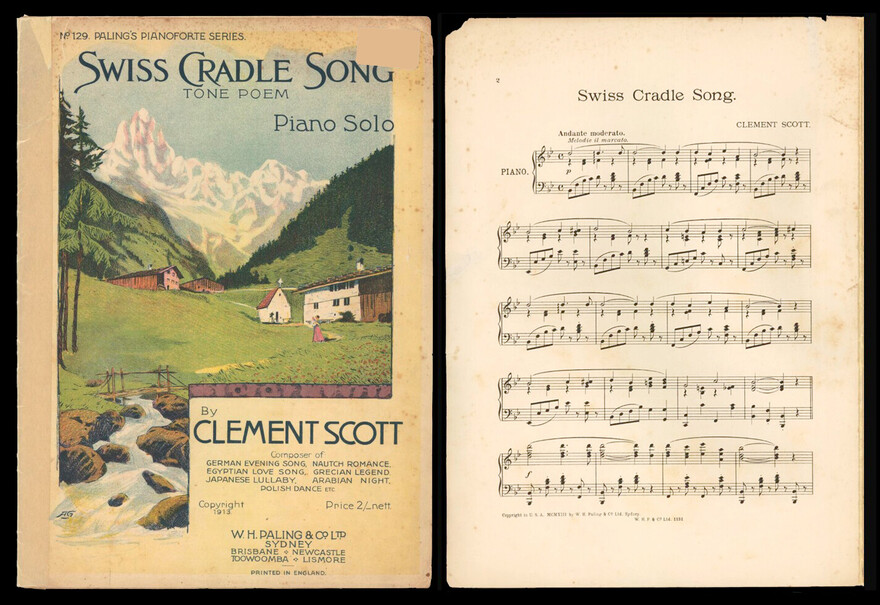
Swiss Cradle Song, by Australian composer Clement Scott, 1913. - National Library of Australia
Whoever Clement Scott was, he is credited with having written about a dozen pieces for piano, which were advertised as “Favourite Teaching Pieces”. They included ‘German Evening Song’, ‘Grecian Legend’, ‘Japanese Lullaby’, ‘Egyptian Love Song’, ‘Arabian Night Patrol’, ‘Polish Dance’, and ‘Belgian Slumber Song’. These compositions do not display any world music characteristics, but clearly they filled a niche in the market. Such music would have been readily available in New Zealand.
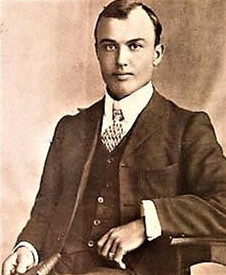
Clement Scott (1880-1946), the pseudonym of Albert Saunders. Australian publisher Paling's sold 130,000 copies of the Swiss Cradle Song.
There is a clue to the reason for the popularity in New Zealand of the ‘Swiss Cradle Song’ piano music in a comment by Dick Grace, one of those who have claimed that the words of the song originated in their family. Grace stated that his aunt Jane, in Gisborne, played this music as accompaniment to silent movies where it became well known. This is a credible claim because ‘Swiss Cradle Song’ is made up of independent sections which could readily be used for this purpose in the different moods of the film.
The addition of words to the first phrase of the melody of ‘Swiss Cradle Song’ may have occurred in several different circumstances, though it can be observed that each of the different songs created is a farewell song. Together they give an intriguing picture of song composition at this time – the free adaptation of songs for specific circumstances. Whereas today to take a tune and add words and call it our own is a shameful, even illegal, act, in the early years of the 20th century this was a common practice both in Māori music and in the British ballad tradition. Such borrowing often occurred in creating a new song, particularly one which reacted to immediate circumstances. Borrowing was seen as a natural musical convenience rather than with the stigma that it appears to have today.
‘Te Iwi’; ‘Māori Faith-healing Song. Te Oranga Mō Te Iwi’ (five verses in Māori)
A hymn used in the Rātana Church is among the earliest of a group of songs based on the ‘Swiss Cradle Song’ tune. ‘Te Iwi’ was published in Sydney in 1923 in a collection of Maori Melodies arranged for piano by Clarence Elkin. However, we expect that ‘Te Iwi’ had been current for a number of years earlier because on publication the song was a complete five verses, it used the original form of the tune, and anecdote gives it a well-established place in the church. One member of the Rātana faith interviewed by Angela Annabel said: “I can see [the song] now – printed on a little yellow card ... I used to go to church just to hear this hymn ... I used to hold it, and I used to love this thing. My ear for music at the time realised that this is a very special song, and I used to wait and wait and wait.” (Annabel 1976:249)
Other anecdotes give an early provenance for the hymn: the manager of Begg’s music shop in Wellington recalls a member of parliament coming into the shop in 1921 and requesting the music of ‘Swiss Cradle Song’ which he had heard at the Rātana settlement. And it is also said that when the secretary of the Rātana movement toured the South Island he found the congregation already singing it. (5)
Distinctive in the Rātana church use of the ‘Swiss Cradle Song’ melody is the original form of the tune (in which the first four notes were the same), rather than the now familiar dip on the second note.
‘Pō Atarau’ (in a 1927 recording by Ana Hato the 1st verse is in Māori, 2nd verse in English)
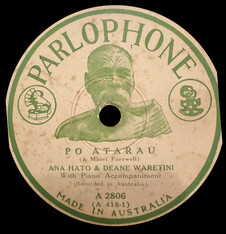
Ana Hato & Deane Waretini, Pō Atarau (Parlophone 78, 1927)
‘Pō Atarau’ is also one of the first songs to provide words to the modified ‘Swiss Cradle Song’. ‘Pō Atarau’ is a romantic text. Translated, its sense is: “On a moonlit night I see in a dream/ Your departure for a distant land/ Farewell, but return again someday/ To your beloved crying after you.” It is a song of parting, from a loved one who is left behind. There are three competing claims to the authorship of this song:
1. From the East Coast of the North Island comes a claim that the song was written as a farewell to the members of the shearing gang who had completed their work for the season. The Grace and Awatere families composed the song to the melody of ‘Swiss Cradle Song’. The families have continued to hold this view of the origin of the song, and they say that a legal claim for copyright was made, but that it was never recognised. (Revington 1999)
2. The central North Island district of Rotorua is the source of another claim to this composition. Mr William Reynolds (who became known as “Pō Atarau” through his association with the song) was assisted by three Māori entertainers – Hine Marama, Meri Ngawiki, and Putu Manahi. They left a cabaret to look at glow worms “on a moonlit night” at Fairy Springs, Rotorua. On their evening stroll they composed the song and took it back to the cabaret and sang it there where it became popular. The story is told by Mr Rangi Royal who said the incident happened in 1918. (Dansey 1975)
3. But another Rotorua version of this story locates its origin at the thermal area of Whakarewarewa, where three guides – Eva Tapiri, Millie Hemopo, and Minnie Eparaima – created the song. (Dansey 1975)
These accounts of the origin of the song, first in the East Coast region and then in Rotorua, gain credibility as places in which the song became extremely popular. Māori groups instituted a tradition of closing a concert performance with it. The song is always sung with a relaxed familiarity as one of the most tuneful and well-loved items on the programme.
Listen to Ana Hato and Deane Waretini’s 1927 recording of ‘Pō Atarau’
‘Haere Rā (Goodbye) Waltz Song’ (1920, by Maewa Kaihau; in sheet music published 1928 or earlier, the 1st and 3rd verses are in English, 2nd and 4th verses in Māori)
The major song in the early family of ‘Now is the Hour’ is ‘Haere Rā’, which possibly introduced the first English words. This allowed the song to be used at Pākehā farewells, as the earlier Māori text had facilitated its use at Māori gatherings. Poroporoaki (farewells) had been the occasion for the earlier songs and now the words of farewell were moved to prominence in the first line, “This is the hour for us to say goodbye.”
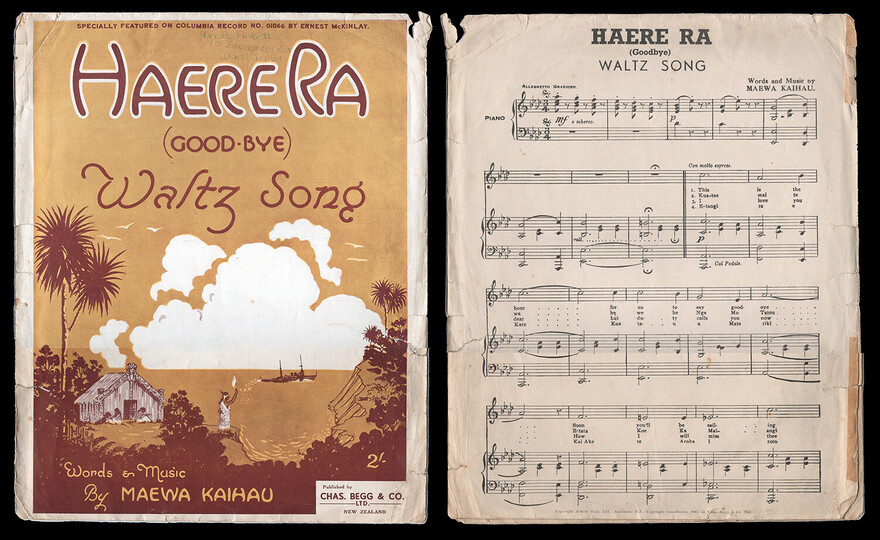
Haere Rā - words and music by Maewa Kaihau (New Zealand: Charles Begg, 1940s). - Chris Bourke Collection
Musically, the tune of ‘Haere Rā’ moves to waltz time (3/4) and has the melodic dip in the first line. These features do not occur in the Rātana song ‘Te Iwi’, and it is possible that they did not occur in ‘Pō Atarau’ either, until it became “infected” by the later, more popular form of the ‘Swiss Cradle Song’ original. Perhaps the two features (waltz and melodic dip) are the contribution of composer Maewa Kaihau, though this is conjectural.
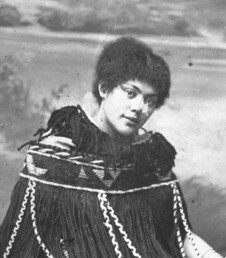
Maewa Kaihau (1879-1941) was born Louisa Flavell. Her mother was a descendant of Ngā Puhi chief Hone Hika, her father French. She married Māori politician Henare Kaihau in 1903.
In the first printing of ‘Haere Rā’, possibly in 1921, Maewa Kaihau is credited with words and music (6); later, when copyright was applied for in 1928, she is listed only as the creator of the words; the tune is said to be composed by Clement Scott. (7)
Two stories told by her family show possible reasons for Maewa Kaihau to have composed the English verses of ‘Haere Rā’/ ‘Now is the Hour’. Annabel was told by the family that the song was composed for one of two occasions:
One family hypothesis is that her song came into being on the occasion of the visit of the Prince of Wales to this country, an event which occurred in 1920; and that for reasons of urgency a tune already known to the composer was used – a pronouncement which confirms the already-indicated pre-existence of ‘Pō Atarau’. A family account, also, of an attachment between a member of the Prince’s entourage and the Kaihau’s eldest daughter ... might well have inspired the song. Another theory associates it with visits to New Zealand waters in the 1920s of the US fleet, and here, too, family disclosures hint at a Kaihau daughter’s friendship with an American officer. (Annabel 1976:253, 254)
‘Haere Rā (Goodbye) Waltz Song’ (1936, by Maewa Kaihau; in sheet music published 1947 or later, the 1st verse is in English, 2nd and 3rd verses in Māori)
In later printings of the song ‘Haere Rā’ there are a number of details which are changed. Maewa Kaihau’s first line, “This is the hour for us to say goodbye”, becomes “Now [it] is the hour for me to say goodbye.” The two Māori verses have been replaced by a verse from the Rātana hymn, and a verse from ‘Pō Atarau’ with a new first line, and some elements of the tune have been recomposed, probably reflecting the oral tradition of the song in the intervening years.
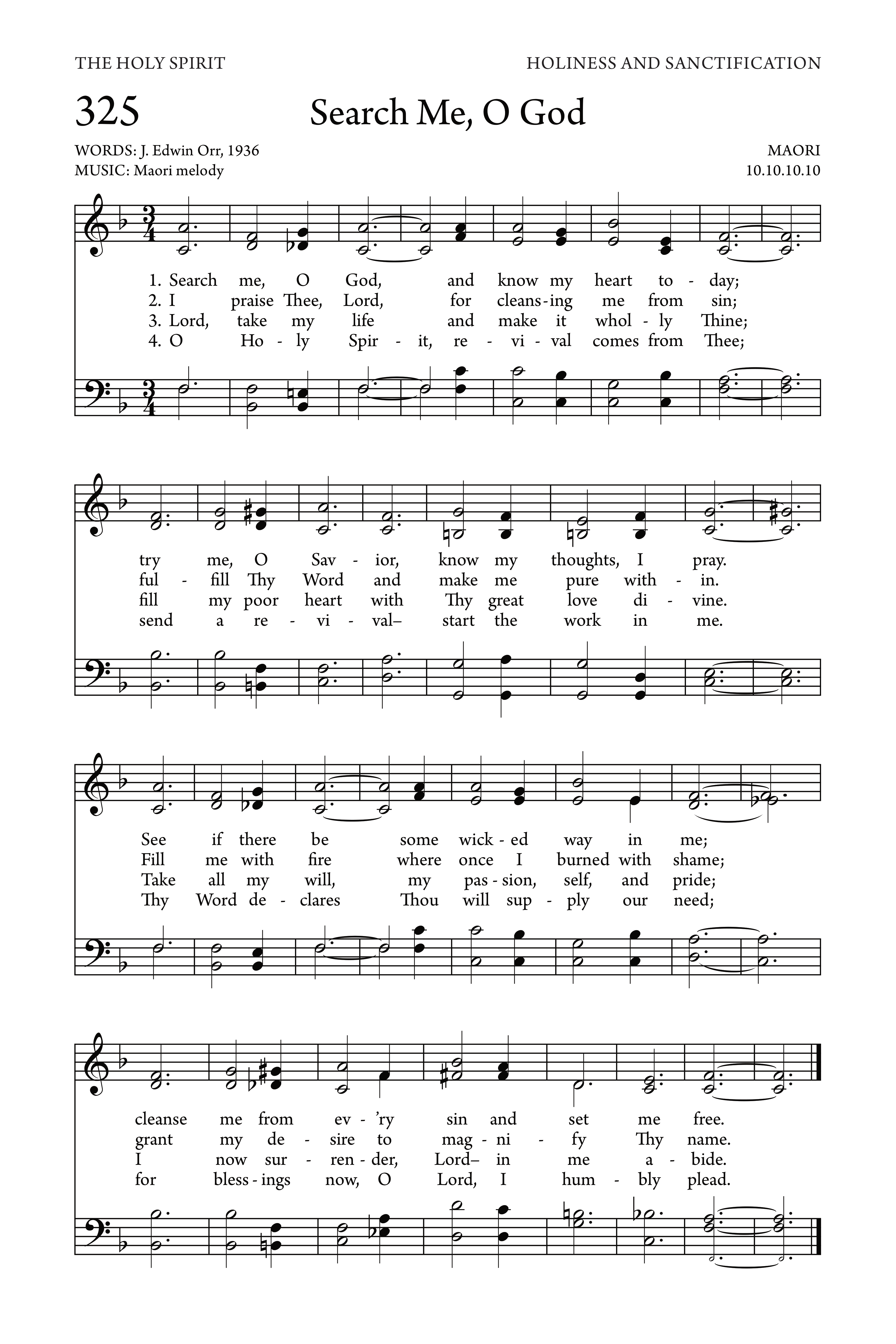
‘Search Me O God’ (by the Reverend J Edwin Orr; words in English.)
This revival hymn uses the ‘Swiss Cradle Song’ tune with words authored by Irish-American evangelist J Edwin Orr. He visited New Zealand in 1936 and heard “the beautiful Māori song of farewell, Pō Atarau”.
Mr Orr was so impressed with the beauty of this Polynesian melody that soon after [hearing it] he wrote new verses to the tune on the back of an envelope in the post office of the little town of Ngāruawāhia. Though the words were an outgrowth of his New Zealand [evangelical] campaigns, the text was based on the familiar words of scripture found in Psalm 139, verses 23, 24: ‘Search Me, O God, and know my heart’.
Further campaigns throughout Australia in the 1930s, and later in nearly all of the English-speaking world, soon popularised the hymn everywhere. During the 1952 campaign in Brazil the Portuguese translation of the hymn was again instrumental in the spiritual awakening of that country. (8)
Although as a revival hymn it may seem closest to ‘Te Iwi’ (which was called a faith healing song in its publication), musically it is an offshoot of the farewell song, ‘Pō Atarau’. ‘Search Me O God’ is well known in America and elsewhere, but it seems little used in New Zealand, and was located in curious circumstances: A member of a band in the Wairarapa country region, who played a violin homemade from a kerosene tin, said that he would only play religious music. When he played the tune ‘Pō Atarau’ the researcher asked him why he played that secular song, and he identified it as the revival hymn ‘Search Me O God’. (9)
Early international recordings
Most spectacular has been the song’s overseas reach in the intervening years. After recordings by top international artists – including Gracie Fields and Bing Crosby – the song became a fully effective New Zealand product. It became an element of culture which could be both exported overseas and extolled at home. This had been happening since a “[US] Navy Week” in 1919 when a group of New Zealand performers concluded their concert with the “native New Zealand song ‘Harryra’ [‘Haere Rā’].” (10)
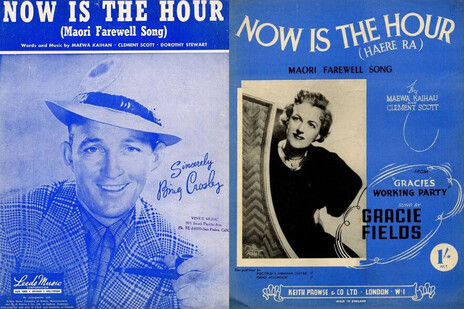
Late 1940s sheet music editions for hit recordings by Bing Crosby and Gracie Fields.
During World War Two the song was frequently performed in troop concerts, but its greatest international popularity came through the post-war performances of Gracie Fields. Fields came to New Zealand in 1946 and is said to have learned the song from the driver assigned to her tour, Mr Nat Mousey, himself a former dance band player. Further English words were contributed by Dorothy Stewart, Gracie Field’s manager on the tour, who is described as a New Zealander living in America (Annabel 1976:264). Stewart retained the copyright of them. Success in Britain came through use in Fields’s popular radio programme Gracie’s Working Party – a post-war reconstruction and morale booster. An attempt at cornering the American market saw five-and-a-half tons of English recordings by Gracie Fields flown to America, but these failed to dislodge Bing Crosby’s eighteenth (and final) “million seller”.
‘Blue Smoke’ (ca 1940, by Ruru Karaitiana 1909-1970; 1st verse English, 2nd verse Māori)
Even as ‘Now is the Hour’ was at its zenith internationally in the 1940s, another Māori composer created a farewell song which became extremely popular. Although the ‘Swiss Cradle Song’ melody was not used, ‘Blue Smoke’ closely mirrors the words of ‘Now is the Hour’: “I know that when I sail home again, I’ll find you waiting for me” (in ‘Blue Smoke’) with “Soon you’ll be sailing far across the sea/ When you return you’ll find me waiting here” (from ‘Now is the Hour’). (11)
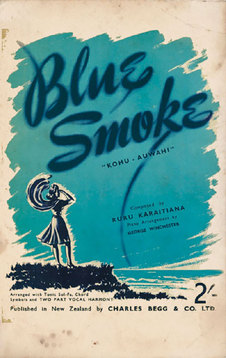
Blue Smoke – the sheet music version of Ruru Karaitiana’s song, with a piano arrangement by George Winchester. Charles Begg & Co. Ltd, 1947. - Alistair Gilkison Collection
As ‘Now is the Hour’ declined, ‘Blue Smoke’ took its place, particularly in the New Zealand dance band repertoire. The first commercial recording of ‘Blue Smoke’ was in a catchy, Hawaiian-inflected style. And its waltz time was unequivocal. It had from the latter war years been immensely popular in the forces, both in Europe and the Pacific, where the J Force, on its way to Japan, adopted the song. Soldiers returning home to New Zealand made this their anthem – one with a distant dreamy romantic mood, rather than the sorrowful anguish of “Now is the hour when we must say goodbye”. And its evocative romantic recording allowed it to capture the post-war mood. (12)
‘Now is the Hour’ further diminished in popularity with the change from sea travel to air. Other songs throughout the century had explored the distance theme but these two stand out as capturing for the first and second half-centuries the flavour of separation and distance which was such a part of the New Zealand psyche.
In the early years there are at least five different songs which make up the story of ‘Now is the Hour’. Their origins are confused, with conflicting stories told about the one song – if it is one song. My suggestion is that here was an adaptable song-template which could be rewritten for any current occasion. New words could apply to religious, cultural, national or personal events. At least six times we have evidence of a song being adapted for current events. This was a natural part of song-making in the Māori tradition, and in the British ballad or folk song tradition. What we have is a kind of “performance diary” of the song, showing how it was used on various occasions; I have called it a quasi-folk song.
The downside was that, being such a popular song, it attracted those who wanted to claim the profits, and who saw their actions in terms of the sole-composer paradigm, even though they were adaptor-composers. History was on their side, and a court ruled in their favour, unaware I suppose, of other traditions of intellectual ownership.
That this song so caught (or encouraged) the mood of the nation for “willing misery” or “sad realism” in its treatment of the distance theme was a guarantee of its popularity and influence. We can see it now as a group of songs which shaped New Zealand. And which, as New Zealanders’ consciousness of themselves developed, was elbowed aside by the more robust ‘Blue Smoke’.
--
For variations of the lyrics, go to the accompanying page: Now is the Hour / Haere Rā – lyrics
Listen to the complete Tūrakina Sings album by the Tūrakina Girls’ College Choir (Kiwi, 1976)
Notes
1. The songs in which I had explored these themes (in radio talks, conferences and published papers) were ‘Ka mate, ka mate’ (1998), ‘On the Ball’ (1999), ‘Pōkarekareana’ (2007), and ‘God Defend New Zealand’ (2008).
2. In writing the essay on ‘Now is the Hour’ I valued the friendship of Alistair Gilkison, whose collection yielded up treasures of printed music and recordings, and of Michael Brown. I am indebted to the research of Angela Annabel.
3. “Poignant Scene of Christmas, ’39. Now is the hour ... far across the sea.” Report of the performance by Kingi Tāhiwi and the Ngāti Pōneke group on the battleship Ramillies, preparing to escort the First Echelon of troops; Wellington Harbour, 15 December 1939. Unidentified newspaper clipping, Wellington City Libraries.
4. A B Saunders is named in a NZ Herald report, 20 January 1948.
5. Although Annabel (1976) records these instances of the song’s early use she seems to have asked the church if they used the songs ‘Now is the Hour’/ ‘Haere Rā’/ ‘Pō Atarau’. All these songs share the same ‘Swiss Cradle Song’ origin yet they would have been considered separate songs by the participants, thus giving Annabel a negative answer to her question.
6. Emira Maewa Kaihau, b. Louisa Flavell in 1879 at Whangaroa.
7. The musical composition by Clement Scott was accepted by a Sydney judge hearing the copyright case on this song, though in these two important ways – waltz time and melodic dip – a departure had been made from the original.
8. www.hymn.org/htm/s/e/searchme.htm, consulted 7 July 2005. [This link is no longer active. The likely source for this passage is 101 More Hymn Stories, by Kenneth W Osbeck (Michigan: Kregel Publications, 1985].
9. Michael Brown, pers. comm., 2010.
10. The tour, under contract to the American Chataqua and Lyceum Association, involved four performers led by Mr N H Papakura of New Plymouth. They also gave a performance at the White House for President Harding. (Dansey 1975)
11. A recording of ‘Blue Smoke’, made [by Jean Ngeru, in Hawera] before its official recording in 1949, is included in Thomas 2004.
12. Thomas 2004:114-117. Blue Smoke: the Lost Dawn of New Zealand Popular Music 1918-1964, by Chris Bourke, was published by Auckland University Press in 2010.
Sources
Annabel, Angela, 1976, ‘New Zealand’s Cultural and Economic Development Reflected in Song: Aspects of a New Zealand Folksong Ethos’. MA thesis, University of Auckland.
Dansey, Harry , 1975, ‘Yes But When Exactly was the Hour?’ in Auckland Star, 28 March.
Elkin, Clarence, 1923, Maori Melodies (with words), Collected and Arranged for Pianoforte. Sydney: W H Paling & Co, Ltd.
Frame, Janet, 1984, An Angel at My Table. An Autobiography: Volume Two. Auckland: Hutchinson.
Frame, Janet, 1985, The Envoy from Mirror City. An Autobiography: Volume Three. Auckland: Hutchinson of New Zealand.
Hyde, Robin, 1986 [1936], Passport to Hell. Auckland: Auckland University Press.
Revington, Mark, 1999, ‘Now or Never: The Strange Disputed History of a Kiwi Classic’ in NZ Listener, September 11.
Thomas, Allan, 1998, ‘The Haka in the Thick of It: The Sports Challenge and Traditional Haka “Ka Mate Ka Mate”’, in Music in New Zealand , Spring, No.33, pp.44-52.
Thomas, Allan, 1999, ‘On the Ball: New Zealand’s Rugby Song’, in Sport Society and Culture, Brad Paterson (ed.), Stout Research Centre, Victoria University of Wellington, pp.111-121.
Thomas, Allan, 2004, Music Is Where You Find It: Music in the town of Hawera, 1946. Wellington: Music Books New Zealand.
Thomas, Allan, 2007, ‘“Pokarekare Ana”: an overlooked New Zealand folksong?’, in Journal of Folklore Research, Moira Smith (ed.), vol.44, nos.2&3, May-Dec., pp.227-237.
Thomas, Allan, 2008, ‘“The Words Stink and the Music is Just Pathetic”: the making of a popular national anthem’, in Musicology Australia, vol.30, pp.64-69.
Other links
‘Pō Atarau’ at New Zealand Folk Song
The life of composer Clement Scott (Albert Saunders), from Ajazz, August 2021, pp. 10-12. This also mentions court proceedings over ‘Swiss Cradle Song’s composition, the claimant C S Darling, and the confusion with UK playwright Clement Scott.
Unsung hero, from Sunday Star-Times, 15 December 2009. ‘Swiss Cradle Song’ composer Albert Saunders, aka Clement Scott.
How ‘Pō Atarau’ made it all the way to Ryan Gosling’s Project Hail Mary, Alex Casey, The Spinoff, 26 March 2026.
Erama Maewa Kaihau was once a star, too, Austin Haynes,The Conversation, 31 March 2026.
--
This essay originally appeared in the posthumous tribute to Allan Thomas, World Music is where we found it: essays by and for Allan Thomas (Wellington: VUP, 2011). It is republished with the kind permission of Jennifer Shennan and Te Herenga Waka University Press.
Allan Thomas (1942-2010) taught ethnomusicology at the Victoria University of Wellington for over 30 years. He was pivotal in establishing the gamelan orchestra at the university, and encouraged hundreds of students to see the breadth and importance of community music making in Aotearoa, Asia, and the islands of the Pacific.